


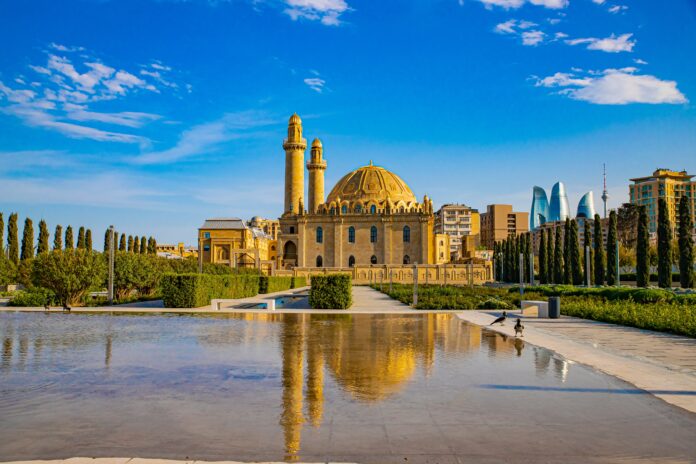
The outrage over restrictions on hijab in Azerbaijani schools has put the spotlight on the country’s strict secular principles and laws. But how did a nation with more than 1,300 years of Islamic history become one of the most secular societies in the Muslim world?
Protests by Muslim students, parents and religious activists against restrictions on headscarves in Azerbaijani schools have reignited a longstanding debate about the place of Islam in the country.
The controversy has highlighted an apparent contradiction: Azerbaijan is overwhelmingly Muslim, with a predominantly Shia population, yet its authoritarian government maintains tight control over religious life and strongly promotes secularism.
For many practising Muslims, restrictions on hijab represent an infringement of their fundamental religious freedoms. The authorities, meanwhile, have defended secular education and school uniform regulations.
To understand how Azerbaijan arrived at this point, it is necessary to examine its remarkable Islamic history — and how successive political systems transformed the relationship between religion and the state.

The arrival of Islam
Islam first reached the territory of modern Azerbaijan during the seventh century, as Muslim armies expanded into the Caucasus following the conquest of the Persian Sasanian Empire.
Subscribe to our newsletter and stay updated on the latest news and updates from around the Muslim world!
Before Islam, the region was religiously diverse, with Zoroastrianism and Christianity among its established faiths. Conversion to Islam was gradual, but over the following centuries the religion became dominant, integrating Azerbaijan into the wider Muslim world.
The region became a meeting point of Arab, Persian and Turkic cultures, developing a distinctive Islamic identity that survives today. Cities such as Baku, Ganja and Shamakhi became important centres of commerce, culture and Islamic learning.
A major turning point came in 1501, when Shah Ismail I established the Safavid state and made Twelver Shia Islam its official religion. Before the Safavids, Sunni Islam had been widespread across the region. However, the new rulers promoted Shiism, sometimes through coercion, gradually transforming the religious identity of much of the population.
Today, Azerbaijan remains predominantly Shia, although it also has a substantial Sunni minority.

Russian conquest and early secularisation
Azerbaijan’s next major transformation came during the early 19th century.
Following wars between the Russian and Persian empires, the treaties of Gulistan in 1813 and Turkmenchay in 1828 transferred large Azerbaijani-populated territories to Russian control. This divided Azerbaijani communities between Russia in the north and Persia in the south.
Under Russian rule, Islamic institutions were increasingly regulated by the imperial authorities, while European political and intellectual influences spread through Azerbaijani society.
The rapid development of Baku’s oil industry during the late 19th century accelerated these changes. A new generation of Muslim intellectuals emerged, advocating modern education, scientific advancement and political reform.
Some sought to reconcile Islam with modernity, while others embraced secular nationalism.
In 1918, following the collapse of the Russian Empire, Azerbaijan established a short-lived independent republic. The Azerbaijan Democratic Republic adopted a secular political system and introduced women’s suffrage, becoming one of the earliest Muslim-majority states to do so.
However, independence lasted less than two years.
In April 1920, Soviet forces conquered Azerbaijan, beginning a period that would profoundly transform its religious identity.
Soviet communism’s assault on Islam
The Soviet period was arguably the single most important factor in making Azerbaijan the secular society it is today.
The Communist authorities were committed to state atheism and regarded organised religion as a threat to their ideological and political authority. Across Azerbaijan, mosques were closed, Islamic schools dismantled, religious property confiscated and Muslim scholars persecuted.
Many clerics were arrested or executed, particularly during Stalin’s purges. Religious education was removed from public institutions, while anti-religious propaganda portrayed Islamic practices as backward and incompatible with socialist progress.
The authorities also sought to undermine religious customs and traditions, including those associated with dress, family life and public worship.
Changes to the Azerbaijani alphabet further weakened access to older Islamic texts and scholarship.
For approximately 70 years, generations grew up in a society where Islam was largely excluded from formal education and public institutions. Nevertheless, religion never completely disappeared.
Muslim families continued to observe religious traditions privately, while Islamic identity survived through cultural practices, festivals and communal life.
By the time the Soviet Union collapsed in 1991, however, the transmission of Islamic knowledge between generations had been severely disrupted. Many Azerbaijanis still identified as Muslim, but regular religious observance had declined considerably.
Independence and the Islamic revival
The collapse of the Soviet Union brought renewed opportunities for religious expression. Mosques reopened, Islamic education revived and Azerbaijanis began rediscovering religious traditions that had been suppressed for decades.
Religious influences arrived from Turkey, Iran and other Muslim countries, while some young Azerbaijanis travelled abroad to study Islam.
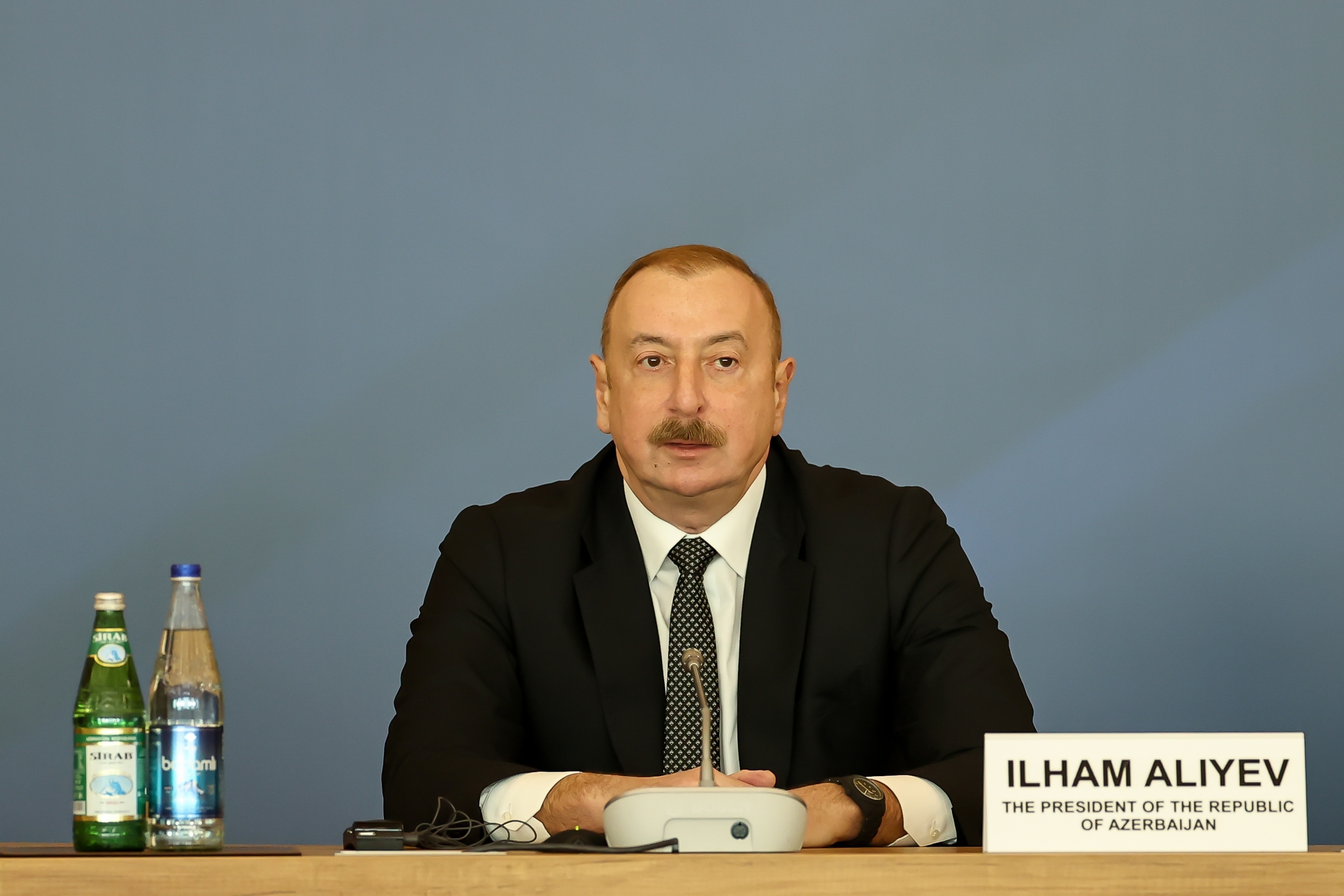
However, the country’s new rulers were determined to preserve the secular political system inherited from the Soviet era. Under Heydar Aliyev, who became president in 1993, and his son Ilham Aliyev, who succeeded him in 2003, the government consolidated extensive control over religious institutions.
Azerbaijan’s constitution formally guarantees freedom of conscience and separates religion from the state. In practice, however, religious communities face strict registration requirements, while the authorities regulate religious education, literature and clerical appointments.
Independent Islamic movements have faced particular scrutiny, with human rights organisations repeatedly criticising restrictions on religious freedom.
The government argues that its policies are necessary to combat extremism, prevent foreign interference and protect national security. Critics contend that secularism has become a justification for suppressing independent religious activity and potential political opposition.
One particularly controversial episode occurred in 2015, when a deadly police operation against members of the Shia Muslim Unity Movement in Nardaran led to numerous arrests and allegations of serious human rights abuses.
The hijab controversy
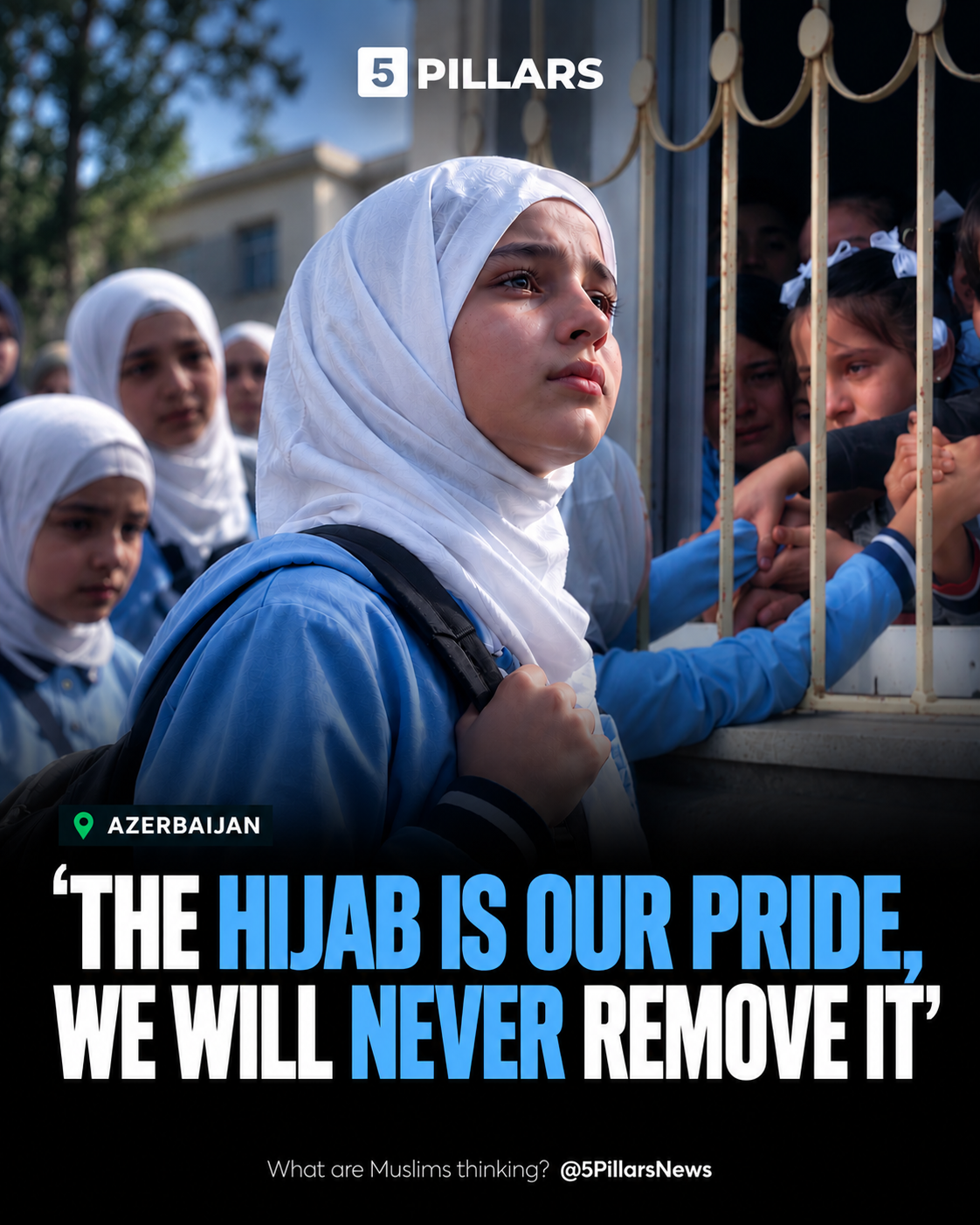
The latest controversy over hijab in Azerbaijani schools illustrates the tensions between the country’s Muslim identity and its secular political establishment.
For practising Muslim women, hijab is not simply a cultural tradition. According to mainstream Islamic jurisprudence, covering the hair is a religious obligation for Muslim women who have reached puberty. It represents obedience to Allah, modesty, dignity and religious identity.
Yet Azerbaijan has experienced repeated disputes over headscarves in state schools, particularly since restrictions associated with school uniform regulations triggered demonstrations around 2010.
Critics argue that preventing Muslim girls from wearing hijab forces them to choose between their education and their religious convictions. The authorities maintain that public education should operate according to secular principles and established uniform rules.
The renewed protests have brought these competing interpretations of secularism back into the spotlight. They also raise a fundamental question: should secularism simply mean that the state does not officially endorse a religion, or should it allow the authorities to restrict visible religious practices in public institutions?
A Muslim identity that survived
Despite Russian imperial domination, seven decades of Soviet atheism and decades of post-independence secular governance, Azerbaijan remains overwhelmingly Muslim in identity.
Although Soviet policies weakened religious institutions and observance, they failed to erase Islam from Azerbaijani society.
Azerbaijan’s history demonstrates how political power can profoundly reshape religious life without entirely erasing religious identity.
More than 1,300 years after Islam first reached the Caucasus, the struggle over its place in Azerbaijani public life continues.
And for the Muslim students, parents and teachers protesting restrictions on hijab, that struggle is no longer merely a question of history — it is about their religious freedom today.