

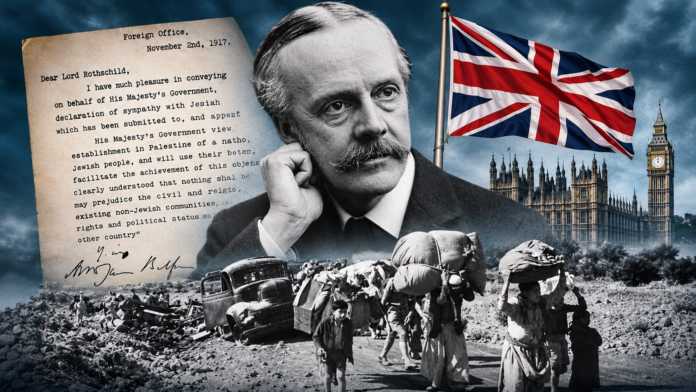
On November 2, 1917, Britain promised to support a Jewish national home in Palestine without consulting its Arab majority. More than a century later, Palestinians continue to live with the consequences of a declaration that helped pave the way for their dispossession.
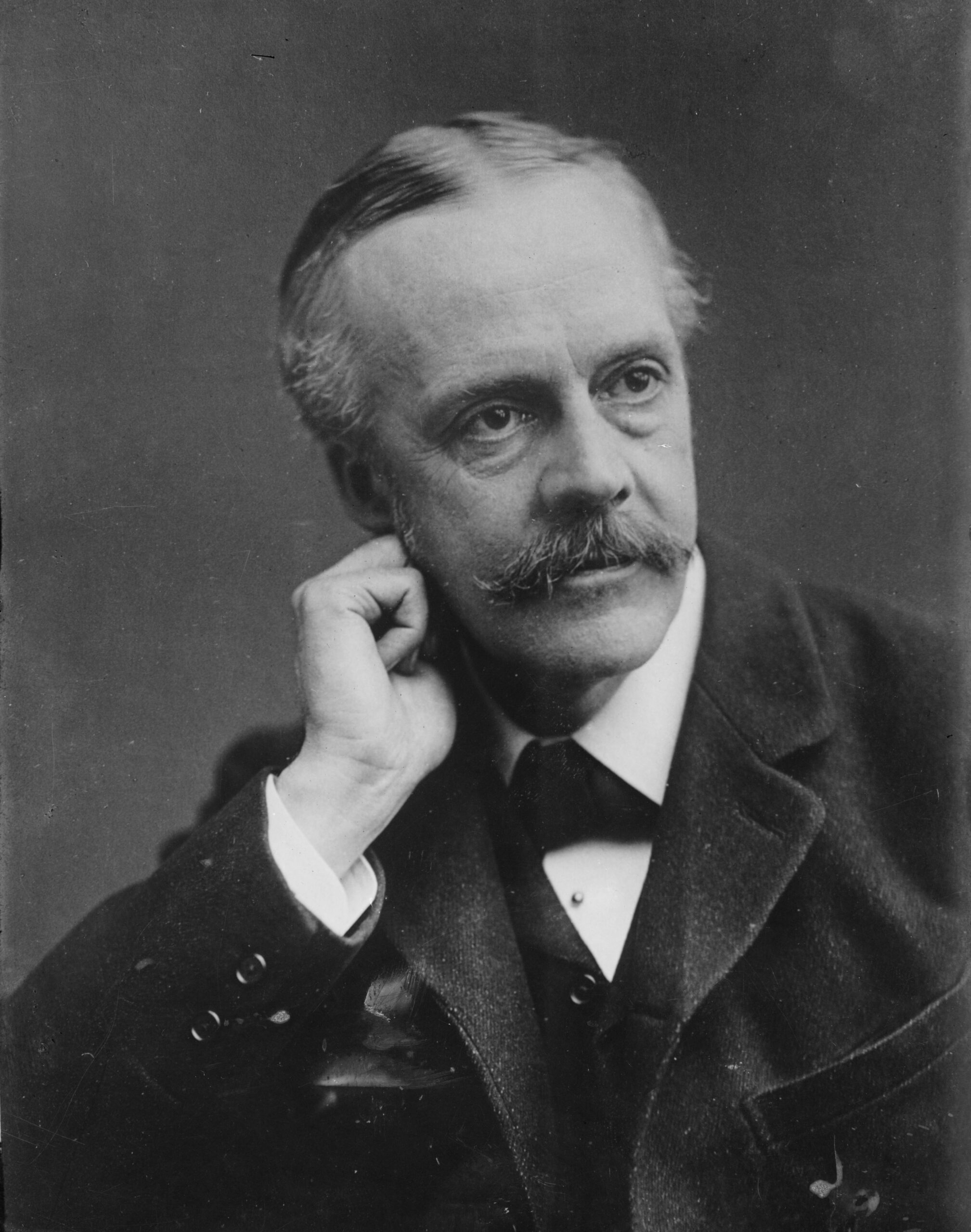
The letter signed by British Foreign Secretary Arthur James Balfour would change the course of Palestinian history.
Known as the Balfour Declaration, the 67-word statement expressed Britain’s support for establishing a Jewish national home in Palestine, a land overwhelmingly inhabited by Palestinian Muslims and Christians.
For the Zionist movement, it represented a major diplomatic breakthrough on the road towards the establishment of Israel. For Palestinians, it represented something very different: a colonial power promising to support another people’s national aspirations in their homeland, without asking for their consent.
The declaration helped lay the political foundations for the creation of Israel in 1948, the mass displacement of Palestinians during the Nakba, and a conflict whose consequences continue to shape the Middle East today.

What was the Balfour Declaration?
The declaration was issued during the First World War, when Palestine was still part of the Ottoman Empire. It took the form of a letter from Balfour to Lord Walter Rothschild, a prominent British Jewish leader, who was asked to communicate the government’s position to the Zionist Federation.
Subscribe to our newsletter and stay updated on the latest news and updates from around the Muslim world!
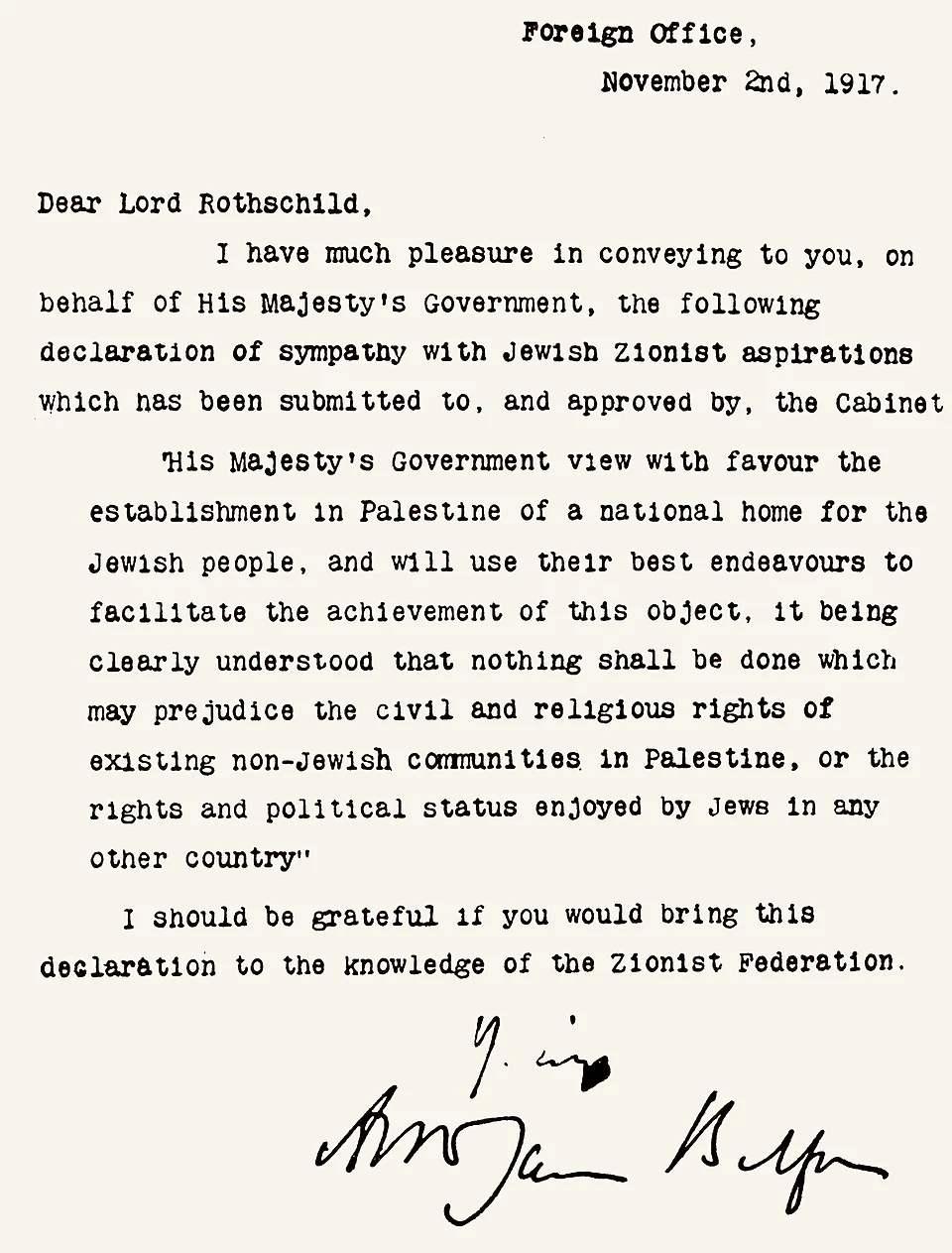
The central passage stated:
“His Majesty’s Government view with favour the establishment in Palestine of a national home for the Jewish people, and will use their best endeavours to facilitate the achievement of this object.”
The declaration also stipulated that nothing should prejudice the civil and religious rights of the existing non-Jewish communities in Palestine. However, it made no equivalent commitment to protecting their political or national rights.
This distinction would prove crucial.
The Zionist movement, which had emerged in Europe in the late 19th century, sought to establish a Jewish national homeland in Palestine, partly in response to centuries of antisemitism and persecution of Jews in Europe. Britain’s declaration gave that movement the official backing of a major imperial power.
It did not explicitly promise an independent Jewish state, but it provided political support for a project that would eventually lead to Israel’s establishment.
A promise made without Palestinian consent
One of the most controversial aspects of the Balfour Declaration was that Britain made this commitment without consulting the people who already lived in Palestine.
According to Palestinian historian Rashid Khalidi, Arabs constituted approximately 94% of Palestine’s population in 1917, while Jews accounted for around 6%.
Yet the declaration recognised the national aspirations of the Jewish people while referring to the Arab majority merely as the “existing non-Jewish communities”. The words “Palestinian” and “Arab” did not appear anywhere in the document.
This omission was not simply a matter of language. The declaration acknowledged Jewish national aspirations while offering the Arab majority only civil and religious protections, rather than an equivalent right to national self-determination.
Khalidi argues that this reflected the colonial thinking of the period, when European powers routinely made decisions about territories and peoples without their consent.
Britain was effectively committing itself to transforming the political future of a country whose inhabitants had not authorised it to do so. This is central to why Palestinians regard the declaration as a historic betrayal.
How Britain turned its promise into policy
The Balfour Declaration was not merely a symbolic statement.
After the First World War and the collapse of the Ottoman Empire, Britain obtained control over Palestine through a League of Nations Mandate. The Mandate, approved in 1922, incorporated the Balfour Declaration and required Britain to facilitate the establishment of a Jewish national home.
Under British administration, Jewish immigration increased, Zionist institutions developed, and the foundations of a future Jewish state were strengthened.
The Mandate recognised the Zionist Organisation as a body that could advise and cooperate with the British administration on matters affecting the Jewish national home. No equivalent national representative institution was recognised for Palestine’s Arab majority.
According to the Institute for Palestine Studies, this created a fundamental imbalance between the two communities.
Britain’s responsibility to facilitate the Zionist project repeatedly came into conflict with Palestinian demands for representative government and independence. The result was a political system in which the national ambitions of the Arab majority were subordinated to Britain’s commitment to the Zionist movement.
Palestinians resisted from the beginning
Palestinians did not passively accept Britain’s plans for their homeland. From the early years of British rule, Palestinian political leaders, religious figures and ordinary citizens opposed the declaration.
Palestinian Arab congresses demanded independence and challenged Britain’s support for Zionism. Delegations travelled to London to make their case directly to British officials. Demonstrations, strikes and other forms of resistance followed.
Between 1918 and 1936, Palestinians marked November 2 as a day of mourning, frequently organising demonstrations and general strikes against the Balfour Declaration.
Opposition eventually developed into the Arab Revolt of 1936–1939, a major uprising against British colonial rule and Zionist immigration. Britain suppressed the revolt through extensive military operations, arrests and other coercive measures.
By the end of the 1930s, Palestinian political organisations and armed resistance had been severely weakened.
Palestinian historians argue that British policy had strengthened the Zionist movement while undermining the Palestinian population’s ability to achieve independence.
From Balfour to the Nakba
The consequences of British policy became most devastating in 1948.
Following the Second World War, Britain announced that it would end its Mandate over Palestine. In November 1947, the United Nations proposed partitioning Palestine into separate Jewish and Arab states.
Zionist leaders accepted the partition proposal, while Arab leaders rejected it, arguing that it violated the rights of Palestine’s Arab majority.
Fighting broke out between Jewish and Arab communities, followed by the intervention of neighbouring Arab armies after Israel declared independence in May 1948.
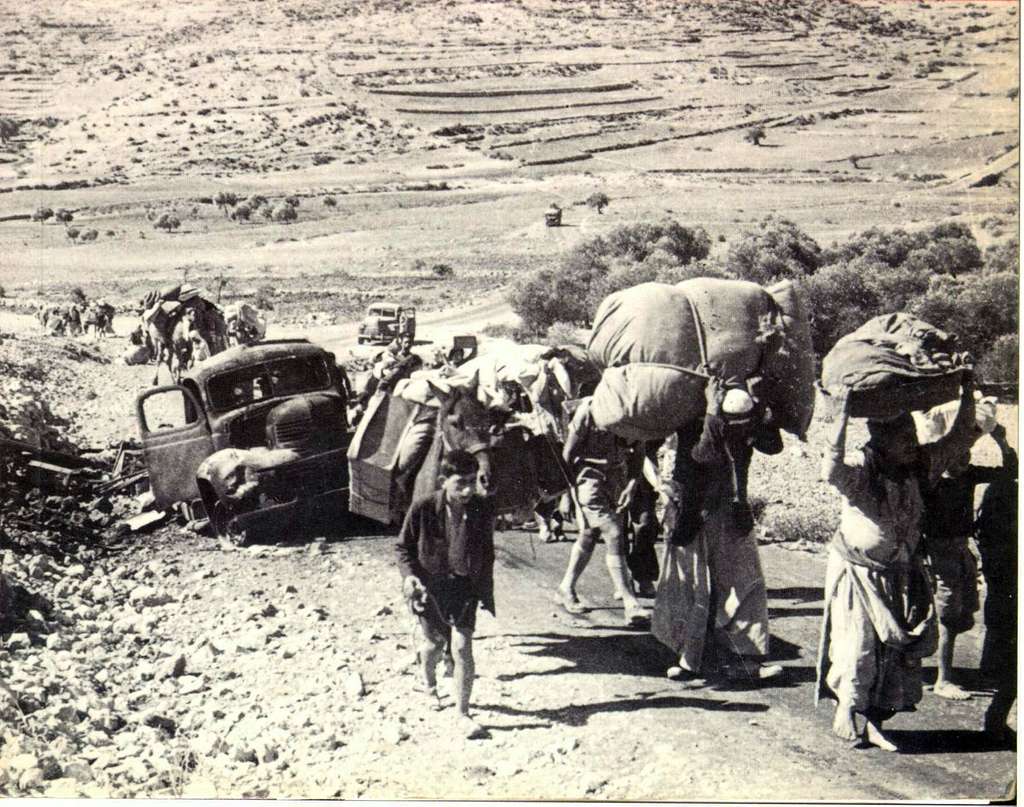
During the war, approximately 700,000 Palestinians fled or were expelled from their homes. Hundreds of Palestinian towns and villages were depopulated, with many subsequently destroyed. Palestinians remember these events as the Nakba, meaning “catastrophe”.
The refugees and their descendants were largely prevented from returning to their homes, creating a refugee crisis that continues across generations.
The Balfour Declaration did not itself order these expulsions, nor did it make every subsequent event inevitable. But it established the British commitment that helped the Zionist movement develop the political, institutional and demographic foundations for statehood.
The Institute for Palestine Studies identifies a direct historical connection between the declaration, British Mandate policies and the displacement of Palestinians in 1948.
For Palestinians, the Nakba was therefore not an isolated tragedy but the culmination of decades of political developments in which Britain played a decisive role.
Why Palestinians consider it a British betrayal
The charge of betrayal rests on several fundamental grievances.
First, Britain made commitments concerning Palestine without obtaining the consent of its population.
Second, it supported Jewish national aspirations while failing to recognise the equivalent national rights of the Arab majority.
Third, it used its position as the administering power to implement policies that helped the Zionist movement establish institutions and expand its presence in Palestine.
And fourth, British rule ended without delivering independence to the Palestinian people.
Britain’s actions were also viewed as conflicting with wartime assurances of Arab independence, although the precise territorial scope of those earlier promises became a subject of dispute.
Palestinian historians argue that this was the central injustice of Balfour: a European imperial power helped determine the political future of another people’s homeland while denying that people an effective say in the decision.
Supporters of the declaration argue that it recognised the Jewish people’s historic connection to the land and their legitimate aspiration for national self-determination.
Palestinian critics counter that those aspirations could not justify disregarding the political rights of the population already living there.
The question of British responsibility therefore goes far beyond whether Balfour’s letter was legally binding. It concerns the consequences of Britain’s decisions for a population that had little power to influence them.
A legacy that continues today
The consequences of the Balfour Declaration did not end with Israel’s creation in 1948.
In 1967, Israel occupied the West Bank, including East Jerusalem, and Gaza, placing millions more Palestinians under Israeli military control.
Over subsequent decades, Israel expanded settlements in occupied territory, while Palestinians continued to demand an independent state and the right of refugees to return.
Israel’s military campaign in Gaza following the Hamas-led attacks of October 7, 2023, has brought renewed international attention to Palestinian suffering and the historical roots of the conflict.
For Palestinians, these developments are part of a much longer history of dispossession and denial of national rights.
The Balfour Declaration did not directly cause every subsequent Israeli policy or military action. Nevertheless, it helped establish the political conditions from which the modern conflict emerged.
More than a century after Balfour signed his letter, Palestinians remain without a fully sovereign independent state, while millions continue to live as refugees or under occupation.
For Israel and supporters of Zionism, the declaration remains an important diplomatic milestone in the restoration of Jewish national sovereignty. For Palestinians, it remains a symbol of imperial injustice and a reminder that their political future was shaped by decisions taken without their consent.