



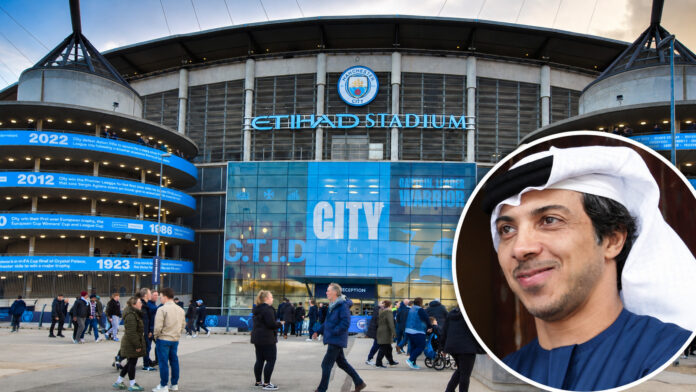
Manchester City’s extraordinary rise from Premier League outsiders to the dominant force in English football has been powered by vast Abu Dhabi wealth. Now, after an independent commission reportedly found the club guilty of 114 of 115 financial rule breaches, serious questions are being raised about whether Emirati money has been used to spoil the once beautiful game.
Manchester City’s remarkable transformation over the past 18 years has fundamentally changed the balance of power in English football.
Before the takeover by Sheikh Mansour’s Abu Dhabi United Group in 2008, City had won just two league titles in their history and had spent much of their existence in the shadow of neighbours Manchester United.
The arrival of Abu Dhabi money changed that almost overnight.
City were able to spend on a scale that was previously unimaginable for the club, recruiting some of the world’s most expensive players and eventually building a squad capable of competing for every major trophy.

The results have been extraordinary.
Since the 2008 takeover, City have won the Premier League eight times, the Champions League, the FA Cup three times and the League Cup six times, alongside other major honours. They also became the first English side to win four consecutive Premier League titles.
Subscribe to our newsletter and stay updated on the latest news and updates from around the Muslim world!
But the question now hanging over English football is whether some of that success was achieved through financial practices that breached the rules designed to prevent wealthy clubs from obtaining an unfair advantage.
115 charges and verdict
In February 2023, the Premier League charged City with 115 alleged breaches covering the period from 2009 to 2018.
The allegations included failing to provide accurate financial information, failing to disclose the full details of player and manager remuneration, breaching UEFA financial rules and the Premier League’s profitability and sustainability regulations, and failing to co-operate with the league’s investigation.
The case followed a lengthy investigation that began after leaked documents raised questions about the club’s finances and sponsorship arrangements.
Among the allegations was that money connected to the club’s Abu Dhabi ownership had been channelled through sponsors and recorded as sponsorship revenue.
City have consistently denied wrongdoing and have maintained that their financial arrangements were legitimate. The club has also challenged the Premier League’s handling of the case and says it has respected due process.
After a 12-week hearing which began in September 2024, an independent commission has reportedly found City guilty of all but one of the 115 charges.
The reported finding has not yet brought the saga to an end. The Premier League has not publicly announced the verdict, while City say the process remains ongoing and are expected to appeal.
If the reported findings are upheld, however, they would represent one of the most consequential episodes in the history of English football. The issue is not simply whether Manchester City spent a lot of money. Football has always involved wealthy owners, big transfers and huge salaries.
The fundamental issue is whether financial regulations were circumvented in order to allow a club backed by enormous wealth to spend beyond the limits imposed on its competitors.
Abu Dhabi money spoiled the game?
There is little dispute about the scale of the transformation.
In 2008, City were taken over by Abu Dhabi United Group for around £200 million. The club immediately became one of the wealthiest in world football.
Two years later, City spent more than £120 million in a single summer transfer window on players including Yaya Touré and David Silva. The first Premier League title followed in 2011-12.
The club has since developed into an extraordinary footballing machine, attracting managers such as Roberto Mancini and Pep Guardiola and players including Sergio Agüero, Kevin De Bruyne and Erling Haaland.
City’s own history of the takeover describes it as the catalyst for a “glittering period of success”, while Abu Dhabi state-linked media have openly celebrated the club’s extraordinary trophy haul since 2008.
A club that had previously spent decades outside English football’s elite was suddenly able to compete financially with the country’s established giants and, eventually, surpass them.
This is where the Premier League’s financial regulations become important. Financial rules were introduced precisely because football clubs cannot operate like ordinary businesses in which an owner can simply inject unlimited amounts of money and attempt to buy sporting success.
The purpose of financial regulations is to place limits on spending and ensure that clubs compete within broadly sustainable financial parameters.
If a club were able to disguise owner investment as commercial revenue, understate expenditure or otherwise provide an inaccurate financial picture, it could potentially spend more on players and wages than clubs complying with the rules.
It would mean having a wealthy owner and allegedly finding ways around the restrictions designed to prevent that wealth from becoming an unlimited sporting advantage. That distinction is crucial. And it is why the reported finding of 114 breaches is so significant.

Possible sanctions
Sky Sports reports that potential sanctions could include fines, points deductions and other sporting penalties, while further legal action from other clubs could also follow but nothing has yet been decided on punishment.
City are expected to appeal, and the appeals process will be heard by a new three-person panel. There is no route to the Court of Arbitration for Sport for this Premier League appeal.
Manchester City’s rise has undoubtedly produced some of the finest football English fans have ever witnessed but it has also demonstrated something less romantic about the modern game.
The Premier League may market itself as the world’s most competitive domestic football competition, but enormous financial resources can radically alter the competitive landscape. Abu Dhabi’s investment turned Manchester City into a global football superpower.
The reported findings of the independent commission now raise a much more uncomfortable question: was all of that financial power exercised within the rules?
Until the appeal process is complete, that question remains unresolved.
But if the reported findings ultimately stand, Manchester City’s extraordinary trophy haul will forever be viewed alongside the financial controversy that accompanied its transformation from an ambitious Manchester club into one of the most successful teams English football has ever seen.