
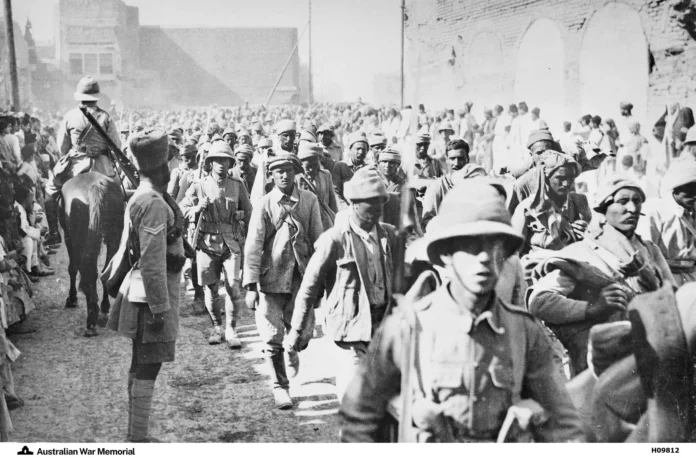
As Britain marks Remembrance Day on November 11, we examine how the First World War destroyed the Ottoman Empire, ended the Islamic Caliphate, divided the Middle East and laid the foundations for the Palestinian tragedy.
Every November, Britain remembers those who died in the First World War. Poppies are worn, wreaths laid and ceremonies held to commemorate the millions who perished in a conflict that ended on November 11, 1918.
But while Britons are familiar with the trenches of the Western Front and the horrors of the Somme, far less attention is paid to another enormous consequence: the transformation of the Muslim world.
For Muslims, the conflict brought about the collapse of the Ottoman Empire, the abolition of the Caliphate, the division of Arab territories between European colonial powers and the beginning of a new chapter in the struggle over Palestine.
Many of today’s Middle Eastern crises have roots in decisions taken during and immediately after that devastating conflict.

The Ottoman Empire enters the war
When fighting broke out in August 1914, the Ottoman Empire was already a shadow of its former self.
Subscribe to our newsletter and stay updated on the latest news and updates from around the Muslim world!
For centuries, the Ottomans had governed territories across the Middle East, North Africa and southeastern Europe. Their sultans also claimed the title of Caliph, an institution carrying enormous religious significance for Sunni Muslims.
But by the early twentieth century, the empire had lost much of its territory and faced political instability, economic weakness and European pressure. Its leadership, dominated by the secular Young Turks, sided with Germany and Austria-Hungary against Britain, France and Russia.
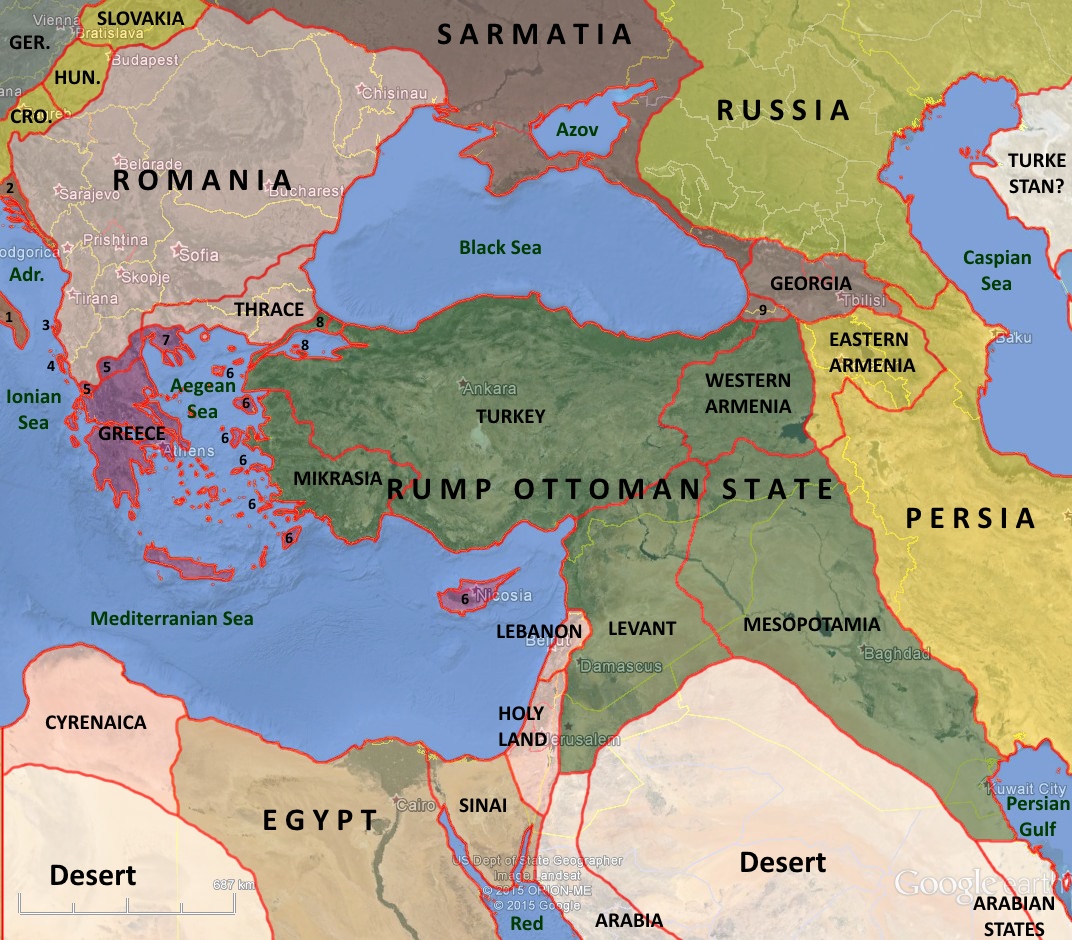
The Ottomans fought on multiple fronts, including Mesopotamia, Palestine and the Dardanelles.
In November 1914, Sultan Mehmed V called for jihad against the empire’s enemies, hoping to mobilise Muslims worldwide. However, millions of Muslims lived under British, French and Russian colonial rule, and many fought in those powers’ armies.
The conflict therefore saw Muslims fighting on opposing sides, sometimes against fellow Muslims.
Muslims fought and died for Britain
One frequently overlooked aspect of the First World War is the contribution of Muslim soldiers to the Allied effort.
Men from British India, including modern-day Pakistan and Bangladesh, fought across Europe, Africa and the Middle East. Muslims from French-ruled North Africa also served in large numbers.
Research by academic Islam Issa estimates that around 885,000 Muslim soldiers fought for the Allies, with at least 89,000 dying.
Many served colonial powers that ruled their homelands. Indian Muslim soldiers fought against the Ottomans in Mesopotamia and Palestine, while others endured the horrors of the Western Front.
Yet while Muslims helped Britain win, British victory also enabled colonial expansion across much of the Muslim world.
Britain’s promises to the Arabs
One of the conflict’s most consequential developments was Britain’s encouragement of an Arab uprising against Ottoman rule.
In 1915–1916, British officials corresponded with Sharif Hussein bin Ali, the Hashemite ruler of Mecca, discussing Arab independence in exchange for rebellion. Hussein hoped to establish an independent Arab kingdom, while Britain sought to weaken Ottoman control.
The Arab Revolt began in June 1916, supported by British money, weapons and advisers, including the spy T. E. Lawrence, later known as Lawrence of Arabia. The revolt contributed to the Ottoman defeat, but Britain’s promises became deeply controversial.
Although the territorial scope of British commitments was disputed, particularly regarding Palestine, Arab leaders believed they had been promised substantial independence.
Meanwhile, Britain and France were secretly negotiating their own plans for the region.
Sykes–Picot: Dividing the Muslim world
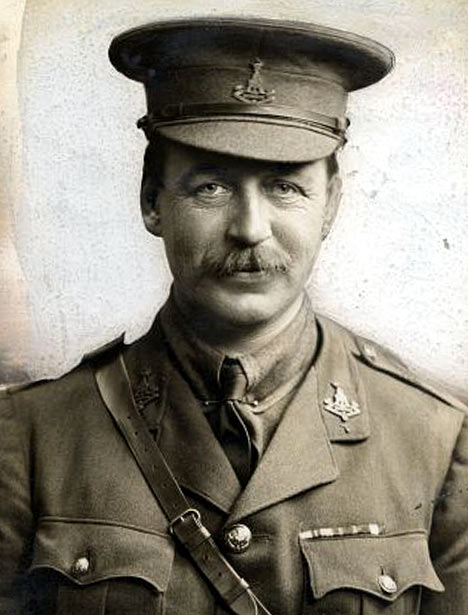
In May 1916, Britain and France reached the secret Sykes–Picot Agreement, named after diplomats Mark Sykes and François Georges-Picot. It envisaged dividing much of the Ottoman Empire’s Arab territory into European zones of control and influence.
France would dominate areas including Syria and Lebanon, while Britain would influence Mesopotamia and the region around Palestine.
Its existence became public after Russia’s Bolshevik Revolution in 1917, angering Arabs who had supported Britain expecting independence.
Although Sykes–Picot did not establish all today’s Middle Eastern borders, it became a powerful symbol of European powers determining the future of Muslim territories without their populations’ consent.
Instead of independence, much of the Arab world experienced new forms of foreign rule.
The Balfour Declaration and Palestine
Perhaps the most enduring consequence of Britain’s wartime diplomacy concerned Palestine.
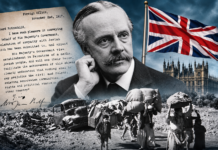
On November 2, 1917, British Foreign Secretary Arthur James Balfour declared support for establishing a national home for the Jewish people in Palestine.
Although the declaration promised to protect the civil and religious rights of existing non-Jewish communities, it offered the Arab majority no equivalent guarantee of political self-determination.
This was a fundamental contradiction. Britain was supporting a Zionist national project in a country overwhelmingly inhabited by Palestinian Arabs, both Muslim and Christian.
Zionism had emerged as a Jewish nationalist movement in the late nineteenth century, partly responding to European antisemitism, with the objective of establishing a Jewish national home, ultimately a state, in Palestine. The Balfour Declaration gave that movement the backing of a major imperial power.
In December 1917, British forces under General Edmund Allenby captured Jerusalem, ending approximately four centuries of Ottoman rule.
For Muslims, the loss of Jerusalem, home to Al-Aqsa Mosque, Islam’s third holiest mosque, carried immense religious and political significance.
The end of the Caliphate
The Ottoman defeat in 1918 began the empire’s final disintegration.
The 1920 Treaty of Sèvres proposed severe territorial losses, although Turkish nationalists under Mustafa Kemal, later known as Atatürk, overturned much of that settlement through their struggle for independence.
The Sultanate was abolished in 1922, followed by the proclamation of the Turkish Republic in 1923.
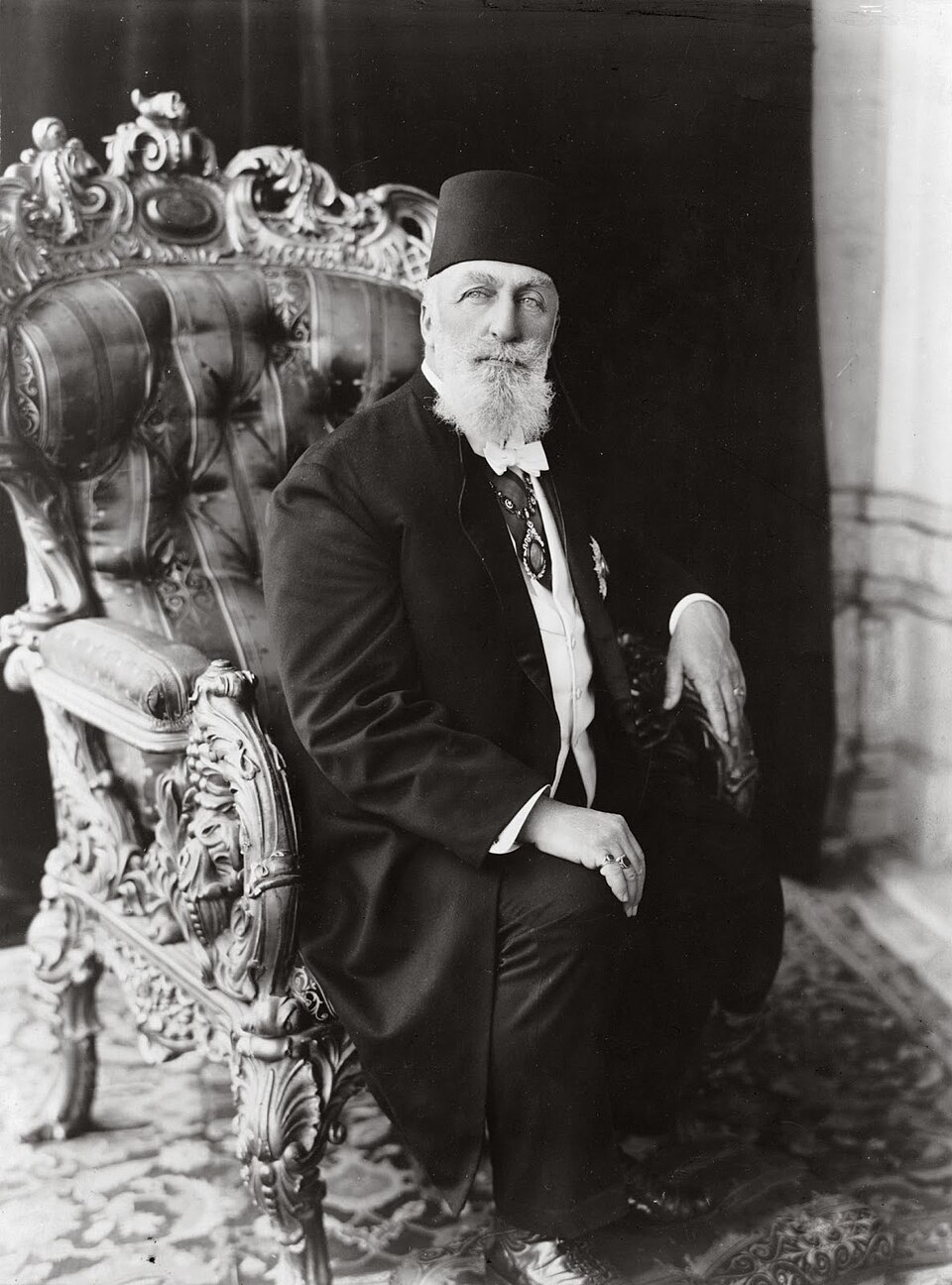
On March 3, 1924, the Turkish Grand National Assembly abolished the Caliphate, removing the last Ottoman Caliph, Abdülmecid II, and sending him into exile.
For Muslims, this was a profound historical turning point. Although the Ottoman Caliphate’s political authority had long been contested, it remained a symbolic connection to centuries of Islamic governance.
Its abolition ended the last widely recognised Sunni caliphal institution, triggering debates about Muslim leadership, religious authority and unity across the Muslim world.
New countries, new rulers, new divisions
The Ottoman collapse transformed the Middle East’s political map.
Britain obtained mandates over Palestine and Iraq, while France acquired Syria and Lebanon. Britain also established a separate administration in Transjordan.
The Hashemite family, whose revolt had helped defeat the Ottomans, received monarchies in Iraq and Transjordan.
Faisal, Sharif Hussein’s son, became King of Iraq in 1921 after French forces expelled him from Damascus. His brother Abdullah became ruler of Transjordan. Hussein himself lost the Hejaz to Abdulaziz Ibn Saud, whose conquests helped establish modern Saudi Arabia.
These developments created a regional order dominated by European political and economic influence, with borders and institutions that would have lasting consequences.
Although local rivalries and political movements also shaped events, the conflict gave Britain and France unprecedented power to reshape the region.
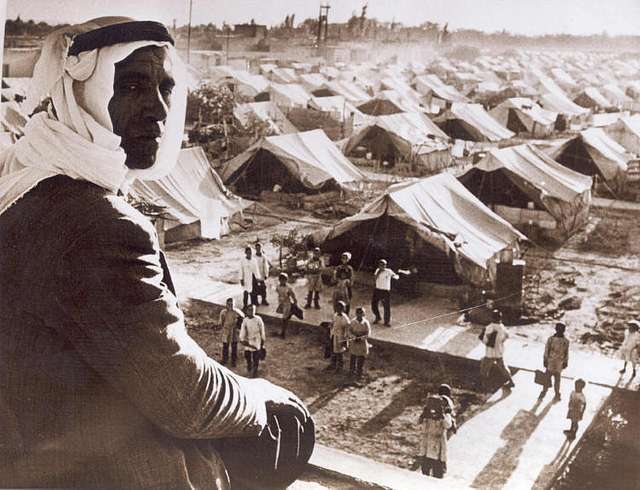
The road to the Nakba
In Palestine, British rule created the conditions for an increasingly bitter struggle between Palestinian Arabs and Zionists.
Jewish immigration increased during the Mandate, particularly as European antisemitism intensified and Nazi persecution drove Jews to seek refuge. Zionist institutions acquired land, established settlements and developed political and military organisations.
Palestinian Arabs demanded independence and opposed a process they feared would dispossess them in their own homeland.
Tensions escalated into repeated violence, including the Palestinian Arab Revolt of 1936–1939.
Armed Zionist organisations such as Haganah and Irgun grew in importance, with Irgun attacking Arab civilians and later British targets.
The conflict culminated in the 1947 United Nations partition proposal, the 1948 war and Israel’s establishment.
During the Nakba, approximately 700,000 Palestinians fled or were expelled, while hundreds of Palestinian towns and villages were depopulated.
Although the Nakba occurred three decades after the First World War, the Balfour Declaration and British Mandate were crucial chapters in the history that preceded it. Their consequences remain central to the Palestinian question today.
What should Muslims remember on November 11?
For Britain, November 11 marks the armistice that ended fighting on the Western Front in 1918. For Muslims, however, the conflict’s end ushered in a profoundly different political era.
The Ottoman Empire disappeared. The Caliphate was abolished. European colonial powers took control of much of the Middle East. Palestine came under British rule, with the Balfour Declaration shaping its future.
These were connected consequences of a global conflict in which Muslims fought on different sides, often under colonial rule.
For Muslims, the First World War’s legacy is not confined to the battlefields of 1914–1918. It is written into the Middle East’s political map — and into conflicts whose consequences are still being felt today.