


As outrage grows over the planned U.K. visit of RSS chief Mohan Bhagwat, many are asking who exactly are the RSS? From its origins opposing Muslim independence movements in colonial British India to its role in the systematic persecution of Muslims today, 5Pillars traces the history of one of the world’s most powerful and dangerous far-right organisations.
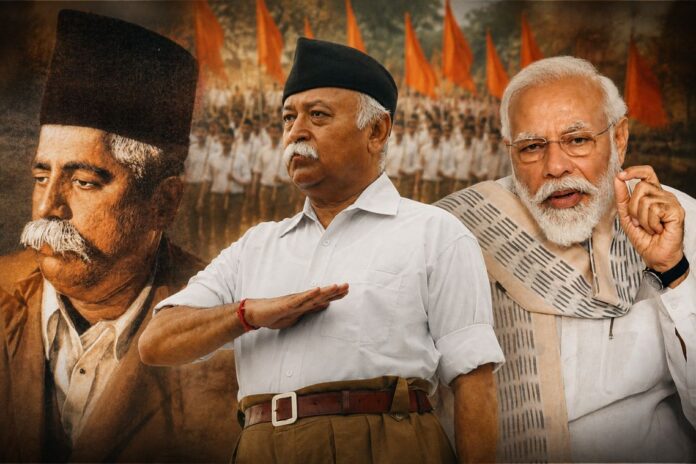
The Rashtriya Swayamsevak Sangh (RSS) is a far-right Hindu nationalist paramilitary organisation widely accused by humanitarian and religious freedom organisations of persecuting Muslims and other non-Hindu minorities in India.
It is also considered one of the largest far-right networks in history.
The leader of the RSS, Chief Mohan Bhagwat, is set to visit the U.K. this week after hosting a public event at New York City’s Madison Square Garden on Saturday afternoon.
A London-based advocacy organisation has already submitted a formal dossier to Home Secretary Shabana Mahmood on August 25, calling for Bhagwat to be excluded from Britain on the grounds that his presence is not conducive to the public good.

The Mayor of London, Sadiq Khan, is also facing calls to condemn the Hindu nationalist figure ahead of his scheduled U.K. tour, which critics say will foster intolerance and discrimination across the diverse streets of Britain.
Despite this, many British Muslims may not know the controversial history or the depth of the RSS’s hateful rhetoric, built on fascist Hindutva nationalist ideals.
Subscribe to our newsletter and stay updated on the latest news and updates from around the Muslim world!
Nazi inspiration — the history of the RSS
Formed in 1925, the RSS is a fascist Hindu nationalist organisation with more than five million members across the world.
Its primary aim is to advance the vision of “Hindutva,” a political project which seeks to establish India as an ethnically homogeneous Hindu supremacist state.

One of the earliest proponents of the RSS’s ideological positions was M.S. Golwalkar, who took inspiration from Nazi Germany’s fascism, which sought to ethnically cleanse Europe of Jews on a mass scale.
“[The Nazis] are a good lesson for us in Hindustan to learn and profit by,” Golwalkar said when referring to India’s Muslims.
In his 1939 book We, or, Our Nationhood Defined, Golwalkar wrote: “To keep up the purity of its race and culture, Germany shocked the world by her purging of the country of the Semitic races – the Jews. Race pride at its highest has been manifested here… a good lesson for us in Hindustan to learn and profit by.”
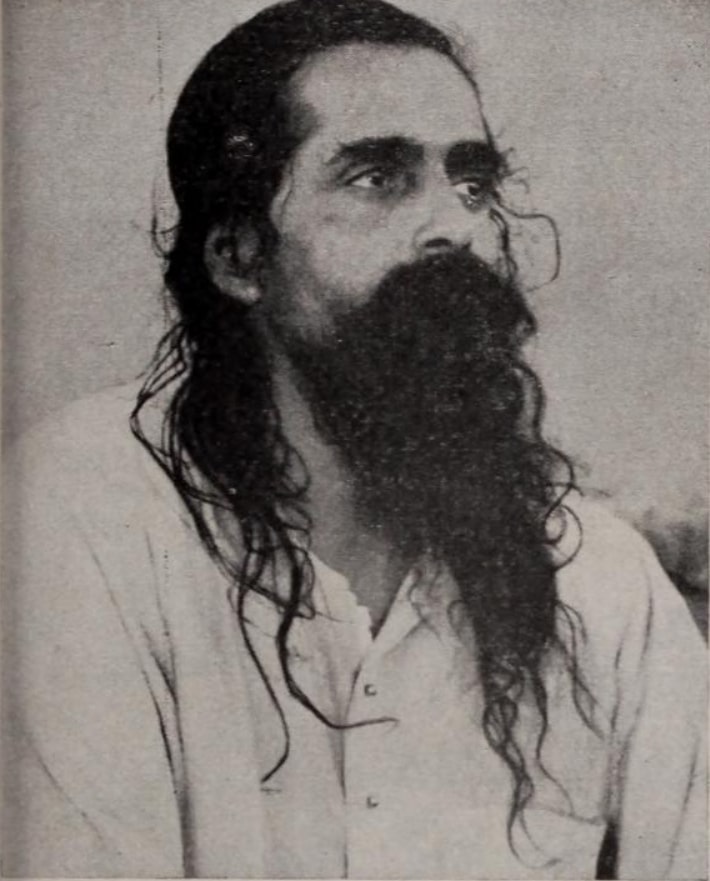
The RSS has since officially disowned the book.
Another prominent early member of the RSS, V.S. Savarkar, viewed the Zionist project in Palestine as an exemplary ideology built on exclusion that India could replicate.
The Bharatiya Janata Party (BJP), India’s ruling party, was born out of RSS ideology, with current Indian Prime Minister Narendra Modi being a member of the organisation.
History during British colonial rule
The paramilitary group’s founder, K.B. Hedgewar, had opposed the widespread support for the Khilafat Movement (1919–24) in India at the time.
The Khilafat Movement was a pan-Islamic project led by Indian Muslims which aimed to pressure the British colonial authorities into ensuring the protection of the rapidly crumbling Ottoman Caliphate.
Hedgewar viewed the Hindu-Muslim unity of the time as potentially dangerous and threatening to the political goal of an independent Hindu Indian ethnostate.
Therefore, Hedgewar became fixated on the need to create a “Hindu nation.”
The RSS was thus formed in 1925 as a force of upper-caste Brahmin Hindus who wanted independence and sought to protect Hindu political, cultural, and religious interests.
To this day, all RSS chiefs have been Brahmins — the most dominant and prestigious Hindu caste.
The RSS has been described as having been born out of anti-Muslim sentiment and a desire to maintain Brahmanical dominance over India.
RSS and minority persecution
The organisation has been banned by Indian authorities on three separate occasions: following Mahatma Gandhi’s assassination in 1948, during India’s Emergency in 1975, and following the demolition of the Babri Masjid in Ayodhya in 1992.
Dr Muzzammil Ayyub Thakur, executive director of the Kashmir Centre, accused the RSS of having a “long record of majoritarian politics, anti-minority mobilisation and association with some of the darkest episodes of communal violence in modern India.”
The United States Commission on International Religious Freedom (USCIRF) has reported multiple violent attacks against religious minorities in India at the hands of the RSS, including against Christians, Dalits, Muslims and Sikhs.
The Council on American Islamic Relations (CAIR) partnered with the USCIRF to urge the U.S. to sanction members of the RSS.
“Religious freedom conditions in India continue to deteriorate as violence and incitement are frequently used to target religious minority communities,” said Chair Asif Mahmood.
Under Prime Minister Modi, India’s ruling BJP party has continued to enforce policies which align with the RSS’s Hindutva ideology.
This has included government-backed acts which repress or target religious minorities beyond its borders, in neighbouring countries and even as far as North America and Europe.
Vigilante violence has also grown in recent years against Muslims and Christians, with BJP authorities failing to punish such acts or hold vigilante groups accountable.
Rewriting the RSS’s tarnished image
Despite this, RSS leader Bhagwat most recently rallied behind unitary slogans at the New York event last week, such as “One World, One Humanity,” as a focus on interfaith relations seemed to dominate the stage.
Bhagwat was on stage alongside Jewish rabbis, Muslim imams and other faith leaders.
Bhagwat also addressed the crowd at the summit, stating that “if any Hindu thinks there should be no Muslims in India, he will not remain Hindu.”
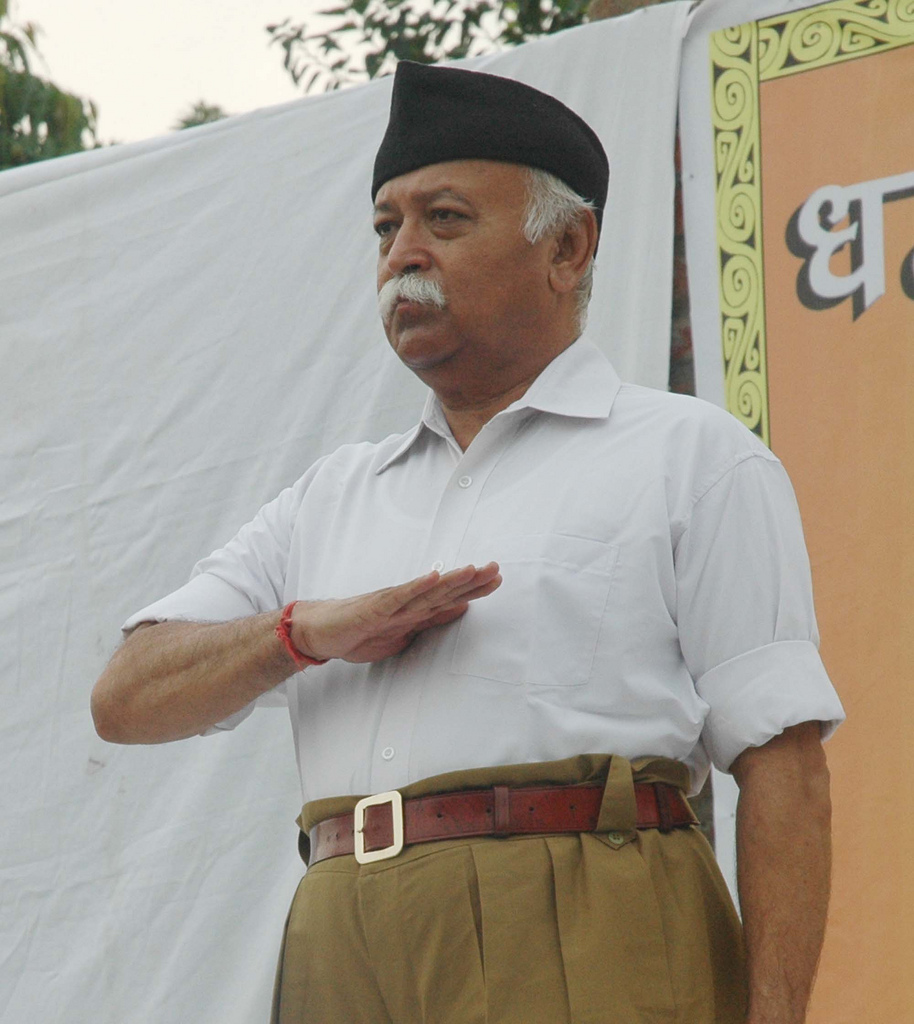
Despite this “universal” branding, attendees of the New York event had to undergo identity-based vetting to gain entry.
This included listing an affiliated Hindu temple or organisation along with a unique five-character code for that organisation, an attendee from Middle East Eye reported.
The shift towards interfaith harmony may well represent a positive development for the RSS given its controversial history, but the human rights watchdog Genocide Watch has said that India is in the early stages of an anti-Muslim genocide.
They credited the RSS with arming and training Hindu groups to commit organised mob violence.
Universal slogans may be one thing, but the reality on the ground in India paints a very different picture to Bhagwat’s statements.