


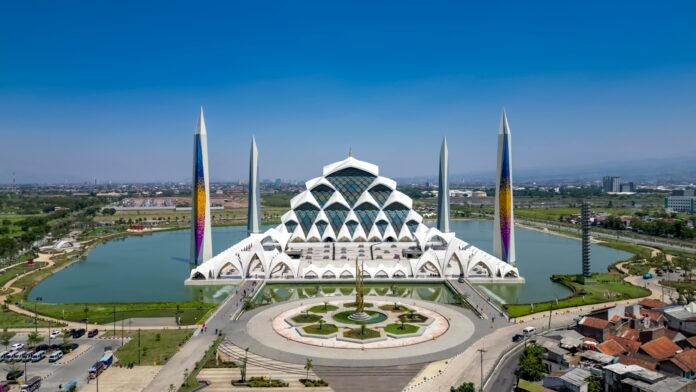
Indonesia is celebrating 81 years of independence today, but for many Muslims outside Southeast Asia the world’s largest Muslim-majority country remains surprisingly unfamiliar.
More Muslims live in Indonesia than in Saudi Arabia, Egypt, Iraq and Syria combined. Around nine in ten of its more than 280 million inhabitants are Muslim.
Yet Indonesia is not an Islamic state. It does not implement Shari’ah nationally, Islamic parties have never succeeded in taking control of the country through elections, and its constitution is built around Pancasila — a national ideology intended to unite Muslims with Indonesia’s Christian, Hindu, Buddhist and other minorities.
Nevertheless, Islam is deeply embedded in Indonesian society. It shapes education, family life, charity, politics and public morality, while some of the largest Islamic organisations anywhere on earth operate enormous networks of schools, universities, hospitals and mosques.
Indonesia has therefore spent its entire independent history wrestling with a fundamental question: what role should Islam play in a country overwhelmingly populated by Muslims but which was deliberately not established as an Islamic state?

How Islam reached Indonesia
Islam arrived in the Indonesian archipelago gradually rather than through a single military conquest.
Subscribe to our newsletter and stay updated on the latest news and updates from around the Muslim world!
Muslim merchants had been travelling the maritime trading routes linking Arabia, Persia, India, Southeast Asia and China for centuries, and Muslim communities became increasingly established around important Indonesian ports.
From roughly the 13th century onwards, Islam spread substantially through trade, scholarship, intermarriage and the work of Muslim preachers and Sufi networks.
Muslim sultanates emerged across the archipelago, including powerful states in Aceh, Java and the Moluccas.
By the time European colonial powers established themselves in the region, Islam had become an integral part of the identity of large sections of the population. It also became intertwined with resistance to foreign rule.
During the Dutch colonial period, Muslim scholars and movements participated in resistance against European domination, while organisations such as Sarekat Islam became important vehicles for indigenous political mobilisation in the early 20th century.
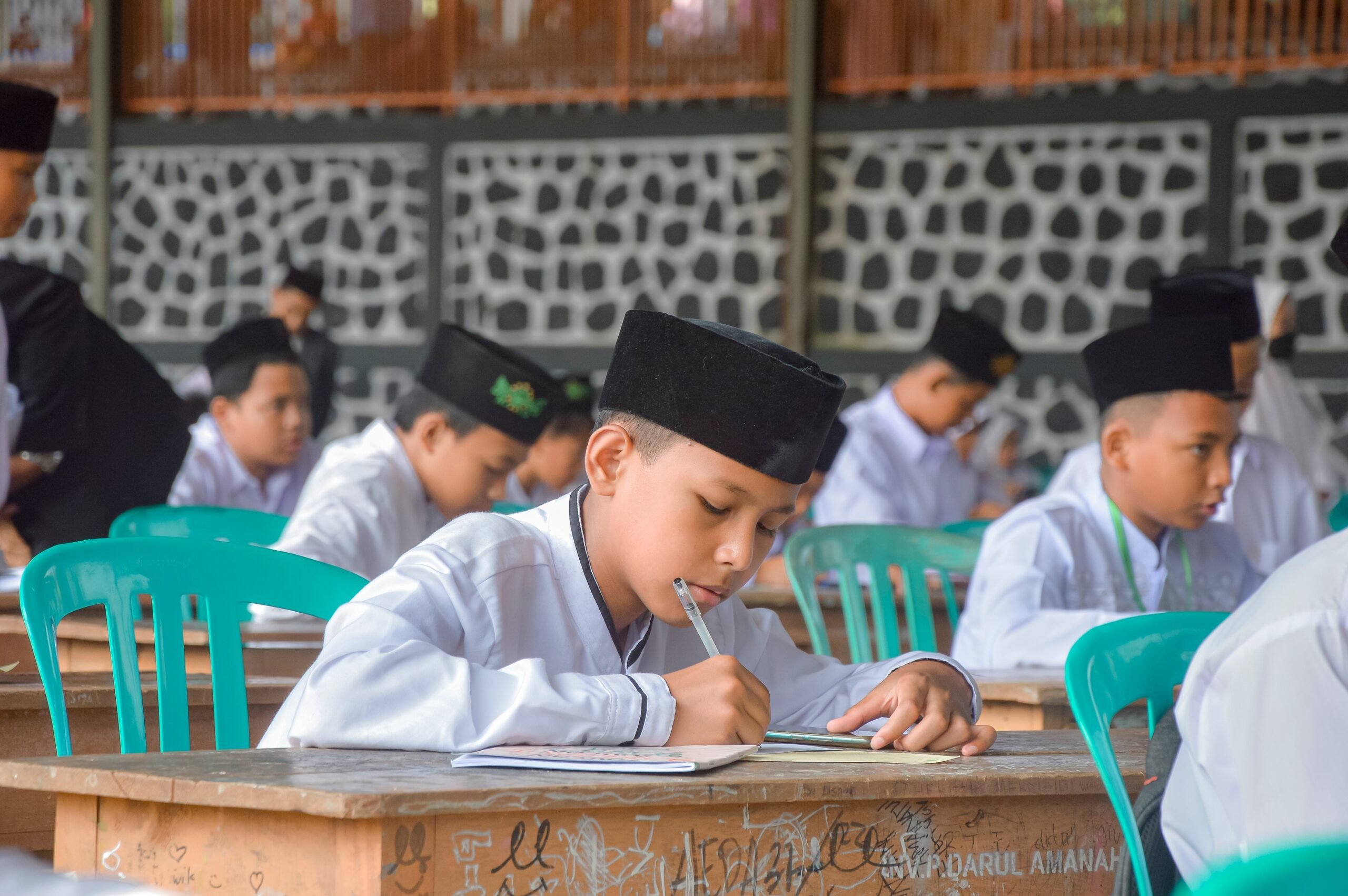
Two organisations established before independence would become particularly important – Muhammadiyah, founded in 1912, promoted Islamic reform, education and social welfare; and Nahdlatul Ulama, founded in 1926, emerged from Indonesia’s traditional Sunni scholarly and pesantren (Islamic boarding school) culture.
Both would eventually develop into enormous social movements and remain central to Indonesian Islam today.
Pancasila or Islam?
The question of Islam’s political role came to a head as Indonesia prepared for independence in 1945.
Muslim nationalists argued that Islam should have an explicitly recognised position in the new state, while secular or religiously neutral nationalists favoured a broader national identity capable of encompassing the entire archipelago.
The resulting compromise became one of the defining moments of Indonesian history.
An early constitutional agreement known as the Jakarta Charter contained wording requiring Muslims to observe Islamic law. But the crucial provision was removed from the final Constitution amid concerns about the reaction of non-Muslim regions and the unity of the newly established country.
Instead, Indonesia adopted Pancasila. Its first principle is belief in one God, followed by principles concerning humanity, national unity, democracy and social justice.
Indonesia therefore did not become an Islamic republic, but neither was religion excluded from government.
Indonesia did not adopt the Western model of separating religion from public life. Instead, it created a state in which religion was officially recognised and institutionally supported without making Islam the constitutional basis of government.
Islam enters democratic politics
But the argument was not settled in 1945. Indonesia’s first national parliamentary election in 1955 demonstrated both the enormous political power of Islam and its internal diversity.
Masyumi, representing much of the modernist Islamic constituency, became one of the country’s largest parties.
Nahdlatul Ulama had separated from Masyumi and contested the election independently, becoming another major political force.
The two principal Islamic parties together won a substantial share of the national vote but neither they nor the wider Islamic bloc secured sufficient support to transform Indonesia into an Islamic state.
The constitutional debate resurfaced during the 1950s as representatives attempted to agree on a permanent constitution.
Islamic politicians again advocated Islam as the foundation of the state, while nationalists defended Pancasila. Neither side obtained the necessary majority.
President Sukarno eventually dissolved the Constituent Assembly in 1959 and restored the 1945 Constitution, effectively ensuring that Pancasila rather than Islam would remain Indonesia’s constitutional foundation.
Political Islam subsequently came under increasing pressure. Masyumi was banned under Sukarno in 1960, and the country’s political system became increasingly authoritarian.
Islam under Suharto
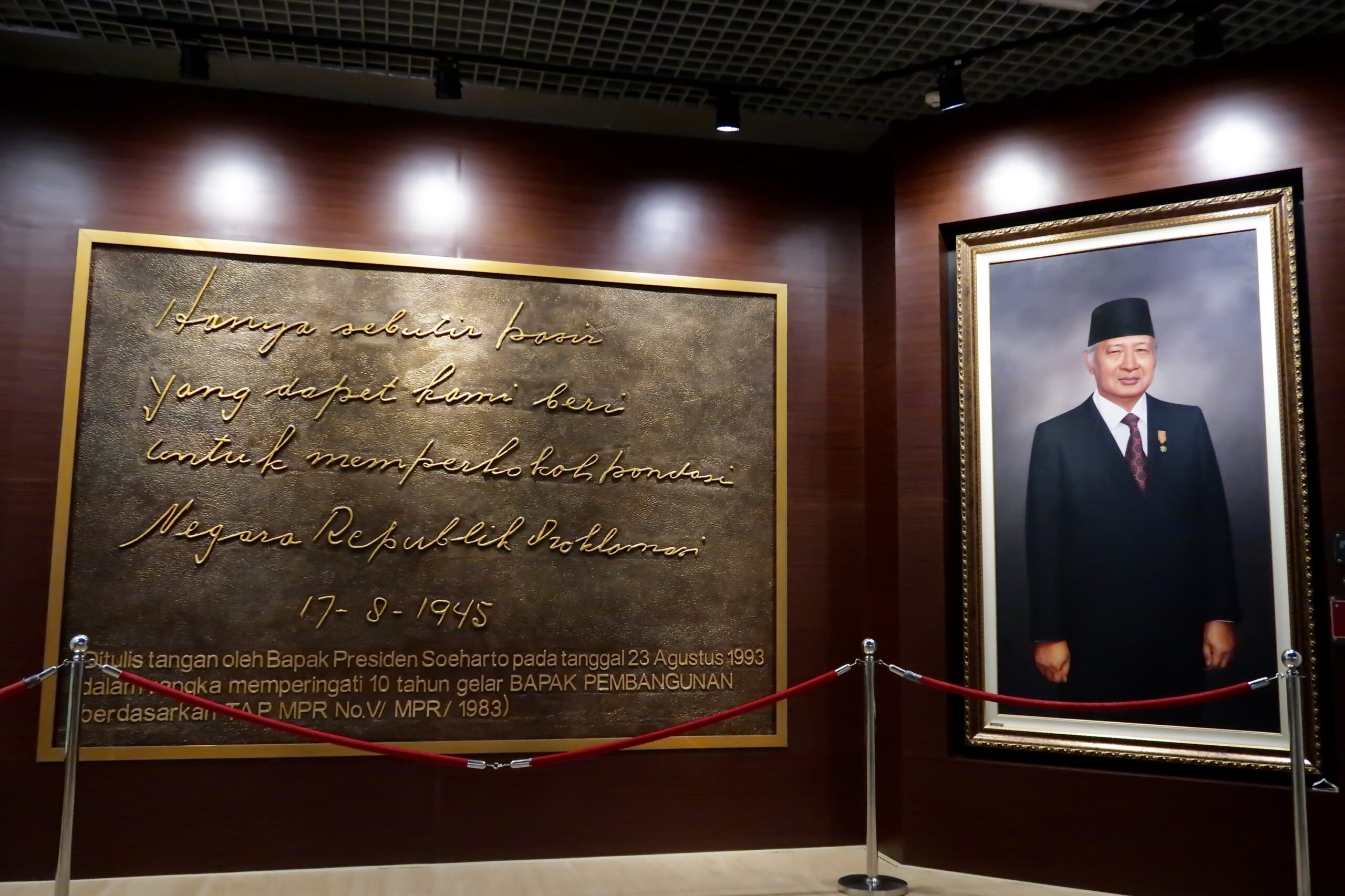
The position of political Islam became even more complicated after General Suharto emerged as Indonesia’s ruler following the turmoil and mass killings of 1965-66.
Suharto’s “New Order” government was intensely anti-communist but initially deeply suspicious of political Islam as an alternative source of power.
Islamic political organisations were restricted and eventually forced into a single approved political party, the United Development Party.
Pancasila was promoted aggressively as the supreme national ideology.
But Islam did not disappear. In many ways it moved away from the struggle to create an Islamic state and deeper into Indonesian civil society.
Nahdlatul Ulama and Muhammadiyah expanded their educational, religious and social activities. Mosques, Islamic schools, charities, universities and organisations became increasingly important parts of everyday Indonesian life.
By the later years of Suharto’s rule, the regime itself began moving closer to Muslim organisations and elites.
Islam after dictatorship
Suharto was forced from office amid mass protests and economic collapse in 1998, beginning Indonesia’s Reformasi era.
Democracy opened the political system once again. Islamic parties were free to organise, Islamic activism flourished and previously suppressed debates about Shari’ah returned to public life.
Yet something significant had changed since the 1950s. The mainstream of Indonesian Islam had largely accepted the existence of the Pancasila state.
Rather than campaigning primarily to abolish the existing system and establish an Islamic republic, most Muslim political actors sought influence within Indonesia’s democratic framework.
Yet Islamic parties compete in elections. Politicians appeal openly to Muslim voters. Religious scholars exercise considerable social influence. Questions concerning Islamic morality, religious minorities, blasphemy and the place of Shari’ah remain politically sensitive.
But Islamic parties have never won an Indonesian parliamentary election and Indonesia’s Muslims frequently vote for nationalist parties rather than parties explicitly defined by Islam.
Aceh and Shari’ah
There is one particularly important exception to Indonesia’s national model.
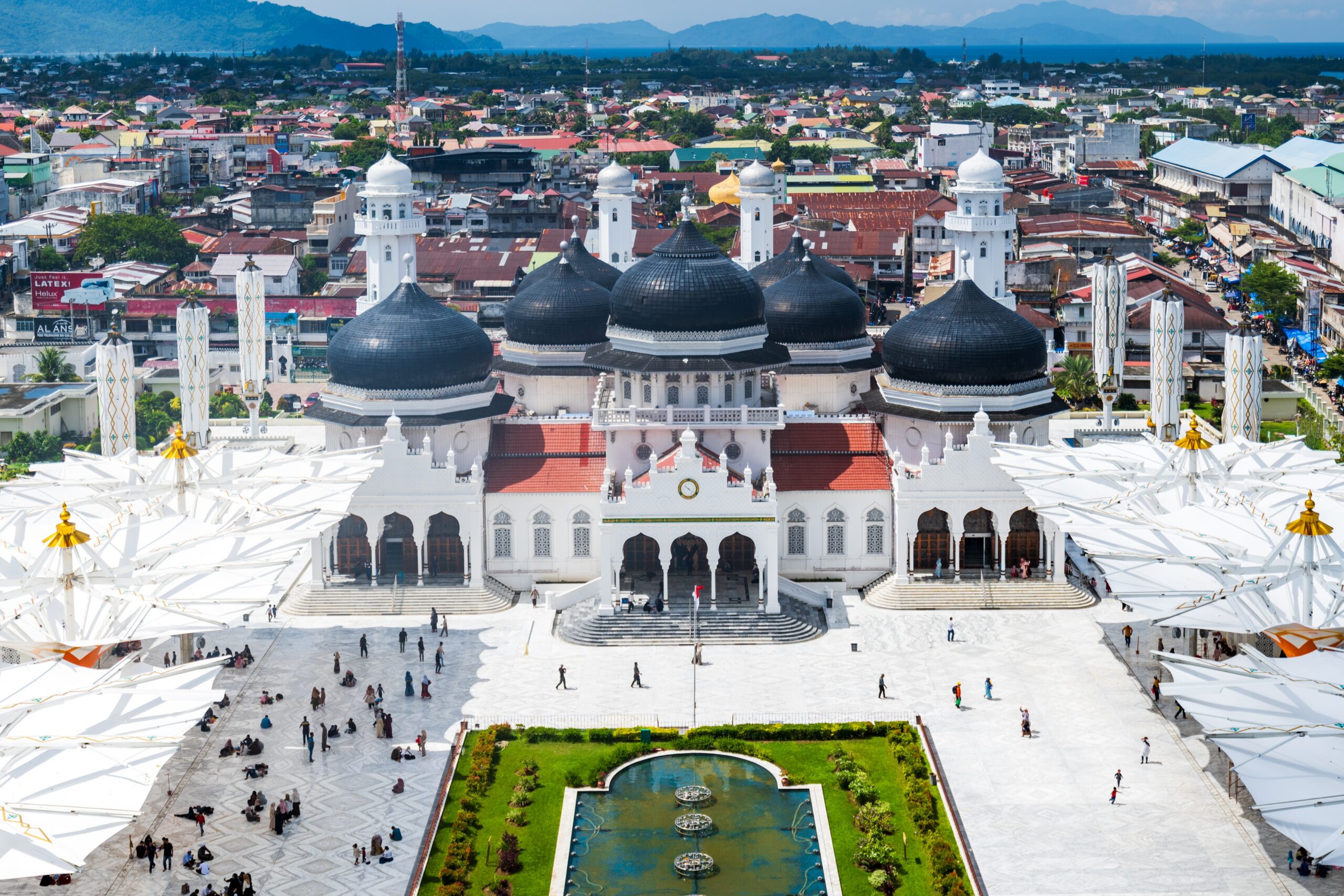
Aceh, at the northern end of Sumatra, has a particularly strong Islamic identity and a long history of resistance to outside rule.
Following Indonesia’s democratic transition and years of conflict between Acehnese separatists and the central government, the province was granted extensive autonomy.
Aceh subsequently received powers to implement Islamic law and established Shari’ah courts and enforcement institutions.
It remains the only Indonesian province operating such a comprehensive system.
For Indonesian Muslims, Aceh consequently represents one possible interpretation of how Islam and government can interact — but it is not the system followed by the overwhelming majority of the country.
The world’s Muslim giant
So 81 years after independence, Indonesia is neither an Islamic republic nor an explicitly secular republic.
Its constitution does not make Shari’ah the law of the land, yet its government administers religious affairs, facilitates the Hajj, recognises Islamic courts in certain matters and supports religious education.
Its explicitly Islamic parties have never dominated national politics, yet some of the largest Islamic organisations on earth exercise enormous influence over society.
And although attempts to establish an Islamic state failed, Islam itself has hardly been pushed to the margins.
It remains visible in Indonesia’s mosques and pesantren, its politics and universities, its charities and hospitals, its family life and national debates.