





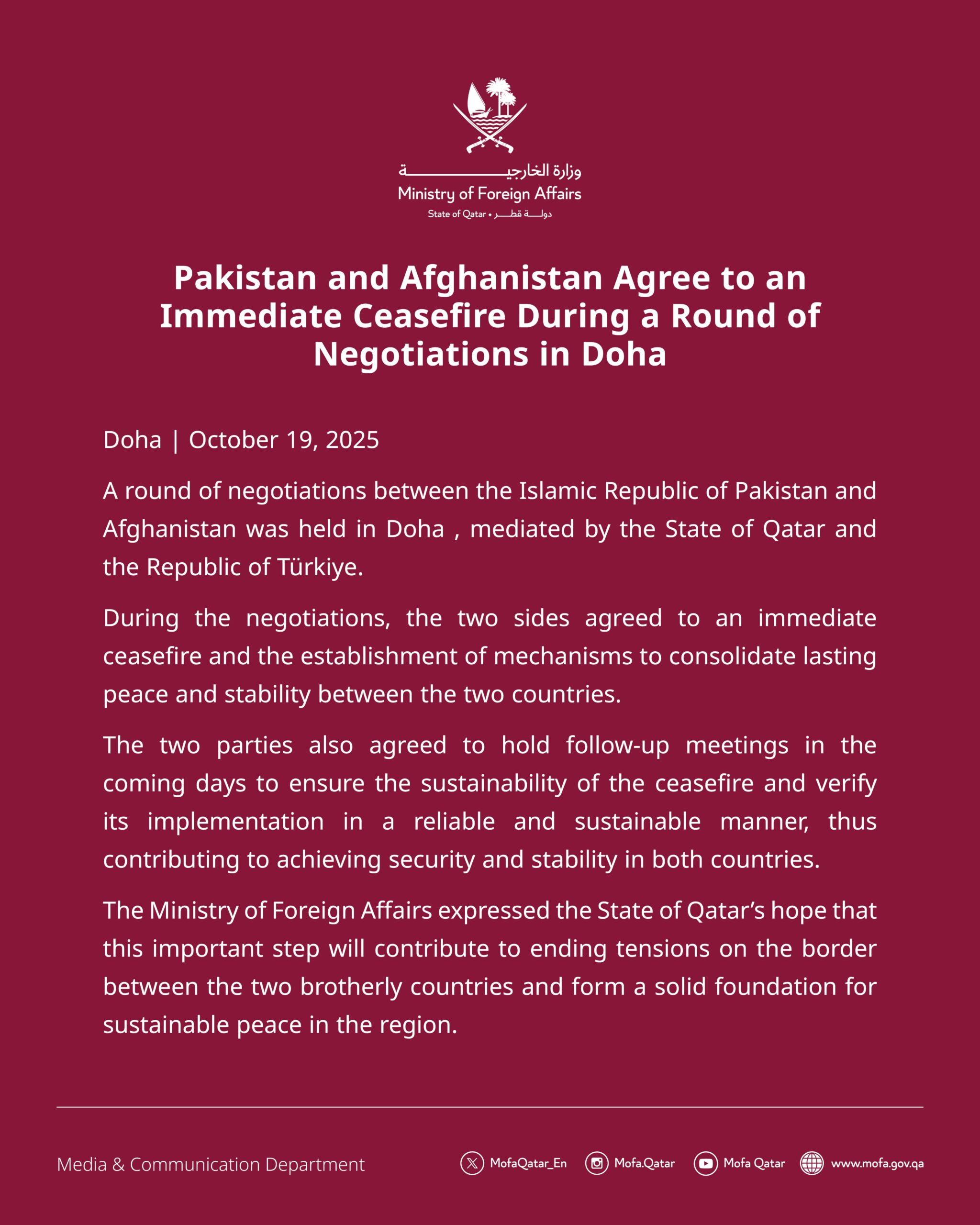
Pakistan and Afghanistan have agreed to an immediate ceasefire after a week of deadly border clashes, marking the most serious escalation since the Taliban took power in Kabul in 2021.
Talks mediated by Qatar and Turkey in Doha brought both sides to the table after days of fierce fighting. Pakistan’s Defence Minister Khawaja Muhammad Asif announced on X that the truce “has been finalised” and that both sides will meet again on October 25 in Istanbul to discuss “detailed matters”.
The spokesman for the Islamic Emirate of Afghanistan (IEA), Zabihullah Mujahid, confirmed that the parties had agreed on a “complete and meaningful ceasefire.” Qatar’s foreign ministry said the upcoming meetings would aim “to ensure the sustainability of the ceasefire and verify its implementation in a reliable and sustainable manner.”
Border violence and mutual accusations
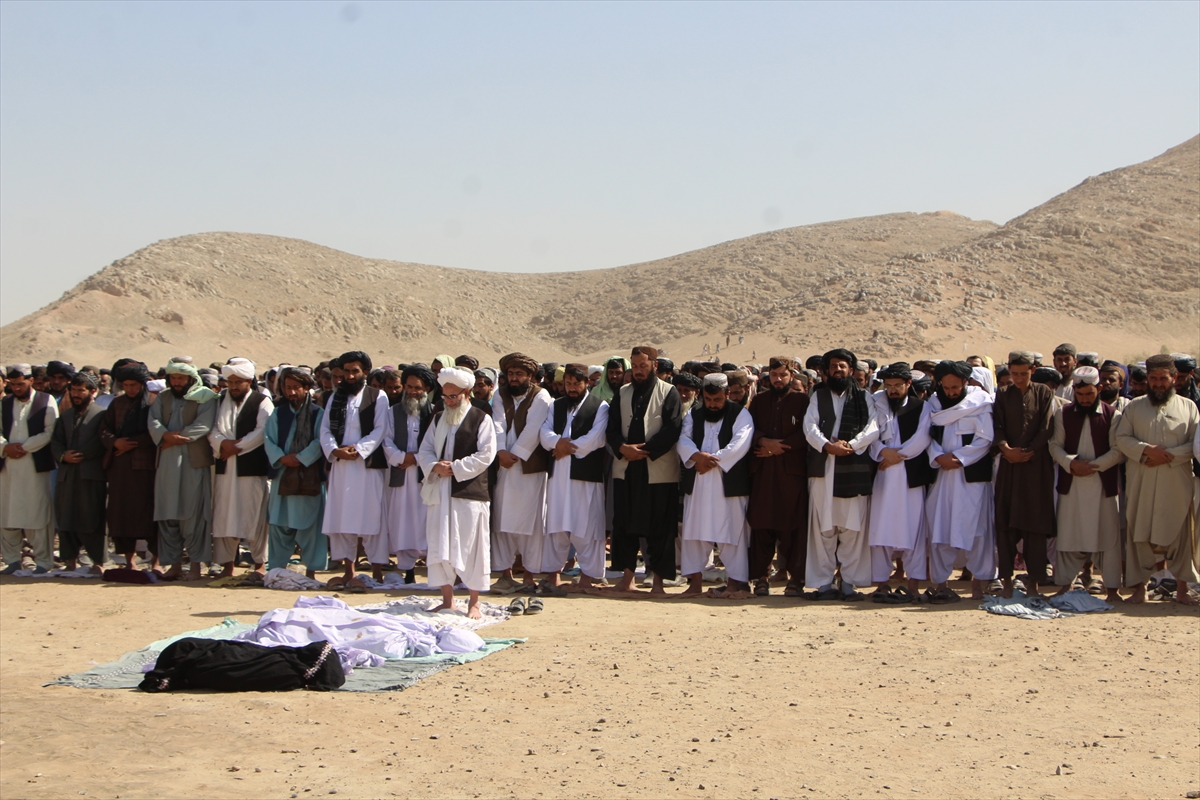
The border clashes, which killed dozens and wounded hundreds, followed Pakistani airstrikes across the 2,600 kilometre frontier. Islamabad accused Kabul of harbouring militants from the Tehreek-e-Taliban Pakistan (TTP) who had stepped up attacks inside Pakistan. The Afghan government denied the accusations, saying Pakistan was spreading misinformation and sheltering ISIS terrorists to undermine Afghanistan’s stability, a claim Islamabad has also rejected.
The violence escalated on Friday when a suicide attack near the border killed seven Pakistani soldiers and injured 13 others. Pakistan’s Army Chief, Field Marshal Asim Munir, said, “The Afghan regime must rein in the proxies who have sanctuaries in Afghanistan and are using Afghan soil to perpetrate heinous attacks inside Pakistan.”
The clashes marked the worst confrontation between the neighbours since 2021, and underscored the growing strain in their relationship. Both sides have traded blame for harbouring militant groups, with each accusing the other of undermining regional stability and security.
Subscribe to our newsletter and stay updated on the latest news and updates from around the Muslim world!
Cricket fallout and airstrike allegations
Despite the ceasefire, tensions persisted as Kabul accused Islamabad of launching new airstrikes inside Afghanistan killing civilians. Afghan officials said the strikes occurred hours after the truce was extended on Friday, targeting residential areas in Paktika province. Kabul claimed that the attacks violated the terms of the agreement reached in Doha.
Afghanistan withdrew from a Twenty20 cricket tri series in Pakistan, citing the deaths of three local cricketers in the strikes. The Afghanistan Cricket Board linked the deaths directly to Pakistani military operations. The move highlighted how the conflict has begun to spill into non-political arenas, affecting sports and cultural exchanges between the two nations.
Pakistan’s Information Minister Attaullah Tarar rejected the accusations, saying the strikes had targeted “verified” militant camps and not civilians. He said more than 100 militants had been killed in recent operations, many of them belonging to a group responsible for the deadly suicide attack on Friday. However, 5Pillars could not independently verify the figures or the nature of the targets.
Causes behind the latest clashes
The clashes erupted after a series of explosions in Kabul and Paktika province. Afghanistan accused Pakistan of violating its sovereignty, while Islamabad said it was responding to a surge in cross border attacks by the TTP. Pakistan claims that the group operates freely from Afghan territory under IEA protection, though Kabul has repeatedly denied this.
A Pakistani security official told Reuters that the recent airstrikes were intended to target TTP leader Noor Wali Mehsud, who was believed to be travelling in the area at the time.
Once strategic allies, Pakistan and the Afghan Taliban have become increasingly adversarial since 2021. Islamabad had initially welcomed the Taliban’s rise to power, hoping for cooperation on border security and trade. But repeated attacks blamed on Afghan based militants and the IEA’s refusal to act against them have strained diplomatic and security relations.
Pakistan’s new deterrence strategy
Analysts say Pakistan is signalling a new deterrence doctrine, warning that any assault from Afghan territory will provoke a direct and forceful response.
According to the Centre for Research and Security Studies, an Islamabad based think tank, more than 2,400 Pakistani security personnel have been killed in 2025 alone, making it the country’s deadliest year in a decade. Analysts argue that Islamabad’s patience has worn thin after years of TTP attacks and broken ceasefires.
Defence experts say Pakistan’s airstrikes within Afghan territory are part of a broader shift in military doctrine.
They believe Islamabad is seeking to establish clear red lines, using military pressure to deter both the Afghan government and affiliated armed networks. The strikes, while controversial, signal a willingness to escalate if Kabul fails to curb the TTP’s activities in its territory.
The recent Pakistan-Afghanistan border clashes have drawn concern from regional powers, urging both sides to exercise restraint and prioritise dialogue to prevent escalation. Iran, Qatar, and Saudi Arabia all called for diplomacy to maintain regional stability and security.
India has not commented, though Pakistan is wary of New Delhi’s engagement with the IEA, some observers note.
While the ceasefire offers a temporary reprieve, the road to lasting peace remains uncertain. Mutual distrust, border insecurity, and the presence of militant networks continue to challenge relations between Islamabad and Kabul, two neighbours bound by history, culture and faith, yet divided by foreign powers, non-state actors and mutual suspicion.