As Washington prepares for possible attack, Iran says it is prepared for both war and diplomatic engagement, insisting Tehran will not negotiate under pressure.
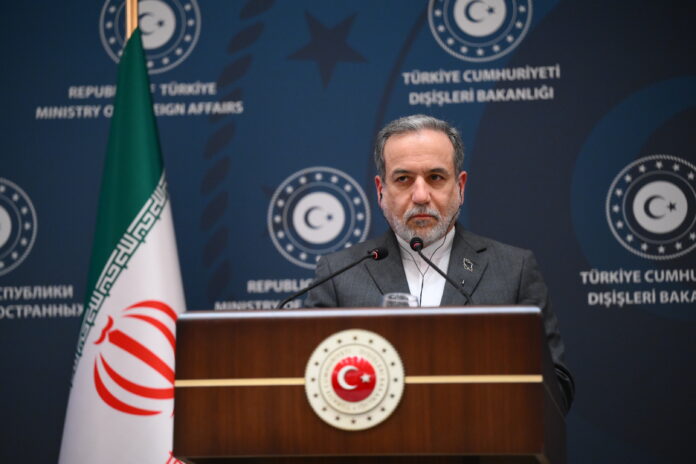
Iranian Foreign Minister Abbas Araghchi made the remarks during a joint press conference with his Turkish counterpart in Ankara, stressing that Tehran remains keen on talks provided they are conducted on equal footing.
He said Iran has never rejected diplomacy, but will not submit to imposed terms or coercion from foreign powers. According to Araghchi, any dialogue must be rooted in mutual respect and shared interests, not threats or intimidation.
He added that the United States has attempted to pursue negotiations through intermediaries, but warned that talks cannot take place while military pressure continues to escalate.
Araghchi also delivered a firm warning regarding potential military escalation. He said Iran is as ready for war as it is for negotiations, adding that the country is even more prepared than it was before the 12-day war in June, when the United States and Israel carried out strikes against Iran while indirect nuclear talks were underway.

He warned that any future conflict, particularly one involving direct US participation, would likely extend beyond a bilateral confrontation and engulf the wider region.
US President Donald Trump has admitted that Iran wants to make a deal rather than face military action, but has insisted that its missile and defence systems will “never” be up for negotiation.
“I can say this, they do want to make a deal,” the US president told reporters at the White House on Friday when asked about a build-up of forces in the Gulf, without providing details.
Subscribe to our newsletter and stay updated on the latest news and updates from around the Muslim world!
Trump had already warned Tehran on Wednesday that time was “running out” to negotiate a deal on its nuclear programme after a large US naval fleet had gathered near the country.
Experts remain divided on whether Trump will follow through on threats to attack Iran or is simply using the armada build up as a scare tactic to pressure Tehran into negotiating on Washington’s terms.

Regional dialogue and mixed messaging
Araghchi said his discussions with Turkish Foreign Minister Hakan Fidan were positive and constructive, highlighting the long-standing relationship between Iran and Turkey.
He described the two countries as neighbours and friends who have supported each other during both stable and difficult periods. He added that Tehran welcomes any initiative that promotes peace, stability, and reduced tensions across the region.
Furthermore, he noted that Iran supports Turkey’s push for regional dialogue and is ready to participate in talks involving regional states aimed at de-escalation and long term stability.
He also accused Israel of pursuing destabilising strategies designed to weaken regional countries and provoke wider conflict.

Fidan echoed concerns about rising tensions and reiterated Turkey’s opposition to military intervention against Iran. He said Ankara has consistently communicated its rejection of such action to all relevant parties and believes Iran’s internal matters should be resolved peacefully by its own people without foreign interference.
Fidan warned that Israel is attempting to persuade the United States to launch a military attack on Iran, a move he said could severely damage the region’s already fragile stability. He expressed hope that the US administration would act with common sense and avoid being drawn into a wider conflict.
It was reported earlier on that several other Arab states had lobbied Trump not to attack Iran following rising tensions over anti-regime violent protests across the country earlier in January.
However, according to reports, Saudi Defense Minister Prince Khalid bin Salman warned in private briefings in Washington that if US President Trump does not follow through on his threats against Iran, Tehran’s leadership would emerge stronger.
Axios reported Friday, citing multiple sources that Khalid bin Salman, widely known as KBS and a close confidant of Crown Prince Mohammed bin Salman, made the remarks amid rising regional tensions and growing speculation about possible US military action against Iran.