



Economic analyst Najm al-Din challenges the growing narrative that capitalism is dying, arguing instead that it is mutating to survive a multipolar world.
With Canadian Prime Minister Mark Carney appealing to middle powers to counter the dominance of the US following Trump’s reassertion of the Monroe Doctrine, it is tempting to view this rupture in the rules-based order as heralding the demise of capitalism.
In fact, across social media feeds, I have noticed many Muslim activists already writing capitalism’s obituary.
While it is only natural for Muslims around the world and millions in the Global South to be joyful over America’s receding power, the oft-repeated statement that “capitalism is dying” is not borne out by the facts, which contradict the narrative of a systemic collapse.
Hedge funds

Carney’s endorsement of a multipolar world must not be conflated with the dismantling of capitalism. This assumption is due to the erroneous belief that capitalism is exclusively synonymous with transatlantic financial interests.
What we must realise is that global hedge funds and asset-holding conglomerates are not beholden to any country and operate largely outside of the Westphalian nation-state system.
Subscribe to our newsletter and stay updated on the latest news and updates from around the Muslim world!
Simply put, they go wherever the money goes.
That is why they are preparing for the eastward shift in the balance of power, because Asian markets have tremendous potential for long-term capital growth.
The reality is that powerful financial stakeholders have incorporated geopolitical risk into their long-term portfolio construction and are building resilience by diversifying across asset classes and geographies in anticipation of a multipolar future.
But before looking into how they are mitigating against risk, it is important to understand why they are embracing multipolarity.
Multipolarity
For decades, the rules-based order functioned as a framework for US-centric dominance.
While America served as a useful instrument in the projection of globalist power for the transnational private sector, a number of key drivers have encouraged capital outflows, forcing powerful hedge funds to no longer perceive the US as a stabilising global force.
With US debt-to-GDP ratios reaching the highest level since WW2, a transactional foreign policy turning long-standing alliances into liabilities, and the rising prospect of non-dollar payment infrastructures, America’s unsustainable fiscal trajectory and unpredictable foreign policy, coupled with diminishing confidence in the dollar as a safe-haven asset, have induced precautionary behaviour among global elites.

This has caused a surge in appetite for non-US private assets and venture capital, particularly in sectors like energy infrastructure and AI, where huge investments are counterbalancing the negative impacts of Trump’s protectionism.
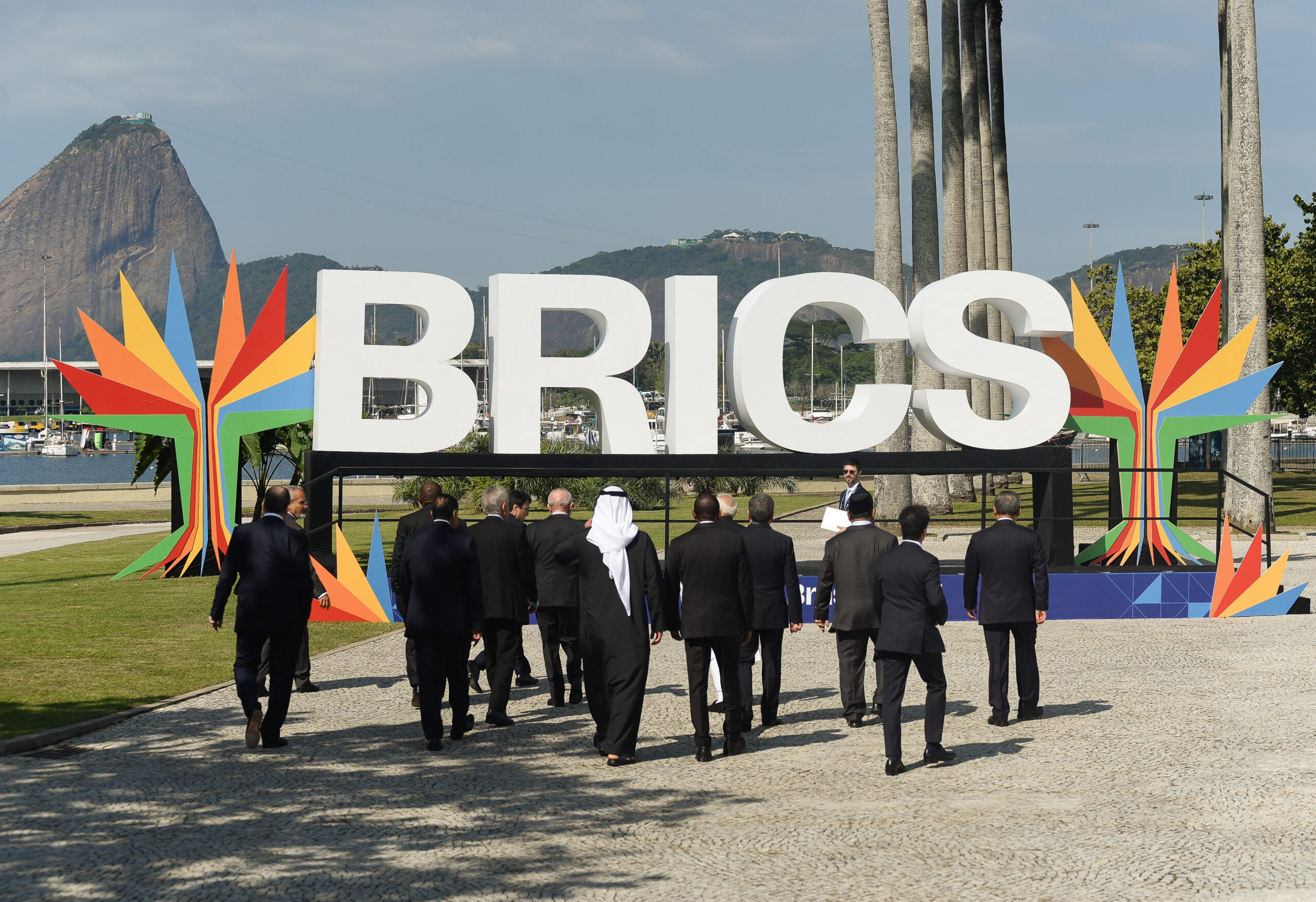
With the expanding economic, demographic, and technological influence of countries like India and China, asset managers are hedging with intergovernmental organisations like BRICS to advance the neo-imperial system.
Though breaking with post-WWII multilateralism, the BRICS+ alliance, Trump’s “America First” policies, and the increasing regionalisation and diversification of global supply chains are primarily geared towards securing resources and markets, thus boosting capitalist interests as opposed to abolishing the market mechanism.
In the coming decade, power will operate in a more fragmented and diverse global landscape. But that does not mean capitalism is being dismantled. Rather, the unipolar order is being reorganised in favour of private financial interests.
Diversifying capital
To capitalise on multipolarity, investment giants are diversifying capital into non-Western markets and commodities, with much of the capital flows moving towards the Global South and Asia, which have been forecast as high-growth regions.
As part of their multi-strategy model, global hedge funds like Bridgewater Associates are expanding into different market cycles by increasing their trading and research in countries like China, while other leading firms are utilising private equity to invest in assets that can manage volatility in diverse global scenarios.
Compared to US equities, Taiwan’s semiconductor industry, India’s manufacturing sector, and China’s AI innovations are being aggressively targeted as frontier markets and are projected to deliver more profitable returns than their transatlantic counterparts.
With GCC monarchies increasingly channelling funds into national strategic interests, global hedge funds are also aligning their macro strategies with Gulf sovereign investment flows, pivoting quickly to capture opportunities in non-Western market cycles, which also include digital infrastructure portfolios in Africa and Latin America.
Therefore, it should not surprise us when British Prime Minister Keir Starmer is signalling a reset in UK-China ties, as European leaders realise that the only way of surviving the seismic shift in the post-war settlement is by proving their utility to the transition being dictated by those who control international capital flows.
Stakeholder capitalism
For a while now, the Davos elites have been waxing lyrical about the dawn of “stakeholder capitalism”, which describes an economic system that shifts its focus from maximising shareholder value to one that serves the long-term interests of employees, communities, and the environment.
It is being dressed as a fairer and greener version of capitalism by prioritising diversity, sustainability, and a shared framework for corporate responsibility, and will require governments to collaborate with a cross-section of the world’s technocrats, billionaire philanthropic foundations, and oligarchs to achieve Sustainable Development Goals (SDGs).
The ESG (Environmental, Social and Governance) investment model will be the lynchpin of the stakeholder capitalism project and will require private capital to be channelled towards sustainable activities that contribute to social and environmental solutions and transformations, alongside a financial return.
As inclusive as it sounds, the system will cede sovereignty to unelected stakeholders and consolidate their control over the means of production, distribution, and ownership, as the world becomes more stratified.
Ultimately, the stakeholder capitalism model is facilitated by a multipolar world order because it can function better when power and decision-making disperse from a single global authority to multiple centres.
Conclusion
If Muslims are under the illusion that Carney’s exposure of the rules-based order and Washington’s decision to no longer play the role of international policeman signal the end of capitalism, then we are in for a rude awakening.
The perception that capitalism is dying fundamentally mistakes a structural transition in the global order for the destruction of the system itself. Rather than facing terminal decline, the exploitative forces behind global capitalism are proving to be highly resilient and adaptive.
Even as traditional frameworks falter, the system is not dying but entering a competitive phase characterised by adaptation to new geopolitical realities and the emergence of new growth drivers like artificial intelligence.
Capitalism will remain vibrant outside of traditional Western-led institutions because the private-sector oligarchs presiding over the shift towards multipolarity are ultimately a non-aligned entity. If they have any loyalty, it would not be to any nation but to their collective aspirations for full-spectrum dominance.
With America’s share of the global economy declining, they are simply parking their capital with those in whom they see the greatest potential for growth projection.
Therefore, far from dismantling the capitalist power structure, the redistribution of global power represents a careful reshuffling of unipolarity, without any real divergence from long-established power dynamics. As Muslims, it is important not to underestimate the adaptive powers of ideologies that are antithetical to Islam, so that we protect ourselves against complacency and are better prepared to foster a resilient community that can navigate and counter the challenges that lie ahead.