



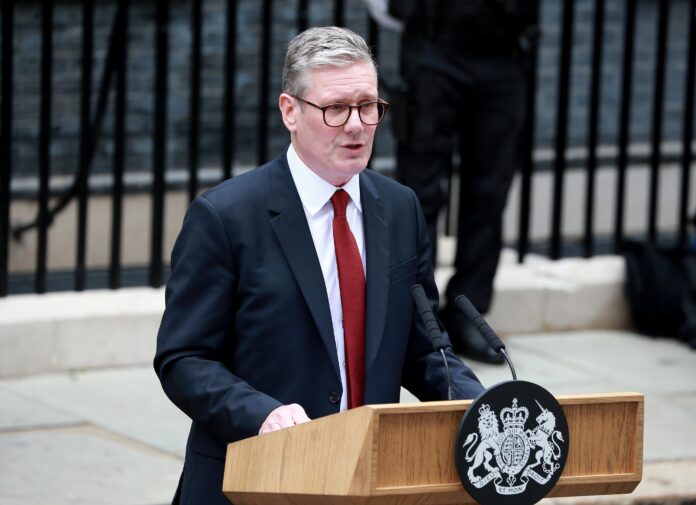
The Labour Party has reportedly scrapped its formal definition of Islamophobia and replaced it with the term “anti-Muslim hate” due to concerns raised over restricting “free speech”.
The Telegraph reports that the move follows concerns within the ruling party that the All-Party Parliamentary Group’s 2019 definition risked restricting “free speech” and could resemble “a blasphemy law.”
Former Conservative minister Dominic Grieve led the review, confirming that both “Islamophobia” and “Muslimness” were removed from the new draft.
Communities Secretary Steve Reed, who has the final say on the definition, previously declared that he would reject any version that “impacted free expression,” insisting: “I’m not going to bring in blasphemy laws by the back door.”
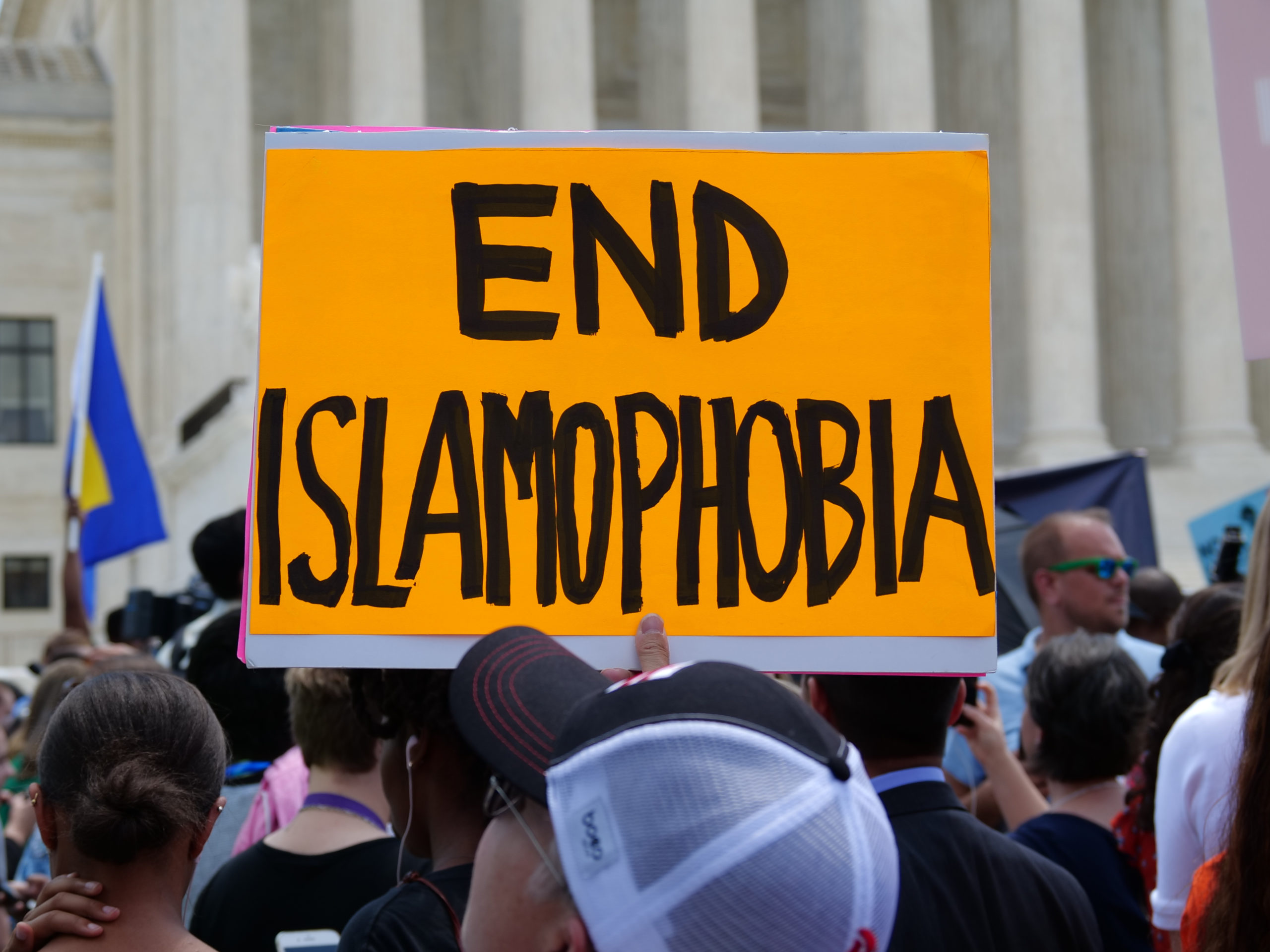
For many Muslims, this episode symbolises the persistent refusal of political elites to recognise Islamophobia as a structural problem. Muslim advocacy groups say that replacing the term waters down its meaning and ignores decades of evidence of systemic bias.

The UK government has not yet commented or confirmed the matter.
Hate crimes at record levels
Subscribe to our newsletter and stay updated on the latest news and updates from around the Muslim world!
While politicians debate semantics, hate crimes continue to surge. Official data show that nearly 40% of all religiously motivated hate crimes now target Muslims, making them the most affected religious group in the country. The Home Office recorded 3,866 anti-Muslim offences in the year ending March 2024 — a 19% rise — while anti-Jewish crimes fell by 18% after a sharp increase the previous year.
Tell Mama, a UK monitoring group on anti-Muslim hate, reported 6,313 incidents in 2024, a 43% increase from 2023, with more than half of all cases occurring offline — including verbal abuse, vandalism, and physical assaults.
The organisation noted that for the first time since its founding, more men than women were targeted — a shift it linked to the spread of stereotypes portraying Muslim men as inherently violent.
Iman Atta, Tell Mama’s director, called for “coordinated action” to protect British Muslims, warning that “as anti-Muslim hate continues to be felt at both a street and online level, our work and support for victims of anti-Muslim hate is needed now more than ever.”
Politics of fear
The rise of Reform UK, the far-right party led by Nigel Farage, has added fuel to this climate of hostility. Once a fringe movement, Reform has surged in popularity and now leads Labour in some polls. The party’s nativist and anti-immigration rhetoric resonates with voters disillusioned by mainstream politics, while its leaders deny stoking prejudice.
Experts warn that Reform’s normalisation of nationalist language has blurred the line between populism and hate. Political scientist Georgios Samaras described the trend as “an epochal shift” in which far-right talking points have entered ordinary political discourse.
On 13 September 2025, this rising anti-Muslim hatred manifested itself on the streets of London. More than 110,000 protesters, mobilised by the notorious far-right Islamophobe Tommy Robinson, joined the “Unite the Kingdom” march — regarded by many analysts as the largest far-right demonstration in British history.

Violence broke out when protesters clashed with police, injuring 26 officers. Multiple keynote speakers attacked Islam as the “real enemy of Europe” that needed “ending” and “fighting,” while describing Muslims as “rapists” and “head choppers.”
Robinson — real name Stephen Yaxley-Lennon — declared it “a cultural revolution in Great Britain,” while figures such as Elon Musk and French politician Éric Zemmour amplified anti-immigrant rhetoric and conspiracy-laden narratives.
The rally underscored how the far right’s racist and hateful ideas — once confined to online echo chambers — are now being voiced on Britain’s streets with an unprecedented scale of confidence and support.
Behind the statistics lies a more troubling cultural shift. From mosques vandalised in British towns to the harassment of Muslim women in public, Islamophobia has evolved from individual prejudice into a wider societal trend. Far-right riots, disinformation campaigns, and the political framing of Muslims as existential threats have fostered a hostile environment that has normalised bigotry.
If the UK government continues to frame Islamophobia as merely an “issue of free speech,” it risks fuelling the very divisions it claims to oppose. Britain faces a choice: confront this rising tide of hate or allow the politics of fear and exclusion to define its future.