

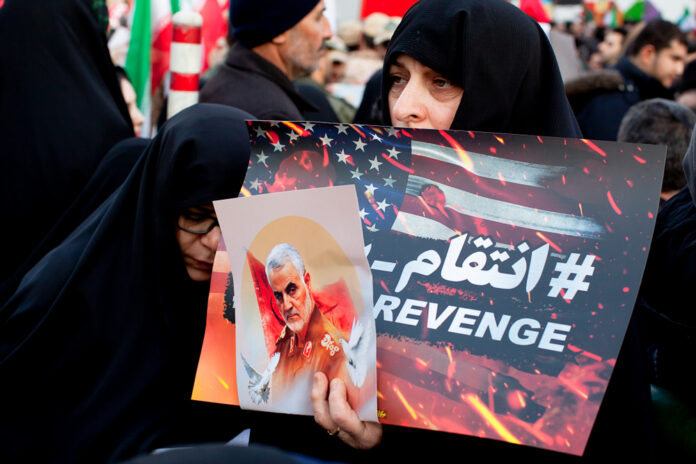
The retaliatory announcement was delivered Sunday during a parliamentary session in Tehran, where Speaker Mohammad Bagher Ghalibaf warned that European governments would bear responsibility for the consequences of what Iran views as a “hostile political decision.”
Earlier this week, the European Union added the Iranian paramilitary group to its terrorist list in response to Tehran’s crackdown on anti-regime protesters in early January.
“Repression cannot go unanswered,” the bloc’s top diplomat Kaja Kallas said, adding the move would put the IRGC – a major military, economic and political force in Iran – on the same level as already designated groups like al-Qaeda and ISIS.
Lawmakers signalled their defiance by appearing in IRGC uniforms inside Iran’s parliament, a coordinated display meant to underline domestic support for the force and reject the European move outright.
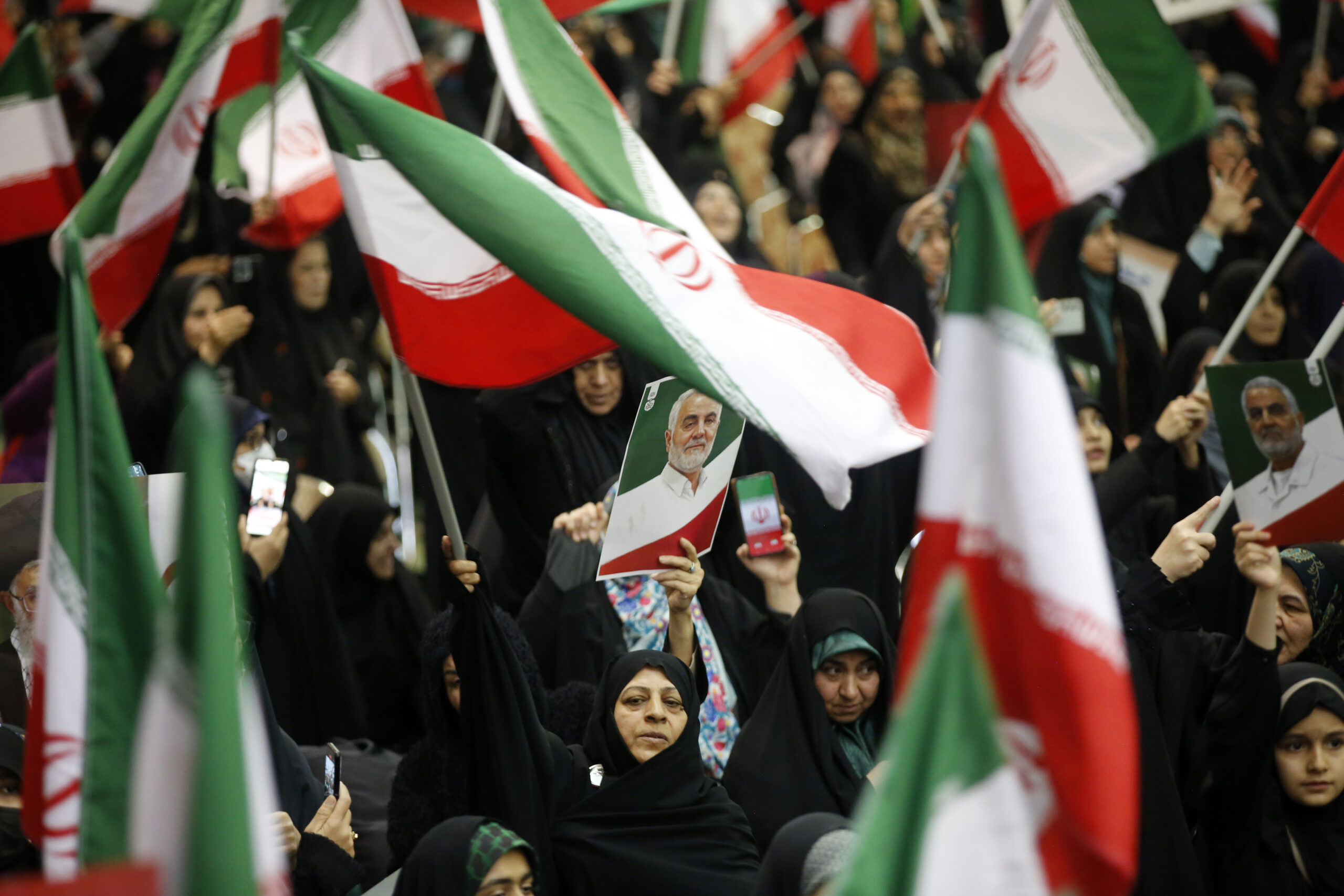
( Fatemeh Bahrami – Anadolu Agency )
Although the IRGC have been condemned for their actions in the West many times over the years, within Iran, the IRGC are seen as a key fighting force which protects the country against threats including Western-backed regime change and terrorist attacks.
For example, the IRGC played a significant role fighting and defeating ISIS in Iraq and setting up and assisting Lebanon’s armed Shia group Hezbollah. However, the IRGC has also faced condemnation from within the Muslim world for the role it played in propping up Bashar Al-Assad’s regime in Syria during the civil war.

Ghalibaf said the decision to proscribe European armies was grounded in existing Iranian legislation. “Under Article 7 of the Law on Countering the Designation of the Islamic Revolutionary Guard Corps as a Terrorist Organisation, the armies of European countries are considered terrorist groups.”
Subscribe to our newsletter and stay updated on the latest news and updates from around the Muslim world!
He added that “the consequences of this action will be the responsibility of the European Union.” Iranian officials have framed the move as a lawful response rather than retaliation, arguing that European governments initiated the confrontation.
Iranian leaders have repeatedly emphasised that the designation would affect how Tehran views future engagement with European states. While no immediate military or economic steps were announced, officials made clear that the classification carries legal and political weight under Iranian law.
Reason for proscription
Europe justified the move to proscribe the IRGC amid allegations of widespread abuses against protesters inside Iran and what the EU considers to be hostile activity conducted by the group in the wider Middle East region.
EU officials said the designation was taken in response to what they described as “repression” by Iranian authorities, focusing on the force’s role in policing protests and enforcing state authority.
According to British reporting, the IRGC has been accused of helping to massacre thousands of anti-regime protesters during the recent riots, as well as sponsoring terrorism and threatening regional security.
It is also alleged to have operated intimidation and harassment campaigns against Iranian dissidents living in Europe.
These accusations framed the IRGC not as a conventional military unit but as an arm of state power used to maintain the Islamic Republic through force.
It is also likely that the move may have come amid rising tensions between Iran and the US. President Donald Trump has moved a large American naval fleet within close proximity to Iran as he pressures Tehran to negotiate a deal on its nuclear energy programme.
Iran has made clear that although Tehran remains open to negotiations, it considers US actions as aggression and has warned that Iran remains ready for either a deal with the west or total war.
The UK’s position
Moving against the grain, Britain has not yet formally moved to proscribe the IRGC, despite mounting political pressure to do so.
Senior figures across British party lines have urged the Labour government to act quickly and follow the EU’s decision, warning that delay risks leaving the UK isolated among Western allies.
Government sources have said legislation to ban hostile state agencies including the IRGC will be introduced only “when parliamentary time allows,” with no clear timetable set, according to The Times.
While Labour is widely expected to follow through with a ban, officials have so far stopped short of committing to immediate action.
Prime Minister Keir Starmer has previously supported proscribing the IRGC but has faced internal advice cautioning that existing terror laws are ill-suited for state backed military bodies. Instead, ministers are backing a hybrid legal model that would impose targeted criminal penalties while preserving limited diplomatic channels with Tehran.
Iran has warned that it will not negotiate on its national defence policies. Iran’s ballistic missile programme is considered by Tehran to be a key part of Iran’s right to self defence and has rebuked past efforts to curb this programme.
Similarly, the IRGC has been a hot button topic and past suggestions that the IRGC’s action in the region amount to “terror activities” has been heavily rejected by Iranian leaders. Some experts believe that proscribing the IRGC will make future efforts at diplomacy with Iran incredibly difficult.