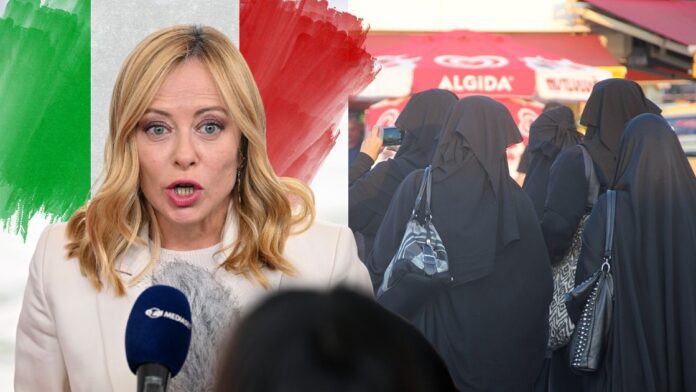
Italy’s government is preparing to ban burqas and niqabs in schools as part of a wider package on migration and integration, which will also seek to limit the number of foreign pupils in classrooms and push families to learn Italian.
Prime Minister Giorgia Meloni announced the plan on Sunday and said the government would soon bring the package before the Council of Ministers.
The proposal would prohibit burqas and niqabs in schools and introduce a legal ceiling on foreign students in each class. Parents of foreign pupils facing “serious integration problems” could also be required to learn Italian.
Meloni said students should attend school with their faces visible, presenting the measure as one linked to women’s equality and social integration.
She said people building their future in Italy should learn the language, understand the country’s culture and respect its rules.

Meloni also argued that Italian children should not feel marginalised because they have become a minority in their classroom.
The government has yet to publish the final legislation or specify the proposed ceiling for foreign pupils.
Subscribe to our newsletter and stay updated on the latest news and updates from around the Muslim world!
Around 11.6 per cent of pupils in Italian schools are currently non-citizens.
Italy already has guidance limiting non-Italian pupils to around 30 per cent of a class in many circumstances, although this can be difficult to enforce in areas with large migrant populations.
The proposed school ban would target the burqa and niqab, which cover the face to different degrees. It would not apply to the hijab, which leaves the face visible.
Political battle
The announcement follows several attempts by parties in Meloni’s governing coalition to tighten restrictions on face coverings.
In March, the League introduced legislation seeking broader restrictions on garments that prevent identification in public places. It would also create an offence of forcing someone to conceal their face.
The bill proposes prison terms and fines for coercion, with tougher penalties in cases involving women, children or disabled people. Senate records show the measure was assigned in March but examination had not yet begun.
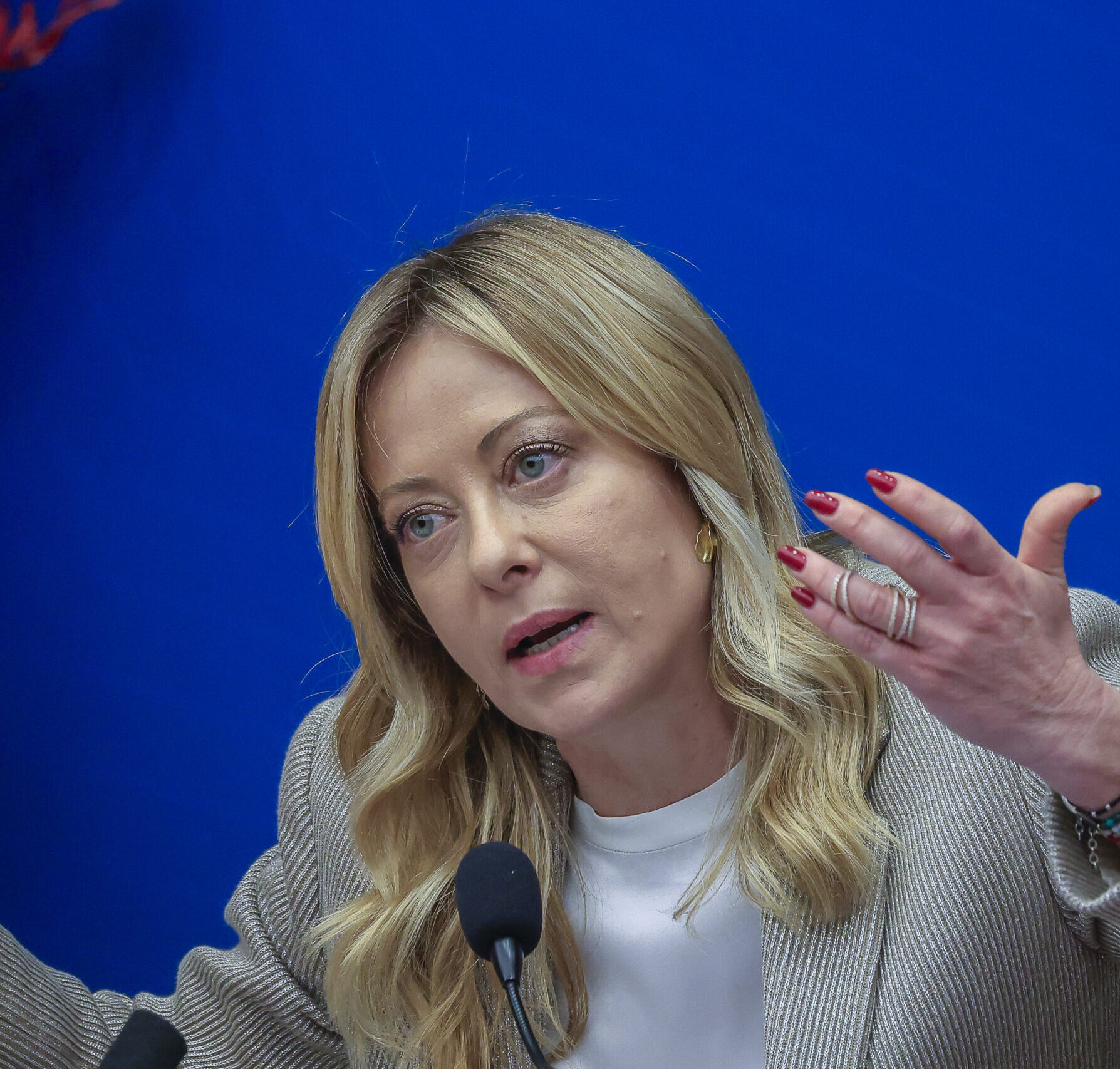
Meloni’s Brothers of Italy party had already presented separate legislation in 2025 seeking a wider ban on full-face veils in public places, alongside tighter rules on mosque funding and forced marriages.
Education Minister Giuseppe Valditara has also backed a school ban, arguing that full-face coverings conflict with equality between men and women.
Critics say the wider package raises legal and practical concerns.
Constitutional law professor Salvatore Curreri told Euronews that strict classroom quotas could clash with Italy’s constitutional guarantee that schools are open to everyone.
He also warned that moving children far from their homes could undermine integration rather than improve it.
Green and Left Alliance MP Angelo Bonelli accused Meloni of focusing on identity politics instead of problems affecting schools. His party has described the government’s approach as politically motivated.
Italy’s current law
Italy does not currently have a specific nationwide ban on burqas or niqabs.
A 1975 public-order law prohibits face coverings that make identification difficult without a justified reason. The legislation was originally introduced during Italy’s violent “Years of Lead”.
A later court ruling clarified that religious or cultural reasons could constitute justification, although people must reveal their faces when identification is required.
That legal grey area has fuelled repeated attempts to introduce more explicit restrictions.
Several European countries already restrict full-face coverings. France and Belgium have nationwide public-space bans, while the Netherlands imposes restrictions in schools, hospitals and public transport.
Meloni’s package must first receive government approval before it can become law. It would then require parliamentary approval.
The proposals come as immigration becomes increasingly prominent ahead of Italy’s next general election, with rival parties also pressing for tougher migration and integration policies.
For Muslim families, the impact will depend on the final wording, exemptions and enforcement arrangements, which have yet to be published.