

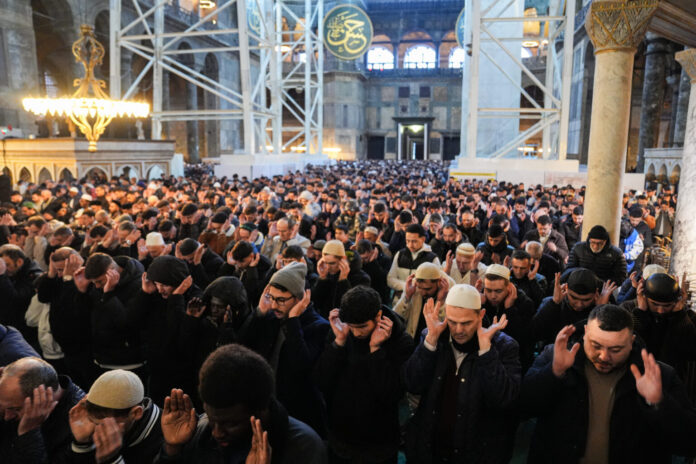
Muslims are projected to become the world’s largest religious group by 2035, while their share of Britain’s population is expected to rise to 16% by 2070, according to a major new report by the Pew Research Center.
The study, The Future of World Religions: Population Growth Projections, 2020–2070, forecasts that the global Muslim population will grow by 80% over the next five decades, significantly outpacing Christianity and overall world population growth.
By 2070, there are expected to be more than 3.6 billion Muslims worldwide, compared with just under three billion Christians.
Muslims will account for 36% of the global population, up from 26% in 2020, while Christianity’s share is expected to remain broadly stable at 29%.
The world’s overall population is projected to grow by 29% over the same period, meaning Islam will expand at almost three times the global rate.

The findings suggest a historic shift in the world’s religious landscape, with Islam overtaking Christianity as the largest religion for the first time in the modern demographic record.
Muslims to make up one in six Britons
Subscribe to our newsletter and stay updated on the latest news and updates from around the Muslim world!
The report also forecasts significant changes to Britain’s religious composition over the coming decades.
Muslims are projected to make up 16% of the British population by 2070, compared with 6.4% in 2020.
This would mean approximately one in six people in Britain identifying as Muslim, reflecting a combination of the community’s relatively young age structure, birth rates and migration.
At the same time, Britain is projected to become a majority non-religious country, with the proportion identifying as having no religion increasing from 40.2% in 2020 to 52.3% by 2070.
The figures suggest that Islam will become an increasingly prominent part of British society even as Christianity continues to lose ground and religious disaffiliation increases.
Similar trends are expected across Europe, where Muslims are projected to increase from 6% of the population in 2020 to 13% by 2070.
France is expected to have a Muslim population share of 20% by 2070, followed by Austria at 18.9%, Belgium at 17.5% and Germany at 14.3%.
However, Muslims are not projected to become a majority in Britain or Europe.

Why Islam is growing faster
Pew attributes the rapid growth of the Muslim population primarily to demographic factors rather than religious conversion.
Between 2020 and 2025, Muslim women had an estimated fertility rate of 3.1 children per woman, compared with 2.0 among non-Muslim women.
Muslims also have a significantly younger population than other religious groups.
In 2020, the median age of Muslims worldwide was just 24, compared with 33 among non-Muslims.
This means a greater proportion of Muslims are entering their childbearing years, contributing to continued population growth even as fertility rates are expected to decline.
The report also examines the impact of people converting to or leaving religions, alongside international migration, although Pew identifies natural population growth as the main driver of Islam’s expansion.
Pakistan to have world’s largest Muslim population
Another major finding is the projected shift in the geographical distribution of Muslims.
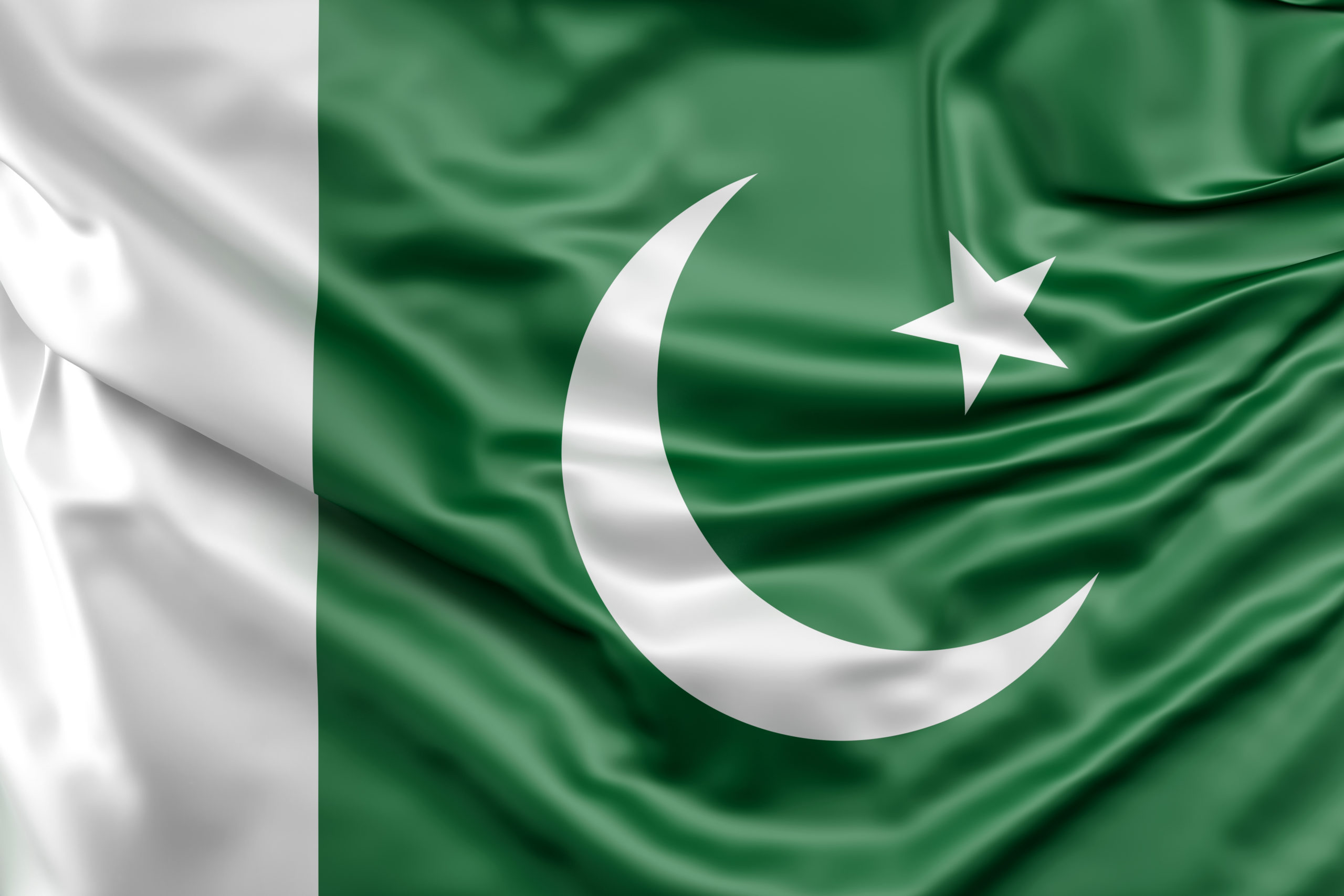
By 2070, Pakistan is expected to have the world’s largest Muslim population, followed by India, Nigeria and Indonesia.
Indonesia currently has the largest Muslim population, but Pakistan’s faster demographic growth is expected to change that ranking.
India, despite remaining a Hindu-majority country, is projected to have the world’s second-largest Muslim population.
Meanwhile, sub-Saharan Africa is expected to become increasingly important to the future of both Islam and Christianity.
Much of the world’s population growth over the coming decades is projected to take place in the region, where both religions have substantial populations.
Muslims are expected to increase their share of sub-Saharan Africa’s population from 33% to 36% by 2070.
The region is also projected to become home to more than half of the world’s Christians, with the Democratic Republic of the Congo overtaking the United States as the country with the largest Christian population.
Christianity declines in the West
While Christianity is projected to continue growing globally in absolute numbers, its position in many Western countries is expected to weaken.
The United States, Canada and Germany are among the countries projected to no longer have Christian majorities by 2070.
Across North America, the Christian share of the population is forecast to decline from 63% to 46%.
In the United States, the religiously unaffiliated population is expected to grow substantially, reflecting continuing secularisation.
Globally, however, the proportion of people identifying with no religion is projected to fall from 24% in 2020 to 17% by 2070.
Pew attributes this partly to demographic changes in China, which has one of the world’s largest populations of religiously unaffiliated people and is expected to experience substantial population decline.
Other religious groups are expected to experience different demographic trajectories.
Hindus and Jews are projected to increase in absolute numbers while declining slightly as a share of the world’s population, while Buddhism is expected to decline both in numbers and global population share.
Projections, not certainties
Pew emphasises that its findings are projections based on demographic modelling rather than predictions of inevitable outcomes.
The calculations take account of fertility, mortality, migration and religious switching, assuming that recent patterns broadly continue.
The researchers also acknowledge uncertainty surrounding future religious affiliation, particularly as the number of people leaving organised religion increased faster than anticipated in some countries between 2010 and 2020.
Nevertheless, the study identifies the youthful age structure and relatively high fertility of Muslim populations as major reasons why Islam is expected to grow faster than every other major world religion over the coming five decades.