
More than 100 civil society organisations have accused European lawmakers of promoting Islamophobia, calling for action over speeches demanding bans on hijabs, halal food and Muslim prayer rooms.
A coalition of 103 human rights and civil society organisations, including Amnesty International, Statewatch and the European Network Against Racism (ENAR), has written to European Parliament President Roberta Metsola expressing serious concerns about anti-Muslim rhetoric during a parliamentary debate.
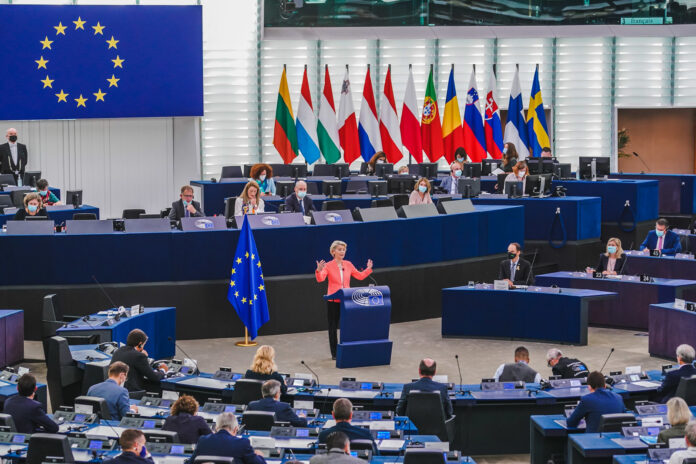
The open letter, published by Statewatch on Tuesday, follows an October 7 debate on a resolution entitled The need for an EU strategy to counter Islamist entryism and the influence of the Muslim Brotherhood network.
The resolution was subsequently adopted on October 8 by 381 votes to 167, with 15 abstentions.
The organisations accuse several Members of the European Parliament (MEPs) of using racist and Islamophobic language, inciting discrimination and portraying Muslims as a threat to European democracy.

During the debate, Muslims were accused of “infiltrating our democratic system like a creeping poison,” while other lawmakers called for measures to combat the influence of Islam on European society.
According to the letter, some MEPs demanded the closure of Muslim prayer rooms, bans on Islamic headscarves and halal food, and the deportation of Muslims who place the Quran above national constitutions.
Subscribe to our newsletter and stay updated on the latest news and updates from around the Muslim world!
The signatories warned that such rhetoric encourages hostility towards millions of European Muslims.
“This rhetoric further fuels hatred, stigmatisation, and criminalisation of millions of people across Europe based on their perceived religion or origin,” the letter said.
The organisations argue that the statements breached the European Parliament’s rules of conduct and the EU Charter of Fundamental Rights, which prohibits discrimination on religious grounds.
Muslim organisations targeted
The controversy centres on a parliamentary resolution calling for an EU-wide strategy against what its supporters describe as the growing influence of the Muslim Brotherhood and political Islam within European institutions.
The resolution identifies the Muslim Brotherhood as a transnational network allegedly operating through religious, charitable, educational and civil society organisations.
It calls for greater scrutiny of organisations suspected of links to the movement, tighter controls on funding and the exclusion of certain groups from European institutions.
Among those specifically targeted is the Forum of European Muslim Youth and Student Organisations (FEMYSO), which represents Muslim youth and student organisations across Europe.
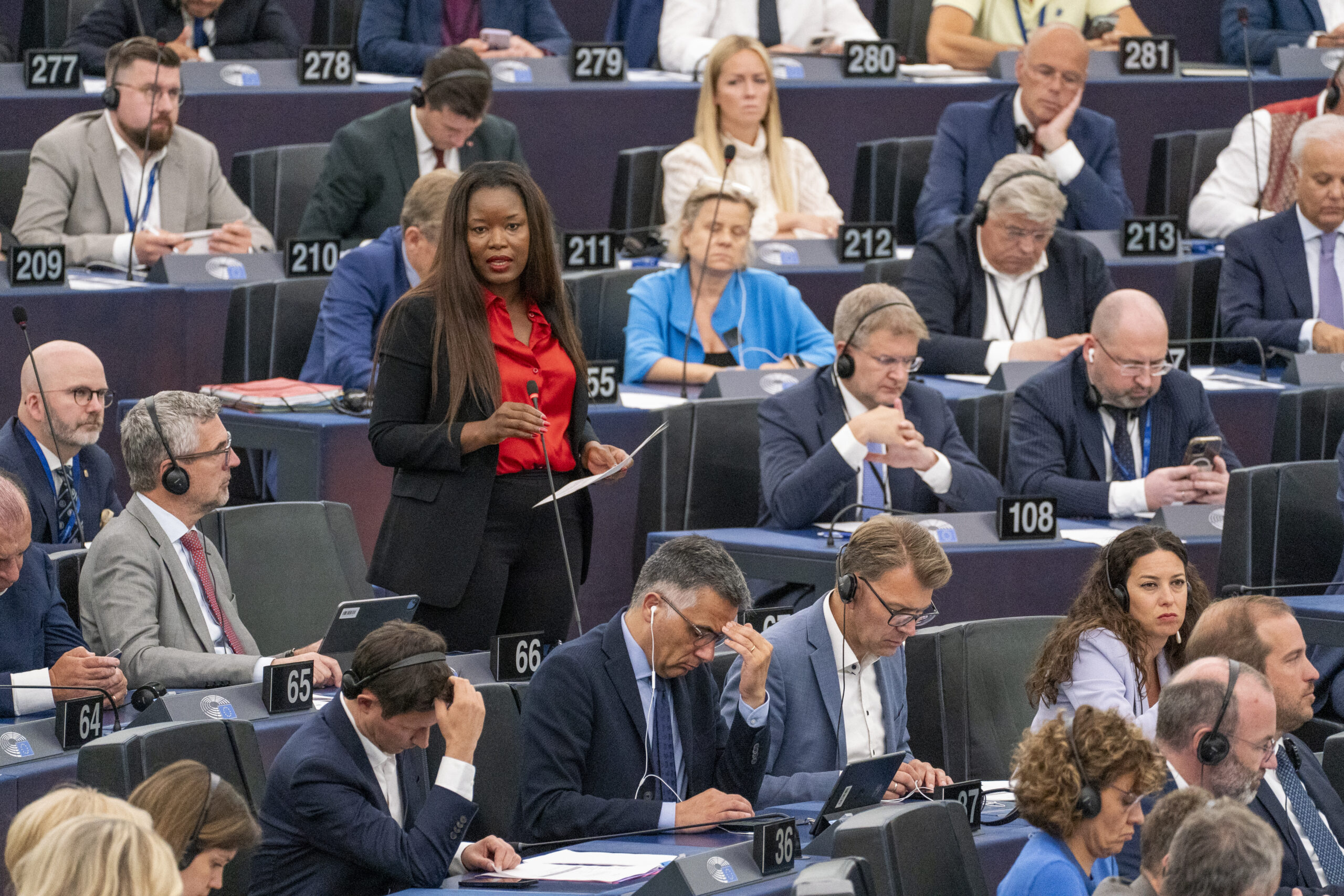
During the debate, one MEP described FEMYSO as a “Trojan horse” allegedly seeking to infiltrate European institutions. FEMYSO categorically rejects the accusations.
The organisation has participated in European Parliament activities for years, including the European Youth Event, and organised an event against Islamophobia inside Parliament in September.
The resolution calls for organisations linked to the Council of European Muslims, including FEMYSO, to be denied access to EU institutions, removed from the EU Transparency Register and excluded from official events.
The signatories argue that such measures could effectively punish Muslim organisations for exercising their democratic rights.
They warn that ordinary activities such as lobbying politicians, participating in public debates and advocating for minority rights are being portrayed as evidence of covert political infiltration.
“CSOs, including youth organisations, routinely take part in public debate, advocate policy positions, and engage in democratic decision-making,” the letter states.
“These are normal and desirable features of an open society, not evidence of wrongdoing.”
Anti-racism organisations under pressure
The letter argues that Muslim organisations face a particularly troubling situation in which their efforts to document and challenge Islamophobia are themselves treated as suspicious political activities.
It warns that the resolution could legitimise the exclusion of Muslim civil society organisations from democratic institutions while undermining their ability to challenge discrimination.
The resolution’s supporters, however, maintain that their objective is to combat political extremism and covert ideological influence rather than Islam itself.
The adopted text explicitly distinguishes Islam as a religion from “political Islamism,” stating that criticism of political ideology should not automatically be equated with an attack on religion.
It also supports national restrictions on full-face coverings, including the niqab and burqa, in public spaces on grounds of security, social cohesion and women’s rights.
Nevertheless, the rights organisations argue that the debate and resolution risk institutionalising discrimination against Muslims.
Growing Islamophobia across Europe
The controversy comes amid increasing concern about anti-Muslim discrimination across the European Union.
According to the EU Agency for Fundamental Rights’ 2024 report, Being Muslim in the EU, 47% of Muslim respondents reported experiencing racial discrimination during the previous five years.
The signatories say the parliamentary resolution contradicts the EU’s own anti-racism commitments, including its 2026–2030 Anti-Racism Strategy, which recognises anti-Muslim hatred as a form of racism.
They have urged European Parliament President Roberta Metsola to condemn discriminatory statements made during the debate and take formal action against MEPs responsible for hate speech.
They have also requested a meeting involving representatives of FEMYSO, the Collective for Countering Islamophobia in Europe (CCIE) and ENAR to discuss the resolution and its implications for Muslim participation in European democratic life.
The letter concludes by urging the European Parliament to ensure that its commitment to equality and non-discrimination applies equally to Muslim communities and the organisations representing them.