


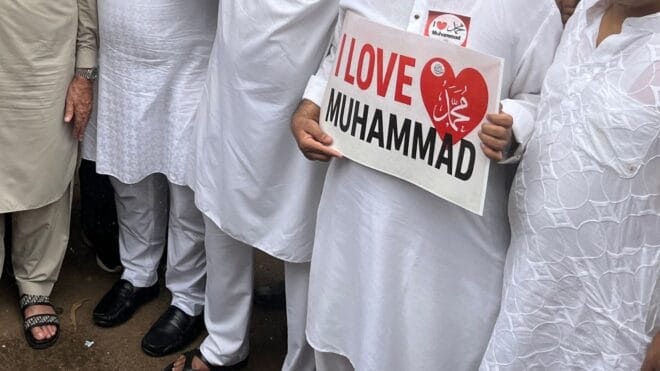
Three Muslim men were arrested in the southern Indian state of Karnataka after a Palestinian flag was displayed on top of a large cutout put up for celebrations of Mawlid al-Nabi — the birth anniversary of the Holy Prophet Muhammad ﷺ.
The incident took place on August 24 in RML Nagar, an area of Shivamogga city, according to the police complaint. The three men have been identified as Nihal, also known as Bekku, Umar and Abrahar.
According to the First Information Report, or FIR, the document through which Indian police formally register allegations of a crime, the men climbed onto the structure, displayed the Palestinian flag and recorded the act. Police allege that the video was later circulated on Instagram. Police in Karnataka say the display and its circulation online could “inflame communal tensions”, while critics have questioned why simply showing solidarity with Palestine would amount to a criminal offence.
The Doddapet police station reportedly registered the case on its own initiative after the video came to their attention.
Police have charged the men under three provisions of India’s Bharatiya Nyaya Sanhita, or BNS, the country’s main criminal law that replaced the Indian Penal Code in July 2024.

The sections cited are 353(2), 196(1) and 197. They cover, among other things, the circulation of material that could promote hostility between communities, acts alleged to promote enmity between different groups, and assertions considered prejudicial to India’s national integration.
Police have said the case is not simply about the Palestinian flag. Their position is that the circumstances in which it was displayed, the recording of the incident and the later circulation of the video could contribute to “communal tension and disturb public order.”
Subscribe to our newsletter and stay updated on the latest news and updates from around the Muslim world!
One of the men, Nihal alias Bekku, has been taken into custody for questioning, while police are searching for Umar and Abrahar, according to local reports. The investigation remains ongoing.
An FIR records allegations and does not establish guilt. Whether the evidence ultimately meets the legal requirements of the sections invoked will be decided through the investigation and, if necessary, by the courts.
A wider pattern around Eid celebrations
The Shivamogga Palestine flag case comes at a sensitive time in Karnataka.
Police forces across the state increased security around this year’s Mawlid celebrations with authorities deploying thousands of police personnel. Local restrictions were also imposed on activities including Nasheed music, fire works and the use of certain celebratory materials.
Other incidents involving Palestinian symbols were reported during this year’s celebrations.
In Ankola, in northern Karnataka, a young man briefly displayed a Palestinian flag during a Mawlid procession. Police intervened, confiscated the flag and questioned the activist in custody.
In Bengaluru, a Mawlid procession in the Basavanagudi area also led to a confrontation between Hindu and Muslims. Police arrested six people and registered three cases following allegations of inflammatory slogans and a subsequent clash.
The cases raise questions about where Indian authorities draw the line between political expression and conduct that can legitimately be treated as a criminal offence.
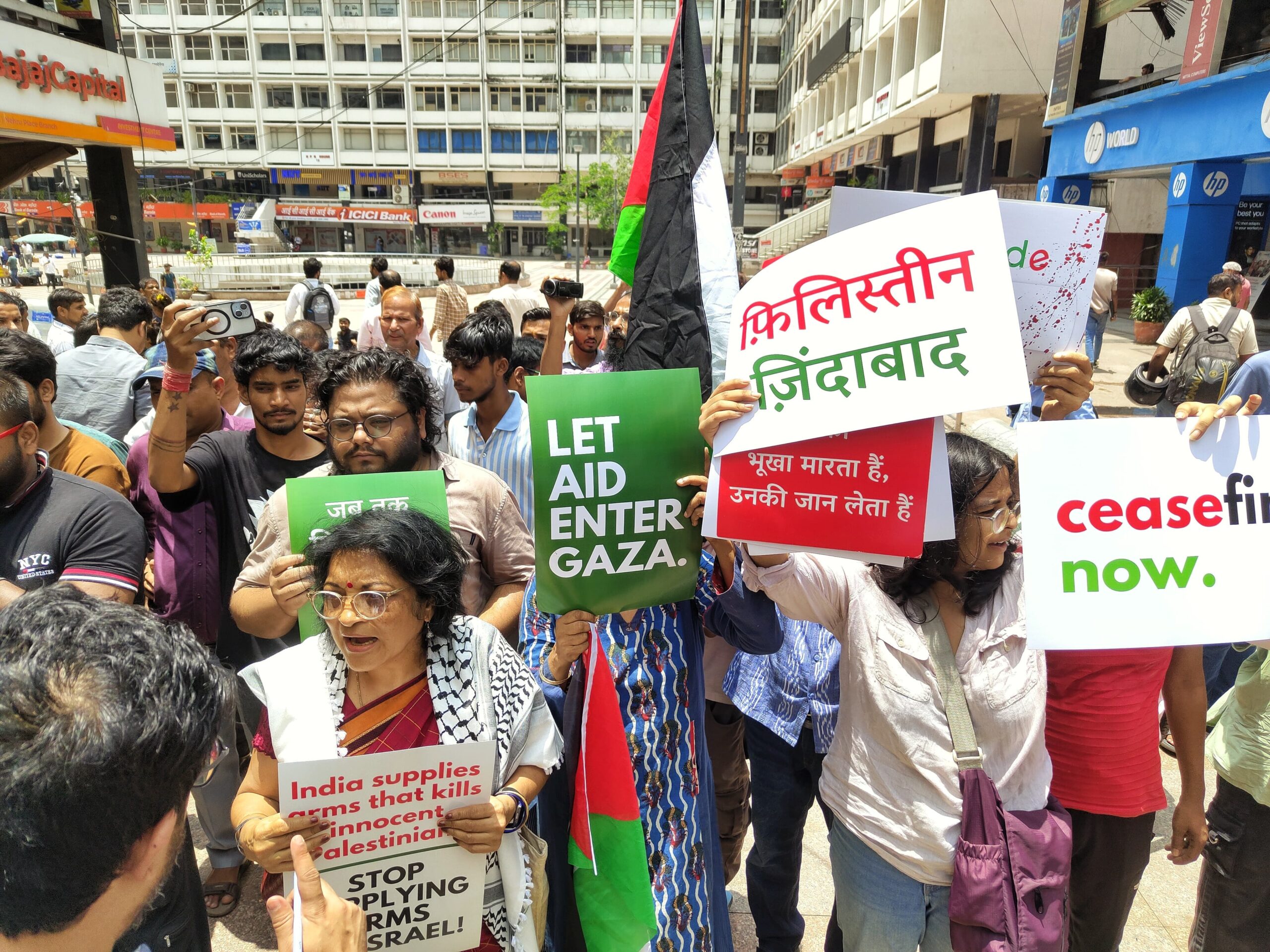
Palestinian symbols have become increasingly visible at Muslim demonstrations and religious gatherings in India since the war on Gaza began. For Muslims, the Palestinian flag is a symbol of solidarity with Palestinians and concern over civilian suffering. It is not necessarily seen as support for any political party or armed organisation. However, Indian leadership and Islamophobic Hindu groups have sided with Israel during the recent genocide as a way to expand on their anti-Muslim agenda.
India has historically maintained diplomatic relations with Palestine and has publicly supported a two-state solution to the Israeli-Palestinian conflict but the Prime Minister Narendra Modi has developed an unusually close politically and personally relationship with Israel’s Benjamin Netanyahu.
Critics of the Shivamogga police action have questioned how the display of the flag, by itself, could amount to promoting communal hatred or threatening India’s national integration.
The legal question is more complicated than the presence of the flag alone. Section 196 of the BNS deals with conduct that promotes or attempts to promote disharmony, hatred or ill-will between different groups. Section 197 concerns assertions that can prejudice national integration, including certain claims about the allegiance or rights of groups within India.
Indian courts have also stressed that describing speech or expression as provocative is not automatically enough to establish such an offence. In a 2026 case, the Madras High Court observed that allegations under Section 196 require consideration of the actual words used, their context and whether there is material showing that they promoted communal disharmony or disturbed public tranquillity.
That makes the circumstances of the Shivamogga incident important to the legal assessment, including what was said or done while the flag was being displayed and what the video that circulated online actually contained.
Police, however, maintain that their investigation is focused on the manner in which the flag was displayed, the recording of the incident and the subsequent circulation of the video. They have said the case is not about Palestinian solidarity itself.
For now, the three men remain accused and have not been convicted of any offence. The allegations will have to be tested through India’s legal process.
At the same time, the case has opened a wider debate about how political and humanitarian expressions of support for Palestine are treated in India, particularly when they take place during religious celebrations.