


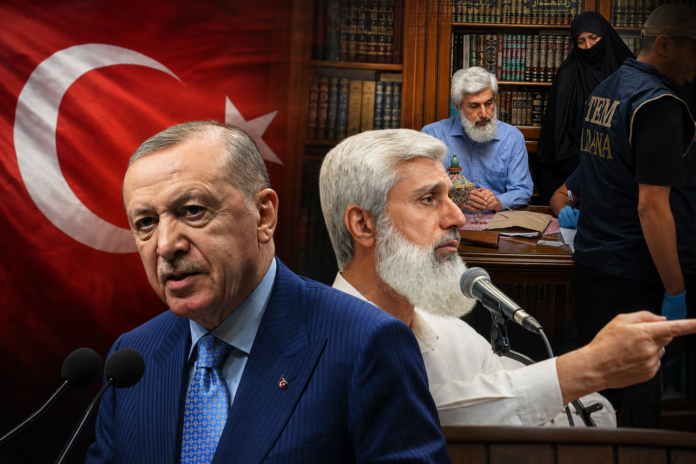
Alparslan Kuytul, the outspoken Muslim leader who has challenged President Recep Tayyip Erdoğan for years, now finds himself behind bars alongside dozens of his Furkan Movement followers. But who exactly is Kuytul and what does his Furkan Movement stand for?
On August 19, 32 suspects tied to the now-closed Furkan Education and Service Foundation were arrested by Turkish authorities. The arrests included its founder, Alparslan Kuytul, 60, and his wife Semra Kuytul.
A further 24 suspects were also taken into custody, bringing the total to 56 individuals tied to the organisation.
Kuytul is the founding chairman and leader of the Furkan Movement, a grassroots Islamic movement which opposes the ruling Justice and Development Party (AKP) led by Turkish President Recep Tayyip Erdoğan.
Turkish authorities arrested the suspects on charges of “establishing and managing a criminal organisation,” “laundering assets derived from crime,” “aggravated fraud,” “forgery of official documents,” and “violation of the Tax Procedure Law.”

The now-criminalised Furkan Movement
The movement was founded in 1981 by Kuytul under the slogan “In God’s world, what God says must happen!”
Subscribe to our newsletter and stay updated on the latest news and updates from around the Muslim world!
Other slogans include: “From tawheed to civilisation!” including quotes to a verse from the 54th verse of Surah A’raf: “Both creation and judgement belong to Allah.”
The official website of the Furkan Movement states that it is an Islamic movement, founded in Adana, Türkiye, “with the aim of preaching tawheed to all of humanity in line with the Qur’an and Sunnah and building an Islamic civilisation.”
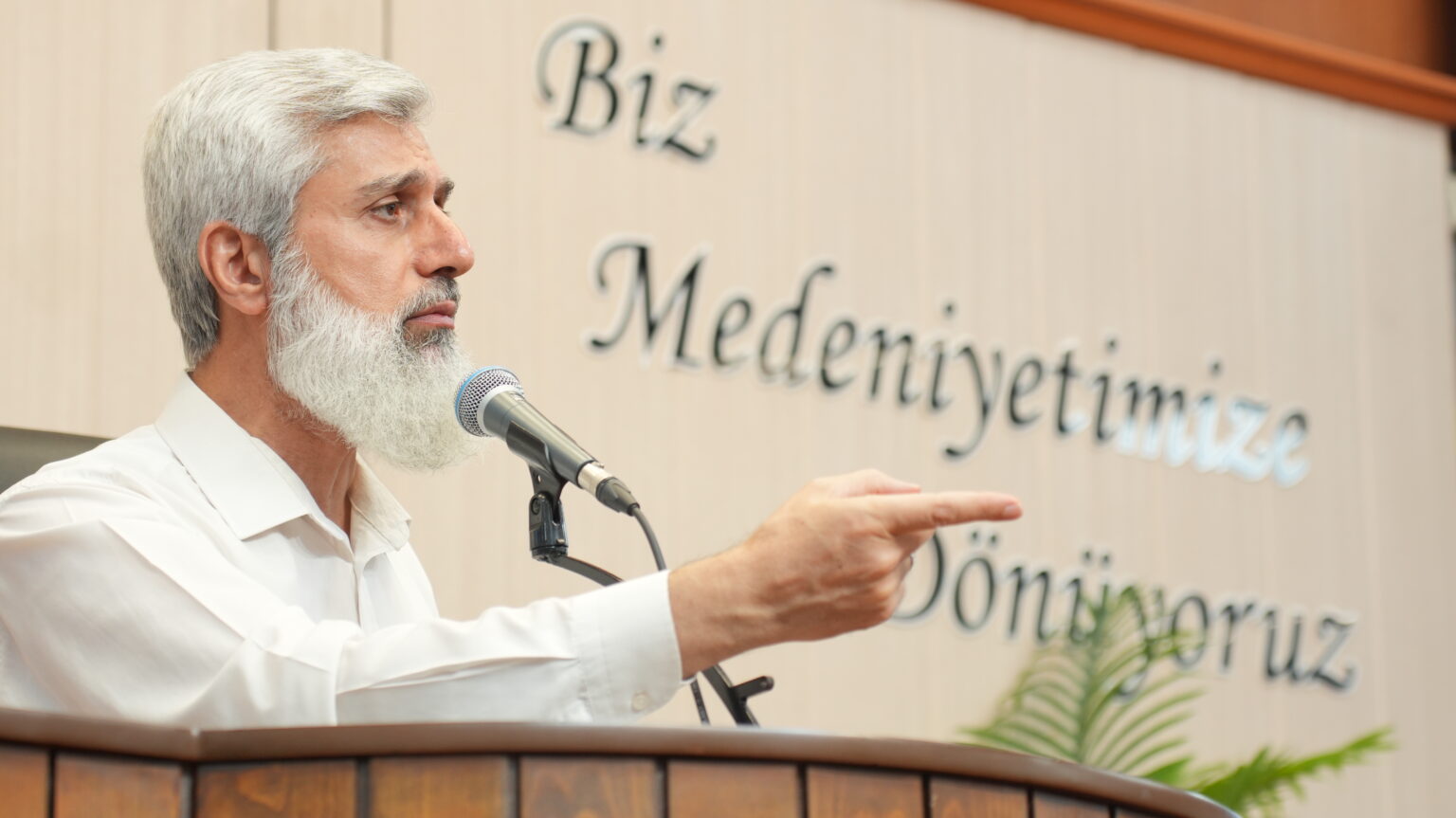
Speaking on the mission of the movement, Furkan says they “aim to raise our generation as a generation that has true faith and morality, is in love with worship, has a high scientific and intellectual level, struggles by legitimate means for Allah’s domination on earth, and will lead the society in good deeds.”
The movement can also be described as being driven by pan-Islamic sentiments, or an “Ummatic vision” built on uniting Muslims around the implementation of Islam and Shari’ah.
In addition to its Islamic motives, Furkan is also a fierce opponent of the current Turkish government and ruling AKP party, having had numerous run-ins with the authorities and the law over the years.
The movement does not command mass support in Türkiye, but has built a committed nationwide following, particularly among religious conservatives disillusioned with Erdoğan and the AKP.
Alparslan Kuytul: Leader of Furkan
Alparslan Kuytul, born in 1965 in Adana, Türkiye, is a graduate of the Faculty of Engineering and Architecture and a former student of Al-Azhar University from 1993 to 1997, where he studied Islamic Law at the Faculty of Shari’ah.
Kuytul is a follower of the Hanafi school of thought and rejects Salafi interpretations of Islam, adding that he is against the so-called “Takfiri” ideology of the “Wahhabis”.
The genesis of the Furkan Movement and Kuytul’s Islamic activism can be traced back to 1981, when during his high school years he began engaging in politics and Islamic lectures.
He founded Kardeşler Bookstore in 1988, where he led classes and lectures, and then formally founded the Furkan Education and Service Foundation in 1994, where he continued to give lectures every Friday about Hadith, Sirah, Fiqh, Usul, Arabic, politics, and wider socio-political topics on the state of Islam and the Middle East.
His wife, Semra Kuytul, leads the women’s branch of the Furkan Movement.
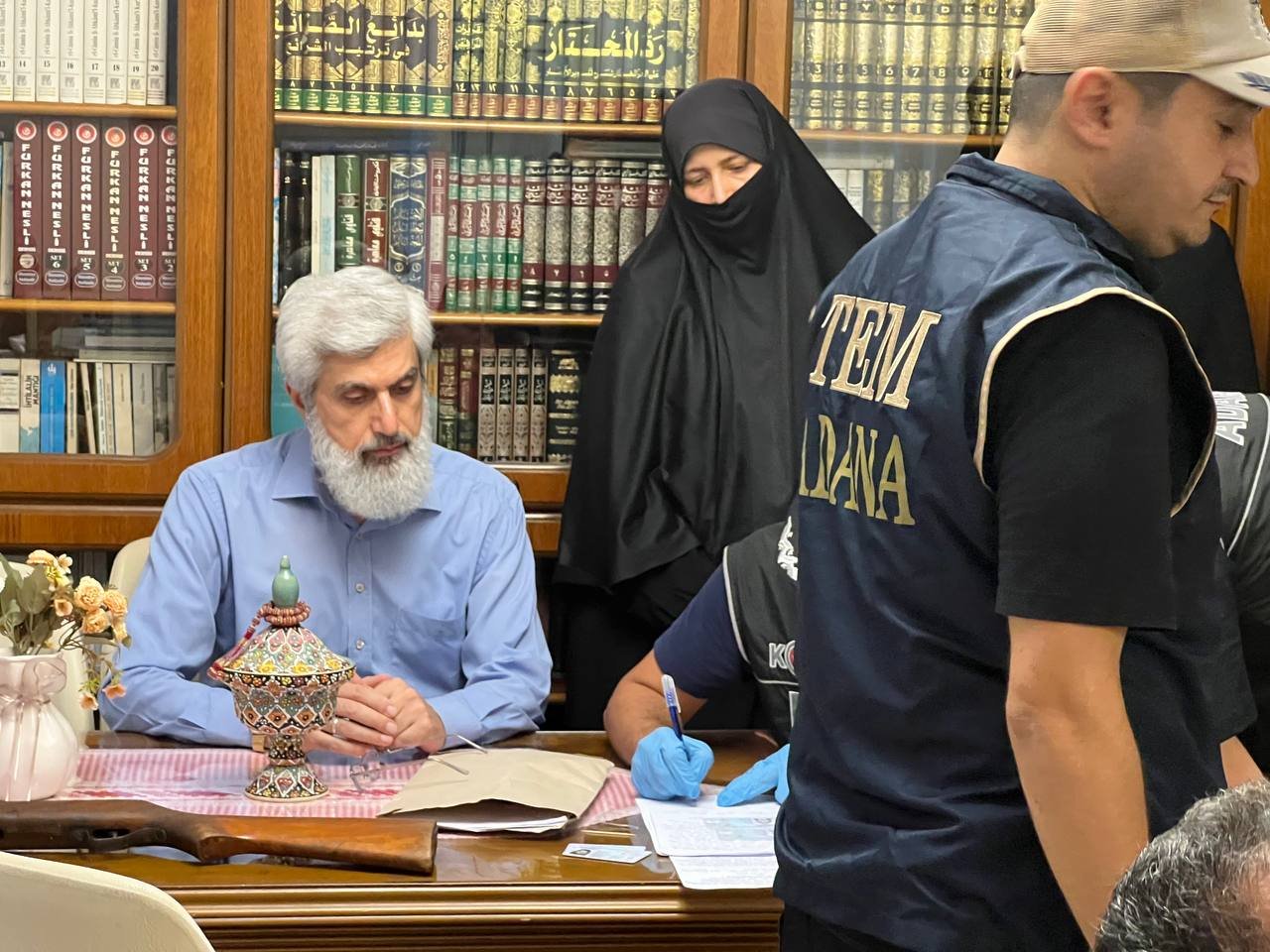
A leading aspect of Kuytul’s Islamic political activism is built around pursuing an Islamic vision for Türkiye and advocating for the implementation of Shari’ah law.
Pro-Furkan sources state that the Furkan Movement’s mission is “to bring about an Islamic socio-political and economic change in Türkiye.”
Kuytul believes that Erdoğan is a pseudo-Islamic politician who uses Islam to rally support without implementing it according to its principles, often challenging the Islamic slogans of the AKP as disingenuous.
Kuytul’s views
The Furkan Movement and its founder are known for holding views beyond the situation in Türkiye, calling for change or expressing support for certain governments within the Middle East.
Kuytul viewed the civil war in Syria as a trap for the Middle East, claiming it was an imperial project aimed at sowing Sunni-Shia divisions.
Kuytul is often cited as a supporter of the Iranian regime, frequently defending it against U.S. and Israeli actions and speaking out against Sunni-Shia sectarianism.
With regard to the recent Mecca Defence Agreement, Kuytul strongly criticised Erdoğan for excluding Iran and Palestine, arguing that such pacts without Iran risk turning into a “Western-backed coalition” against fellow Muslims.
Domestic views
Erdoğan supporters tend to make several accusations against Alparslan Kuytul and the Furkan Movement: that he presents himself as an Islamic scholar while relentlessly attacking an elected Islamist-rooted government; that his rhetoric undermines Türkiye during sensitive security operations; and that his opposition sometimes overlaps with narratives promoted by the AKP’s enemies.
More seriously, pro-government voices have accused Furkan of having sympathies toward or links with groups such as FETÖ, ISIS and the PKK. Kuytul and Furkan have repeatedly rejected such allegations.
Ideologically, Erdoğan supporters also object to Kuytul portraying the AKP as Islamic in rhetoric but un-Islamic in practice. His mocking description of the AKP as the “ZKP” (Zulüm Kalkınma Partisi — “Oppression Development Party”), his criticism of Turkish nationalism, support for Kurdish linguistic and cultural rights, opposition to the Afrin operation, and criticism of Ankara’s foreign policy have all made him particularly controversial among Erdoğan’s conservative base.
Criticism towards Erdoğan from Kuytul intensified following the 2016 coup attempt in Türkiye, which Kuytul claims was dealt with insufficiently.
As a result, Erdoğan loyalists labelled Kuytul and the Furkan Movement as a terrorist-sympathising organisation.
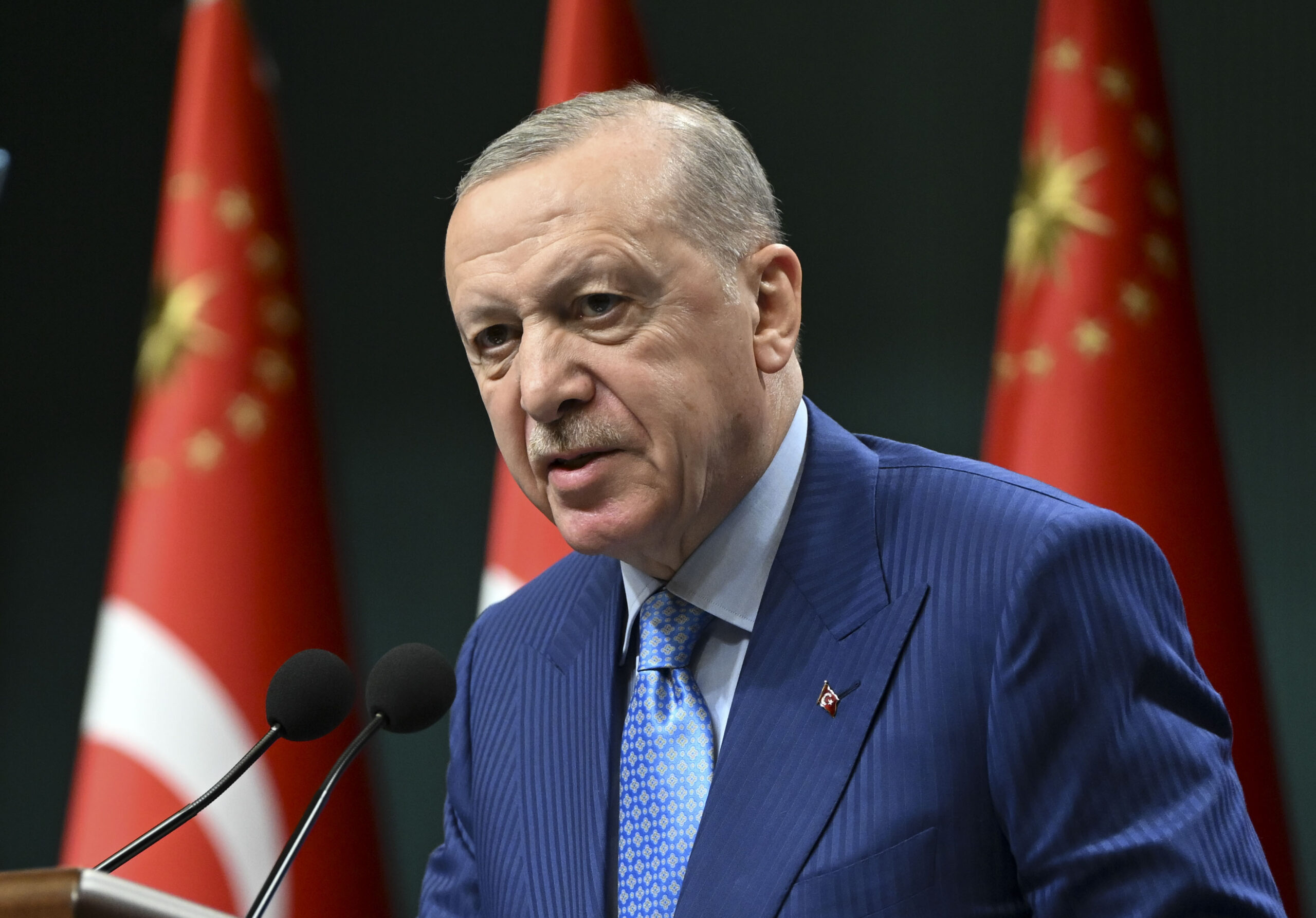
Kuytul once said that if the AKP ever “declares war” on him, his supporters would not back down, and he frequently refers to the AKP as ZKP (Zülüm Kalkınma Partisi), meaning “Oppressive Development Party.”
The pan-Islamic nature of Kuytul’s activism has also led him to criticise the Turkish government’s treatment of Kurds, saying: “The infidel has already divided us into 50–60 pieces. We shouldn’t want to be divided again. If the Turks want a Turkish state, the Kurds will want a Kurdish state as a result. Arabs will also want an Arab state. But if they all want the Islamic state, then they can unite.
“Every race must abandon the understanding of the nation-state. We are already very divided, will we be divided again? Therefore, everyone should understand the Qur’an in order not to be divided again. We must return to Islamic civilisation. Whatever rights the Qur’an gives to every race, everyone will consent to those rights, with its Turks, Kurds, Arabs.”
“We will all lose when we are divided,” Kuytul continued.
Kuytul supports Kurdish rights and Kurdish language recognition and education in schools, criticising Türkiye for being a nation-state based on Turkish identity and therefore going against Islam.
History of government pressure
The arrests of Kuytul, his wife and supporters of his organisation came shortly after he criticised a similar police operation targeting another Islamic community known as Süleymanlılar.
Kuytul was jailed in 2018 after criticising Turkey’s military intervention in northern Syria and opposing its offensive in Afrin, but was later acquitted of terrorism-related charges in 2020.
He was also arrested in 2022 in connection with the abduction of a businessman in Adana on charges of instigating the deprivation of liberty, extortion, bodily harm and torture, which he denied.
He was released pending trial in June 2023.
The Ankara-based Human Rights Association (İHD) criticised the arrests and other measures taken during the investigation, warning against turning pretrial detention as a form of punishment, saying: “The appointment of trustees to companies, the seizure of assets, the blocking of hundreds of social media accounts and the detention of lawyers following the case raise serious concerns about rights violations.”
The Turkish government has repeatedly denied using criminal investigations to silence its critics.