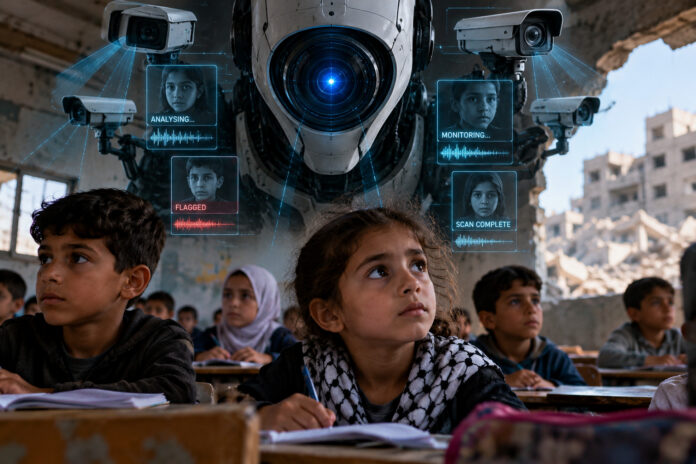
A U.S. charity operating schools in Gaza plans to use Artificial Intelligence to monitor classroom conversations and flag speech it considers “hateful”, “inciting” or “antisemitic.”
The Gaza Children Village, founded by Palestinian-American neurosurgeon Dr David Hasan, says the proposed system is intended to ensure teachers follow a curriculum promoting peace and tolerance.
However, the plans have sparked criticism from Palestinian advocacy groups, a member of the charity’s board and at least one partner aid organisation, according to the Associated Press.
Under the proposal, classroom conversations would be recorded and analysed by AI software. If the system identifies potentially problematic language, an alert would be sent to Hasan, who could then contact the teacher to discuss the context and provide feedback.
Hasan said recordings would be stored for 72 hours. The technology has reportedly been tested, with plans to deploy it in dozens of classrooms, although it remains unclear when monitoring will begin or precisely what language will trigger alerts.

It is also unclear whether teachers, pupils and their families have been informed about the plans.
The Gaza Children Village is a charity which has been approved by Israel’s Coordinator of Government Activities in the Territories (COGAT) and has formally been recognised by Israel’s Ministry for Diaspora Affairs.
Subscribe to our newsletter and stay updated on the latest news and updates from around the Muslim world!
A ‘de-radicalisation’ agenda
Hasan, who teaches at Duke University’s medical school in North Carolina, established Gaza Children Village after volunteering at hospitals in the territory during the war.
He has said he wants to break the cycle of violence between Palestinians and Israelis by exposing children to different perspectives from an early age.
The charity operates schools known as Academies of Hope, which provide education alongside meals, medical care and psychological support. Its curriculum is largely based on materials used by the Palestinian Authority, but Hasan says material he considers to glorify violence or promote antisemitic and anti-Israel beliefs has been removed.
Speaking during a webinar with humanitarian organisations in September, Hasan defended the proposed monitoring system as a means of ensuring teachers follow the revised curriculum.
“I know it’s controversial, but trust me, it’s the only way we feel for us to survive and deliver this curriculum,” he said.
Hasan declined to comment to the Associated Press or provide examples of the curriculum changes.
The proposed system has raised concerns about the potential consequences of monitoring Palestinian children and teachers in a territory where surveillance technology has become particularly contentious.
Israel’s military has used AI to analyse intercepted communications and identify potential targets during its war on Gaza, intensifying fears among Palestinians that information could be used against them.
Amjad Iraqi, a senior analyst at the International Crisis Group specialising in Israel and the Palestinian territories, warned that Palestinians increasingly fear their words and actions could be used against them.
Palestinian advocacy groups have also questioned who should determine what Gaza’s children are taught and whether an externally supported organisation should have such influence over the education system.
Ines Abdel Razek, co-director of the Palestine Institute for Public Diplomacy, said the initiative was concerning because it risked controlling the thinking of future generations.
She argued that the Palestinian Authority and the UN agency for Palestinian refugees, UNRWA, should be supported in rebuilding Gaza’s schools.
The charity’s proposal has also prompted concern from within its own ranks.
Bishara Bahbah, a Palestinian-American political activist and member of the charity’s board, said monitoring classroom performance was different from using cameras to restrict what teachers and pupils could say.
“Cameras to monitor the performance of students and teachers is acceptable. But cameras to silence students and teachers from being able to have a free exchange in a classroom are not acceptable,” he said.
Bahbah added that he had not been aware of the monitoring plans and that they had not been raised with the board.
An official at an aid organisation partnering with Gaza Children Village warned that the proposed use of AI to monitor speech could prompt it to reconsider its relationship with the charity.
The official, who spoke anonymously, said using AI to monitor people’s words opened a “Pandora’s box”.
Gaza’s education crisis
The controversy comes as Palestinian children continue to face the devastating consequences of Israel’s war on Gaza, which has left much of the territory’s infrastructure in ruins and severely disrupted education.
UNICEF has reported that almost 98% of school buildings in Gaza have been damaged, while hundreds of thousands of children have missed formal in-person schooling for years.
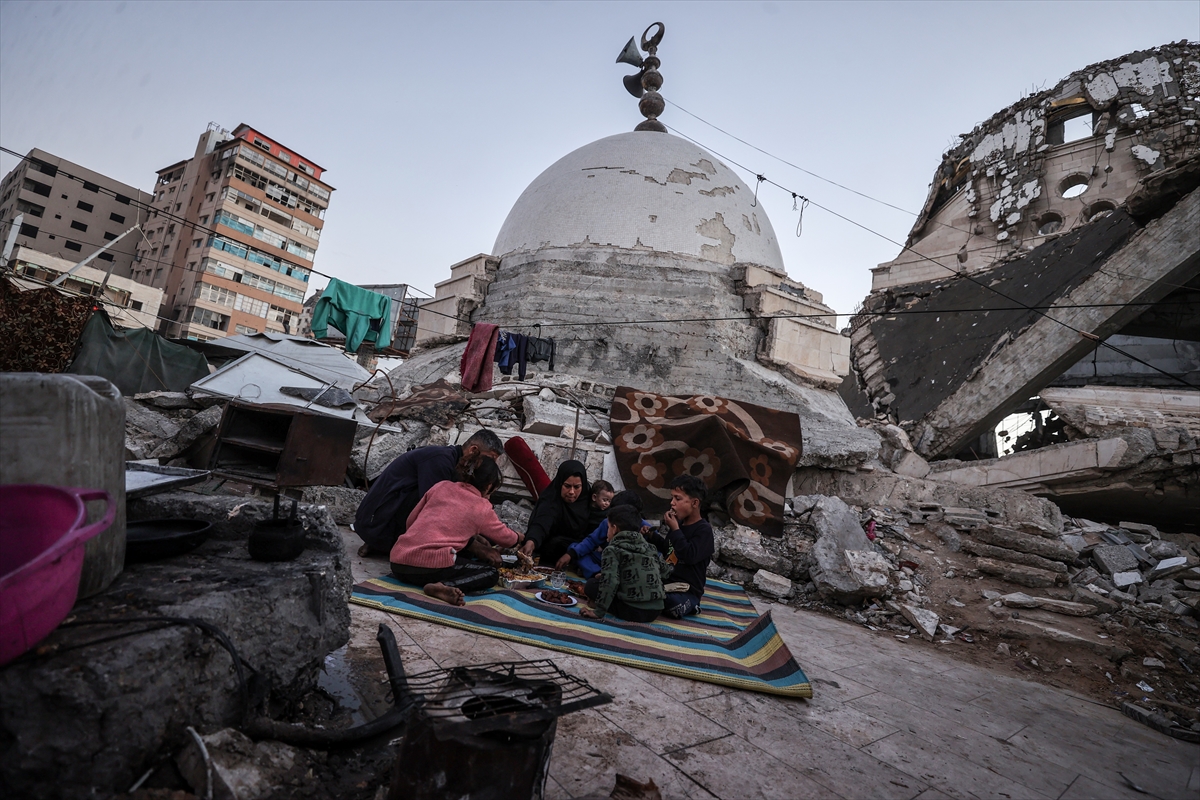
Gaza Children Village says its academies serve thousands of children in central and southern Gaza, many of whom have lost parents or other relatives during the war.
The charity’s supporters argue that its schools offer essential education, nutrition, healthcare and psychological support to vulnerable children.
But the proposed monitoring system has raised a fundamental question: how can efforts to promote tolerance and protect children be reconciled with their right to express themselves freely and learn in an environment that respects Palestinian identity and autonomy?
Mohammad AbuAlrob, a Palestinian government spokesperson, said the Palestinian Authority’s curriculum focused on tolerance and justice. Although he said he did not have enough information about the charity’s curriculum to comment on it, he warned that classroom surveillance would cross “an important line”.
The debate over who controls education in Gaza is likely to remain contentious as Palestinians attempt to rebuild their lives and institutions following years of war and destruction.