



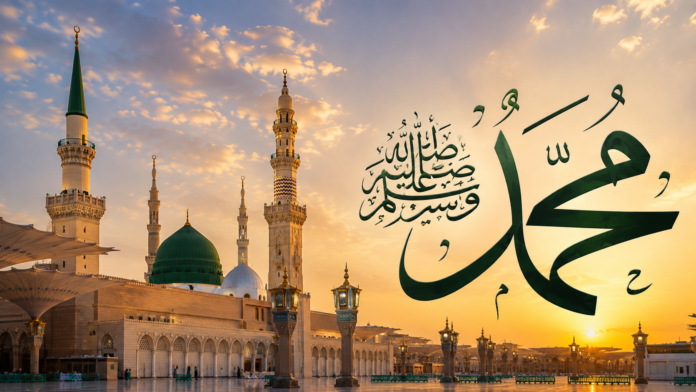
As Muslims around the world prepare to mark the Prophet Muhammad’s ﷺ birthday, we examine the history of the Mawlid, how it spread, and the centuries-old scholarly debate over its legitimacy.
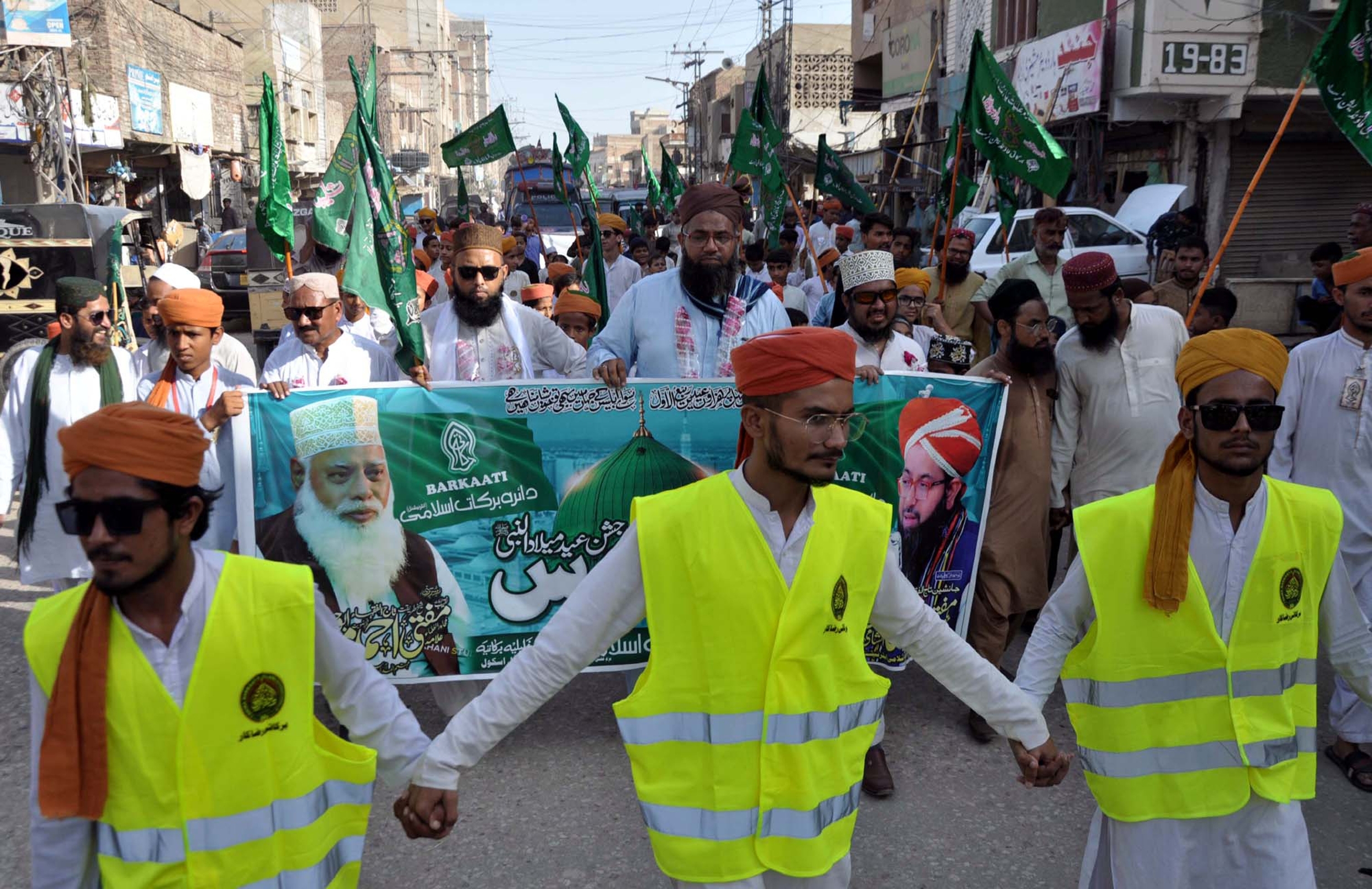
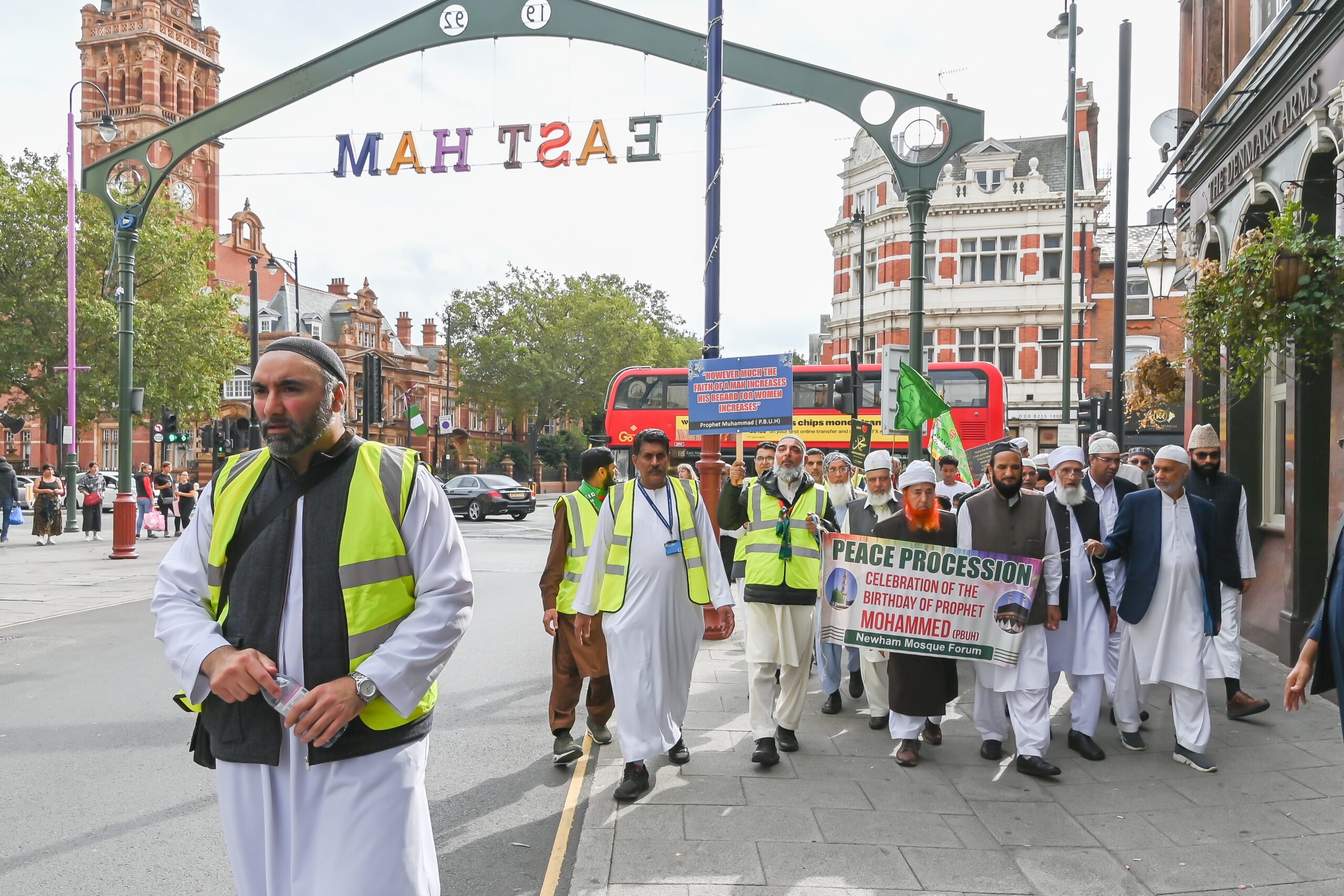
Every Rabi al-Awwal, millions of Muslims around the world commemorate the birth of Prophet Muhammad ﷺ with gatherings, sermons, Qur’an recitation, poetry, food and expressions of love.
Yet Mawlid al-Nabi, as the occasion is commonly known, is also one of the longstanding areas of disagreement among Sunni Muslims.
Some scholars regard commemorating the Prophet’s birth as a praiseworthy expression of love and gratitude to Allah, while others consider establishing an annual religious celebration to be an innovation, or bid’ah, which was unknown to the Prophet ﷺ and his Companions.
The disagreement has existed for centuries and involves major scholars on both sides of the debate.

When was the Prophet ﷺ born?
Even the date normally associated with Mawlid is not certain.
Subscribe to our newsletter and stay updated on the latest news and updates from around the Muslim world!
Muslims overwhelmingly associate the Prophet’s birth with 12 Rabi al-Awwal in the Year of the Elephant. But classical Muslim historians recorded several opinions, including the 2nd, 8th, 10th and 12th of the month.
Islamic scholar Yasir Qadhi, who has written an extensive history of the Mawlid, notes that no hadith in the six major canonical collections gives an exact date. What is established through Sahih Muslim is that the Prophet ﷺ was born on a Monday.
Qadhi argues that the 8th of Rabi al-Awwal has particularly strong historical support, although the 12th became by far the most widely accepted date.
Did the first Muslims celebrate Mawlid?
There is little dispute over another historical point: the Prophet ﷺ did not institute an annual celebration of his birthday, nor is there evidence that the Companions, their successors or the earliest generations of Muslims celebrated it.
Even scholars who subsequently approved of Mawlid generally acknowledged that it was a later development.
The disagreement therefore concerns whether establishing such a commemoration constitutes an unacceptable religious innovation, or a permissible new means of performing acts which are themselves encouraged by Islam.
Where did Mawlid begin?
The earliest well-documented state celebrations occurred under the Ismaili Shia Fatimid dynasty, which ruled Egypt between the 10th and 12th centuries.
The Fatimids commemorated several birthdays, including those of the Prophet ﷺ and members of his family. These occasions, however, differed from many later popular Mawlid celebrations.
Historian N.J.G. Kaptein’s specialist study Muhammad’s Birthday Festival traces the Fatimid celebrations and the subsequent emergence of Mawlid in Sunni Muslim societies.
Qadhi, drawing extensively on Kaptein and medieval Muslim historians such as al-Maqrizi, similarly concludes that the earliest recorded public Mawlid appeared in Fatimid Egypt around the sixth Islamic century.
By the late 12th and early 13th centuries, Mawlid celebrations had appeared in Sunni territories.
One famous patron was Muzaffar al-Din Kökböri, ruler of Irbil in present-day Iraqi Kurdistan, whose elaborate celebrations included preaching, feasting and public festivities.
Over subsequent centuries, Mawlid spread across much of the Muslim world, including North Africa, the Ottoman lands, South Asia, Southeast Asia and Africa, taking very different forms according to local religious and cultural traditions.
The argument for Mawlid
Supporters do not generally claim that the Prophet ﷺ or Sahabah celebrated Mawlid in its later form.
Instead, they argue that its constituent elements — remembering the Prophet ﷺ, studying his life, reciting Qur’an, sending blessings upon him, feeding people and expressing gratitude to Allah — are already sanctioned by Islam.
A particularly important proof cited is the authentic hadith in which the Prophet ﷺ explained his fasting on Mondays by saying that it was the day on which he was born and revelation came to him.
Egypt’s Dar al-Ifta argues that this establishes the principle of thanking Allah for the blessing of the Prophet’s birth, while the precise permissible means of expressing that gratitude may vary.
Major scholars who accepted forms of Mawlid included Jalal al-Din al-Suyuti and Ibn Hajar al-Asqalani. Al-Suyuti argued that a gathering involving Qur’an, accounts of the Prophet’s birth and feeding people could constitute a commendable innovation.
The broader argument rests partly on the classical concept that not everything which appeared after the earliest Muslim generations is automatically a blameworthy innovation.
The argument against
Opponents begin from precisely the same historical fact but reach the opposite conclusion.
They argue that the Prophet ﷺ, his Companions and the early generations loved and honoured him more than subsequent Muslims, yet never designated his birthday as an annual religious occasion.
Had celebrating it been a desirable act of worship, they argue, those generations would have preceded later Muslims in doing so.
They also distinguish between ordinary beneficial innovations and innovations in religious worship. Studying the seerah, feeding people and sending salawat are unquestionably legitimate, they say, but turning those practices into a recurring religious festival on a particular date requires evidence from the Qur’an or Sunnah.
This position has become especially associated in modern times with Salafi scholarship, although opposition to Mawlid predates the modern Salafi movement.
Contemporary anti-Mawlid scholars therefore describe the celebration as bid’ah, while stressing that loving and remembering the Prophet ﷺ is itself fundamental to Islam.
A centuries-old disagreement
Mawlid therefore cannot be reduced to a dispute between Muslims who love the Prophet ﷺ and those who do not.
Both sides insist that love of the Prophet is central to Islam. Their disagreement is primarily about how that love may legitimately be expressed and, more fundamentally, about the boundaries of religious innovation.
Historically, Mawlid was not practised by Islam’s earliest generations and emerged centuries later. But it subsequently became deeply embedded in the religious life of large parts of the Sunni Muslim world and was defended by significant classical scholars.
Other scholars rejected precisely that development as an innovation unsupported by the practice of the Prophet ﷺ and his Companions.
More than eight centuries after Mawlid began spreading through Sunni societies, that fundamental disagreement remains unresolved.