


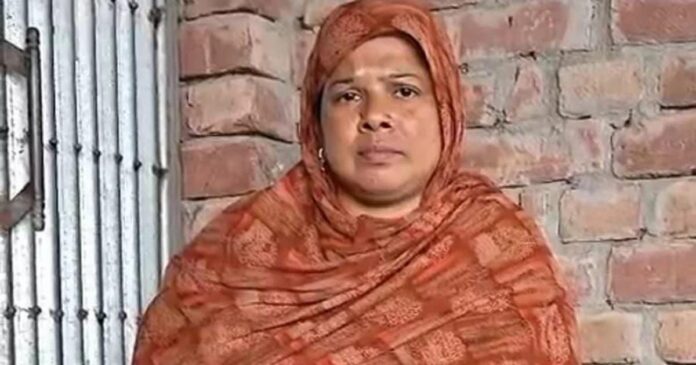
A Muslim woman from West Bengal was profiled as an illegal Bangladeshi migrant and forcibly pushed across the Indian border into Bangladesh at 1am — leaving her isolated from her husband and young sons, despite holding Indian documents proving her citizenship.
Sahida Fakir, 40, who was pushed across the Assam border into Bangladesh, is a victim of an ongoing issue where Indian security forces physically take people they suspect as illegal migrants across the border into Bangladesh, with no legal processes or identity checks.
Fakir’s family and rights group, Mahila Sarvangeen Utkarsh Mandal, MASUM cite her birth certificate, voter ID, PAN card and land records as evidence of her long-standing legal connection to India. West Bengal CID, however, has reportedly denied any knowledge of her detention.
Fakir, from Swarupnagar in West Bengal’s North 24 Parganas district, is now separated from her husband, Jumman Fakir, and their two sons, who remain in India.
According to Fakir, her family and human rights organisation Banglar Manabadhikar Suraksha Mancha (MASUM), she was stopped while going to a market and subsequently taken into custody.

False profiling
MASUM’s complaint alleges that police and Criminal Investigation Department (CID) officials identified her as a Bangladeshi national and took her to a facility where people suspected of being undocumented foreigners were being held.
Subscribe to our newsletter and stay updated on the latest news and updates from around the Muslim world!
The organisation further alleges that Fakir remained in custody for around 90 hours without being produced before a judicial magistrate and was denied access to legal assistance and communication with her family.
Speaking by telephone, Fakir said she was pushed across the border at around 1am and then spent hours walking through muddy fields.
She told The Indian Express: “I am an Indian citizen and just want to return home. My son is in Class 7; who will look after him?”
She is now reportedly staying with a family in Satkhira, Bangladesh.
Her family is seeking legal intervention for her return to India.
Documents cited by family and rights group
Fakir’s family and MASUM say she has multiple government records linking her to West Bengal.
The complaint states that Fakir’s birth was registered by the Bithari Hakimpur Gram Panchayat on October 12, 1995.
It also says her parents, Amanuddin Gazi and Majida Bibi, were listed on the 2002 electoral roll of the Swarupnagar Assembly constituency.
The organisation has presented these records as evidence that Fakir is an Indian citizen with a long-standing connection to West Bengal.
MASUM has raised questions about the legality of Fakir’s detention.
It further alleges that she was not informed of the grounds for her arrest, was denied access to legal counsel and was prevented from communicating with her family.
The organisation has asked for an investigation into the alleged detention and has sought preservation of CCTV footage, arrest records, station diaries, detention registers and other relevant material.
Why this case matters
Fakir’s case comes amid heightened scrutiny of Bengali-speaking Muslims in India, particularly migrant workers who travel from West Bengal to other parts of the country in search of work.
For many families, migration between eastern and western India is routine. But rights groups have raised concerns that language, appearance, place of origin or other forms of profiling can result in Indian citizens being wrongly treated as undocumented Bangladeshi migrants.
Fakir had reportedly moved to Mumbai with her husband around two decades ago in search of work. According to MASUM’s account, she worked as a domestic worker while her husband earned a living cleaning vehicles.
The issue is particularly sensitive in West Bengal, where debates over migration, citizenship and electoral rolls have intensified.
‘She belongs to our village’
Fakir’s family is not the only group asserting that she belongs to West Bengal.
Residents of Gobindapur, the village where her father and grandfather lived, reportedly wrote to the district magistrate on August 5 seeking her return.
According to Scroll, the villagers described Fakir as a permanent resident of the village and said they had known her family for generations.
Similar cases against Bengali-speaking workers
Fakir’s case follows other reported incidents involving Bengali-speaking people accused of being undocumented Bangladeshi migrants.
In 2025, two women from West Bengal, Sunali Khatun and Sweety Bibi, were reportedly detained in Delhi and pushed across the border into Bangladesh along with their families. They were later brought back following legal intervention, including proceedings before the Calcutta High Court and the Supreme Court.
In another case that year, five migrant workers from West Bengal who had been detained in Mumbai were reportedly pushed into Bangladesh. They were later repatriated following discussions between India’s Border Security Force and Bangladesh’s Border Guard Bangladesh.
Rights groups have cited such cases while raising concerns about the treatment of Bengali-speaking migrant workers when authorities suspect them of being undocumented Bangladeshi nationals.
A family waiting for her return
For Fakir’s husband and two sons, the debate over citizenship and migration has become a personal crisis.
She says she left home to buy groceries and ended up on the other side of an international border.
They are now seeking intervention from the courts and the Indian government to establish what happened to Fakir and secure her return.