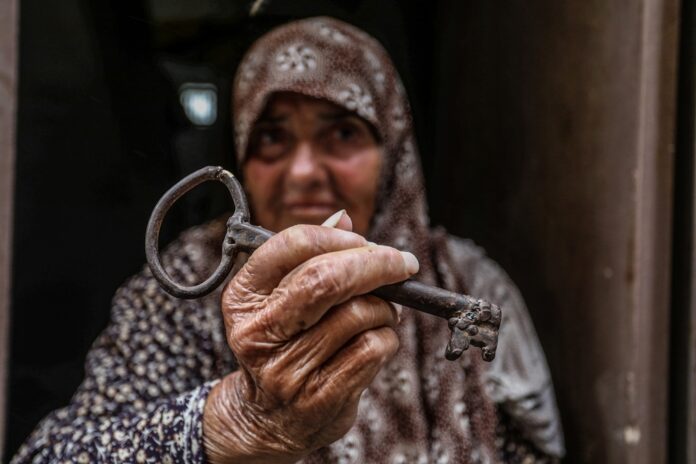
78 years since the 1948 Nakba, Palestinians continue to endure displacement, occupation and mass violence across Gaza, the West Bank and beyond. Abdul Wahid argues that the Nakba was never a single historical event, but an ongoing process sustained through war, territorial expansion and international complicity.
The Nakba (an Arabic word meaning “the catastrophe” in English) was not just a historical event in 1948, remembered on 15 May. It is an ongoing process of killing, ethnic cleansing and land theft that continues to this day.
Looking at the events of the mid-20th century through to the recent genocide in Gaza, and the systemic displacement in the West Bank and southern Lebanon, a pattern emerges: a systematic effort to replace an indigenous population through territorial expansion, mass violence and colonial collusion.
It has been a cyclical process – aided by the impunity granted by global powers and regional regimes – whereby crimes are committed, a reaction is provoked, and that reaction is then used to justify the theft of more land.
If this is understood, it not only becomes clear why all talk of “two states” is nonsense, but also why the seizure of parts of Syria and Lebanon has gone unchecked, and why the Zionist entity sees an imperative to strike down any regional rival.
But the sheer cruelty of these events has also been catastrophic for “Israel”, contributing to the collapse of global public support for its occupation.

1948: the original blueprint
Subscribe to our newsletter and stay updated on the latest news and updates from around the Muslim world!
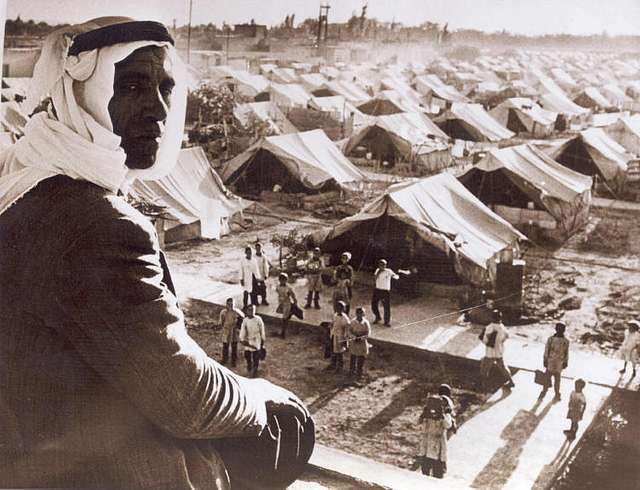
The foundation of this continuing catastrophe was laid in 1948 when Zionist terrorist groups, following the end of the British Mandate on 14 May 1948, launched a campaign that destroyed over 500 Palestinian villages and forcibly expelled between 750,000 and 900,000 people.
This was not a side effect of war, but a planned ethnic cleansing campaign. A critical tool in this process was the use of massacres to incite fear and panic, most notably at Deir Yassin, where villagers were executed to terrorise others into fleeing.
At the outset, this displacement served British colonial interests that sought a “loyal Jewish Ulster” in the Middle East to safeguard strategic routes to India. By the time the Zionists declared “statehood”, the Jewish population had been artificially increased from 8% to 32% through British-sponsored migration, eventually reaching over 80% in the newly occupied lands through the expulsion of Palestinians.
Under the Mandate, the British facilitated Zionist political organisation, meaning that when it ended, the Zionists were able to mobilise as a government. By contrast, they actively blocked Palestinian efforts to organise, leaving Palestinians disadvantaged by a lack of leadership, vision and cohesion.
Moreover, the artificial Arab regimes of the time never acted in Palestinian interests.
Gaza: From open-air prison to genocide
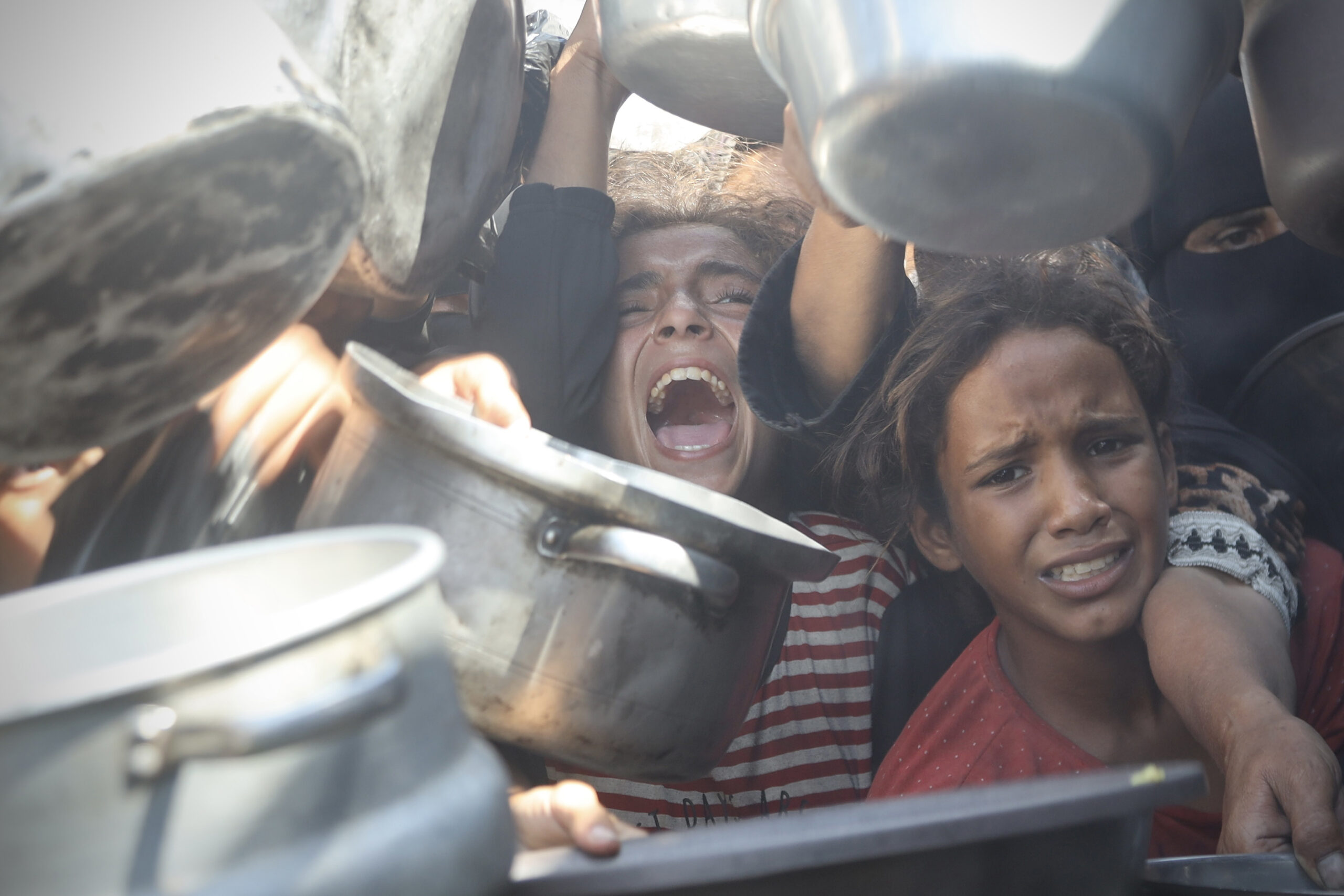
The recent crisis in Gaza is the most ruthless manifestation of the continuing Nakba. For sixteen years, Gaza functioned as a besieged open-air prison, where two million people were subjected to poverty wages and extreme restrictions on movement.
The post-October 2023 landscape, however, represents a shift from containment – and periodic “mowing the lawn” – to what has been described as genocide and total ethnic cleansing.
A direct parallel can be drawn between the 1948 expulsions and Israeli military orders for 1.1 million Palestinians in Gaza to move from the north to the south, effectively aimed at permanently depopulating the northern Gaza Strip whilst massacring those who remained. Later, the use of mass starvation as a weapon of war meant that hunger became a primary killer.
Those who fled to Khan Younis and Rafah were not spared the military onslaught.
Just as 1948 sought a demographic ratio of 80% Jewish to 20% Arab, genocidal rhetoric from Israeli leaders – declaring that there are “no innocent civilians in Gaza” – served to justify the total erasure of the Palestinian presence in areas designated as buffer zones.
The West Bank: a slow violent annexation
In the West Bank, the Nakba manifests as an ongoing settler-colonial project characterised by Balkanisation.
Since 1967, the occupation has evolved into a structure where Palestinians are confined to an archipelago of walled-off enclaves. The Oslo Accords were a trap that divided the land into Areas A, B and C, effectively leaving 60% of the West Bank (Area C) under total Israeli control and facilitating the growth of Jewish-only settlements.
The methods of ethnic cleansing here are both bureaucratic and violent: home demolitions (over 27,000 since 1967), land confiscation, and the construction of segregated Israeli-only roads that allow settlers to travel freely through the territory whilst Palestinians are delayed at hundreds of checkpoints. This is frequently compared to the former apartheid system in South Africa – a structure in which even the roads were segregated. The aim is to ensure that even if Palestinians are not explicitly expelled, they are rendered internally displaced and immobilised until their society collapses.
Violent intimidation of Palestinian villages and farmers echoes the techniques used in 1948 to make life unliveable for the established community.
Collusion and treachery
From the outset, there has been collusion by Western powers and betrayal by regional rulers.
In November 1947, on the eve of the UN Partition Plan, King Abdullah of Trans-Jordan met secretly with Zionist leader Golda Meir to discuss the fate of Palestine in accordance with their mutual interests.
But the Nakba could not have continued without the United States and Europe, which have defended Israeli war crimes whilst condemning similar actions elsewhere.
Historically, the British handed the problem to the UN only after creating an irreconcilable conflict.
Today, the US continues this legacy by providing the military and diplomatic cover that allows the occupation to thrive.
Just as Muslim client rulers have historically surrendered land, more recently they have entered into normalisation agreements such as the Abraham Accords. They are the “real Israeli defence force”, as their inaction or collusion prevents the mobilisation of the region’s vast material and military resources that could come to the aid of the Palestinian people.
The Nakba has been a systemic, unceasing process since 1948. Whether through the massacres of 1948, the apartheid wall in the West Bank, or the ongoing slaughter in Gaza and Lebanon, the objective remains the same: the ethnic cleansing of the Palestinian people from their homeland and the continued occupation of the Holy Land.
Ending this continuing colonial catastrophe requires a fundamental reshaping of the Middle East order and the emergence of sincere leadership that rejects the colonial divisions imposed a century ago. Until then, the Nakba remains a living reality for millions of Palestinians – whether in the ruins of Gaza, the fragmented West Bank, or the refugee camps of Lebanon and beyond.