



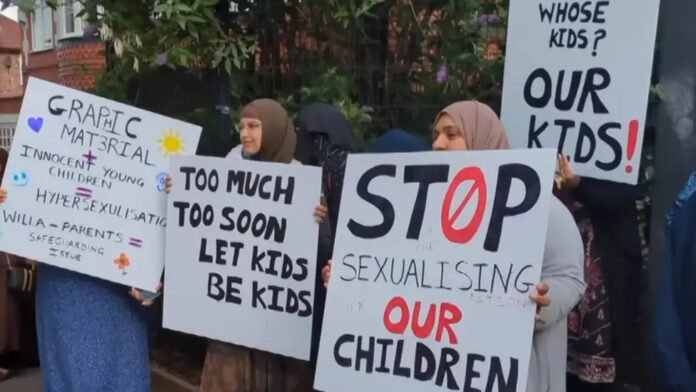
Every June, Muslim parents watch as schools embrace Pride Month in ways that conflict with their faith. In this khutba, Yusuf Patel of the Muslim Family Initiative argues that silence is no longer an option, and parents must understand both their rights and responsibilities to protect their children’s Islamic identity.
“O believers! Protect yourselves and your families from a Fire whose fuel is people and stones, over which are angels, fierce and severe; they do not disobey Allah in what He commands them and do whatever they are commanded.” [Surah at-Tahreem: 6]
O Muslims, June has arrived. In this country – and across the Western world – June is marked as “Pride Month.” Across our cities, on television, in shops, in workplaces and – critically – in our children’s schools, we will see a sustained push of values and lifestyles that fundamentally conflict with what Allah has told us to believe and how He has commanded us to live.
This is not simply a matter of different opinions held by different people. What we are witnessing is an organised, well-funded effort to reshape the minds of the next generation – including Muslim children – and many of our schools have become willing participants in that project.
The LGBTQ+ lobby has been so successful at presenting their struggle as that of the underdog, they have co-opted schools to fight their cause. Schools end up imposing subjective values as though they are universal, rather than originating from a particular worldview.

As parents and as a community, we often feel angry and confused. Angry at the way modern, disputed values are being imposed upon our children. Confused about how we should respond.
But what we know – what Islam demands of us – is that doing nothing is not an option. The Messenger of Allah ﷺ said: “Every one of you is a shepherd and every one of you is responsible for his flock.” (Sahih al-Bukhari & Muslim)
Subscribe to our newsletter and stay updated on the latest news and updates from around the Muslim world!
Parents, you are the shepherds of your children. That responsibility does not end at the school gate.
The Challenge in Our Schools
Let me speak plainly.
Some schools are doing nothing for Pride Month – and this is fine. But many schools across the country are holding assemblies, inviting external speakers, displaying flags and bunting, asking children to celebrate lifestyles that we – as Muslims – hold to be incompatible with what Allah has revealed. In some cases, children have been asked to participate in mock pride marches or wave pride flags. Some schools have done all of this without even informing parents.
Our children face a particular challenge: the values being promoted in school are presented not as one viewpoint among many – but as the truth, as compassion, as what good people believe. Any position that differs – including the Islamic position – is framed as hateful, backward, or bigoted.
This is the landscape our children navigate. And we, as parents, need to understand it clearly before we can respond wisely.
In one primary school, a teacher said to children, “wouldn’t you like to be gay”, in one secondary school a Muslim child who said that “being gay” was sinful in Islam was punished.

Our Rights — Islam and the Law
O Muslims, I want you to know something important: we have rights. As Muslim parents, our beliefs are protected under English law. The Equality Act 2010 identifies nine protected characteristics. Faith and belief is one of them, just as sexual orientation is one of them.
Schools have a legal obligation to balance all nine of these characteristics. They are not permitted to promote one or two characteristics at the expense of others. When a school actively promotes LGBTQ+ identities and treats Islamic values as though they have no place in the conversation, they are potentially in breach of their own legal obligations.
Imposing a single viewpoint on sexual relationships and family structures can amount, in law, to indoctrination as well as discrimination.
Furthermore, it is unacceptable and potentially unlawful for a school to force a Muslim child to participate in activities that violate their sincerely held religious beliefs. A Muslim child should not be compelled to wave a pride flag, participate in a mock pride march, or affirm a worldview that contradicts their faith.
Knowing your rights gives you the confidence to engage, not with hostility, but with knowledge and with dignity.
Five practical steps for parents
Here are five concrete things you can do as a Muslim parent during this period:
- Find out what your child’s school is doing.
You may be surprised, some schools do very little. But you will not know unless you ask. Send an email to the headteacher: “Are you planning any activities or events during Pride Month?” The very act of asking sends a message: I am an engaged parent. I care about what my child is being taught.
- Educate your school.
Schools understand LGBTQ+ needs in detail because organisations representing that community have invested millions in making their case. We have not been as effective in conveying the Islamic perspective. Schools need to hear from us – respectfully, clearly, in writing. Remind them of the Equality Act. Remind them that Muslim children’s faith beliefs are a protected characteristic. You do not need to be aggressive. Informed, calm, persistent engagement is far more effective.
- Seek Support
Download Muslim Family Initiative’s free guide, ‘Raising Proud Muslims, Not Pride Muslims’. And if you need support with a particular issue in school, call the Muslim Family Initiative Helpline for support.
- Join with other parents.
A letter from one parent is easily dismissed. A letter from twenty parents, Muslims and non-Muslims alike, because many non-Muslim parents share our concerns, is much harder to ignore. Seek out other parents. Build relationships with the parents at your child’s school. Act collectively.
- Talk to your child.
Do not leave your child to make sense of Pride Month alone. Talk to them. Explain what they might see or hear at school. Give them the Islamic framework – with love and without panic – before the school gives them a different one. A child who understands why they believe what they believe is far better equipped to navigate the world.
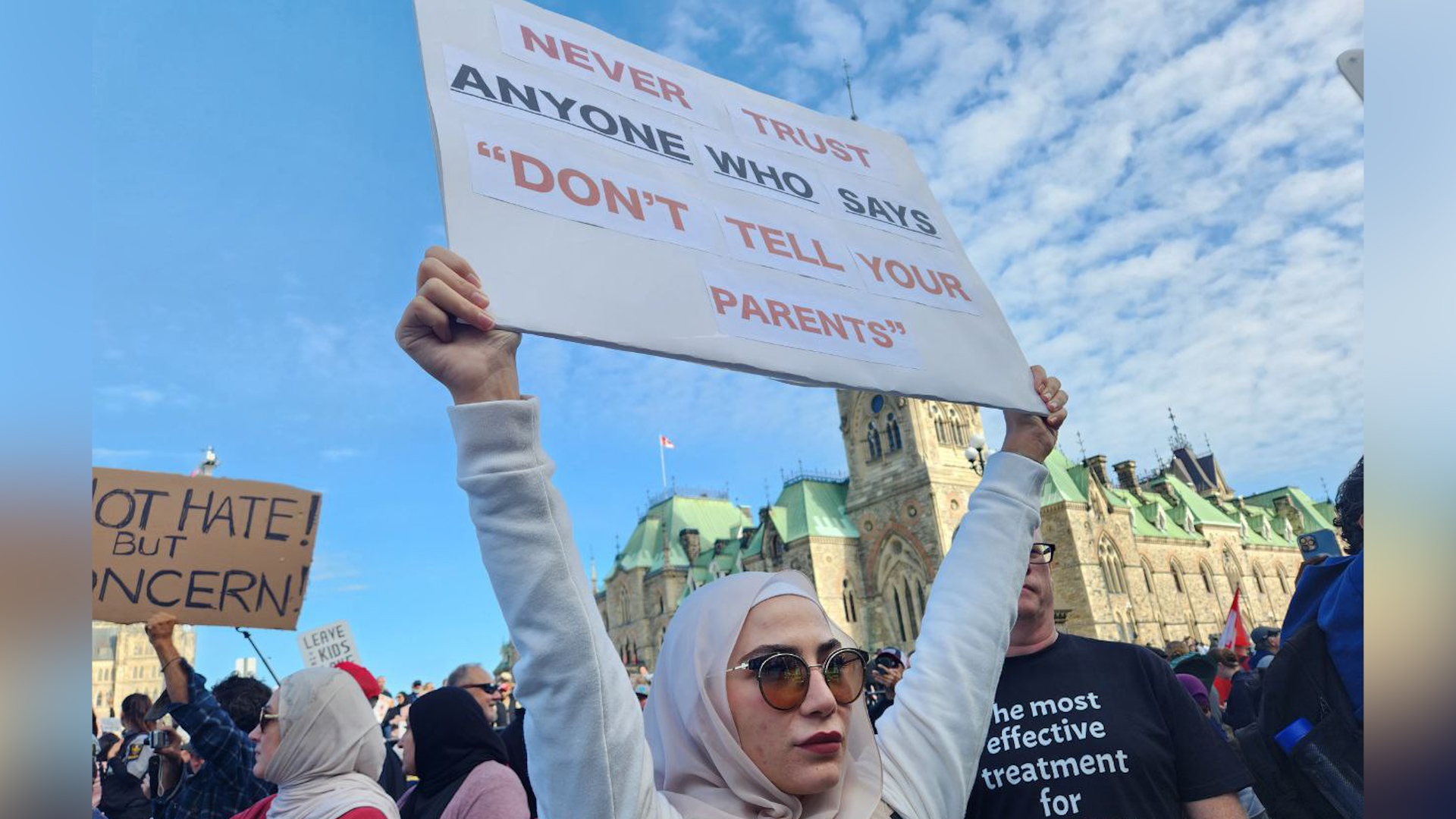
Our belief – firm, compassionate, certain
Let me address something that many of us feel but perhaps don’t articulate clearly enough.
We are told that supporting LGBTQ+ identities is compassion. We are told that our Islamic position is harmful. But O Muslims, we must understand: the most compassionate thing we can do for any human being is to tell them the truth as Allah has revealed it – with wisdom, with gentleness, with love.
Islam makes a crucial distinction that the modern world refuses to make: between a feeling, a behaviour, and an identity. A feeling is not permanent. A behaviour can change. But modern ideology has transformed certain feelings and behaviours into fixed identities – and then told people that to struggle against those feelings is to suppress “who you are.”
Islam teaches something altogether more profound: every human being was created with a fitra – a natural disposition – and our purpose in this life is to align ourselves with that fitra, to worship and obey Allah, and to struggle against those desires within us that pull us away from Him. That struggle is not oppression. That struggle is the very essence of what it means to be Muslim.
“And I did not create jinn and humans except to worship Me.” [Surah adh-Dhaariyaat: 56]
Our children need to hear this from us – not from a school assembly, not from a TikTok video, not from a TV programme. From us.
And they need to see that their parents are not afraid. That their parents engage with the world with knowledge, with confidence, and with certainty in what Allah has told us to be true.
Building the home our children need
O Muslims, I want to speak to you now not about schools – but about our homes.
Research consistently shows that children who are emotionally secure – who know they are loved (especially by their father), who have a strong sense of identity, who feel attached to their families – are far less vulnerable to the kind of identity confusion that the modern world actively cultivates.
The Messenger of Allah ﷺ was the best of fathers and the most loving of men. When al-Aqra’ ibn Habis saw the Prophet ﷺ kiss his grandson Hasan ibn ‘Ali, he was shocked. He said: “I have ten children and I have never kissed any of them.” The Prophet ﷺ replied immediately and without hesitation:
“Whoever does not show mercy will not be shown mercy.” (Sahih al-Bukhari)
That response was a rebuke. A warning. A child who does not feel loved by their father is vulnerable. This is not emotion, this is a reality we see playing out in our communities.
O fathers – and I speak especially to fathers today – when did you last tell your son that you love him? When did you last hug your daughter? When did you last sit with your child – not in the same room, but truly present, giving them your undivided attention, one to one?
A child who is not sure if they are loved by their father will be vulnerable to LGBTQ+ identities and promiscuous relationships.
Children feel and understand love in different ways. Some children feel most loved when you hug them (physical touch). Others when you tell them how proud you are of them (words of affirmation). Others when you spend focussed, one-to-one time with them (quality time). Others when you do something for them – carry their bag, make their favourite meal (acts of service). Others when you bring them even a small gift (receiving gifts).
Ask yourself: does my child know, beyond any doubt, that I love them? Would they answer yes immediately – or would they have to think about it?
It is never too late to start. The impact on your child – and on your relationship with them – will be, insha’Allah, transformational.
Three things to do this week
Before we close, let me give every parent here three practical things to do this week:
- Send one email to your child’s school asking what, if anything, they are planning for Pride Month. Keep it polite, keep it short.
- Speak to your child tonight. Ask them: “Have you seen or heard anything at school about Pride Month? What did you think about it?” Listen before you speak. Create the space for them to come to you.
- Show your child one act of love this week that is clear and unmistakeable – a hug, a word of praise, a moment of your undivided time. Do it deliberately, not by accident.
May Allah make our homes places of iman, of love, and of firm foundations. May He protect our children from all that is harmful and guide them to be among those who worship Him in the way that pleases Him. May He give us the wisdom and the courage to guide them with knowledge, with love, and with certainty.
O Allah, Lord of all creation – protect our children. Protect them in the schools they attend, in the streets they walk, in the content they consume. Protect their fitrah, the natural disposition You placed within them when You created them.
O Allah, give our parents – our fathers and our mothers – wisdom. Give them the knowledge to engage with the world without fear. Give them the courage to stand firm on what You have revealed, even when they stand alone. Give them the love to nurture their children in a way that makes those children feel wanted, secure, and certain of their identity as Muslims.
O Allah, guide our children. If any among them are struggling – with confusion, with doubt, with desires they do not understand – do not let them struggle alone. Draw them close to You. Guide them to parents and scholars and communities who will support them on Your straight path.