


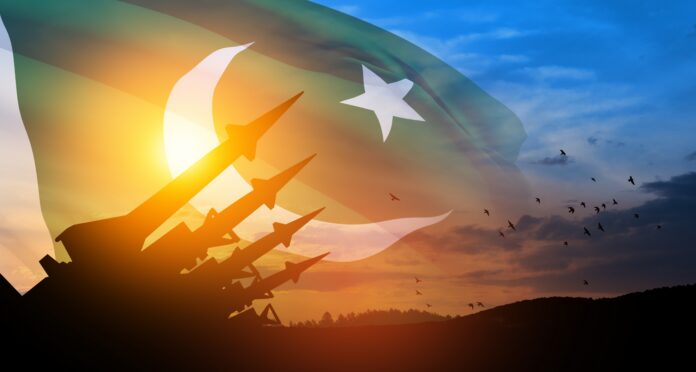
Pakistan’s nuclear tests, conducted on May 28, 1998, did more than counter India — they shattered the myth of permanent Muslim weakness, forcing hostile powers to reckon with a sovereign Muslim state armed with ultimate deterrence, writes Muhammad Siddeeq.
Every year on May 28, Pakistan marks Youm-e-Takbeer, the anniversary of the 1998 Chagai nuclear tests. The day is not remembered as a routine military commemoration. It is treated as a national and civilisational milestone — a moment when Pakistan announced that its sovereignty would not depend solely on alliances, foreign aid, international sympathy or pleas to the UN Security Council.
For Pakistanis, Chagai represents the hour when a vulnerable Muslim state stepped into the highest chamber of strategic power. The tests were conducted in response to India’s Pokhran-II nuclear tests earlier in May 1998. But their meaning quickly exceeded the India-Pakistan rivalry. They came to symbolise national defiance, Muslim dignity and the refusal of a developing post-colonial state to remain permanently vulnerable and exposed to hostile states who possess superior military force.
For friendly Muslim countries, too, the anniversary has emotional and strategic resonance. Pakistan’s nuclear weapons are legally and operationally Pakistani. They are commanded by the Pakistani state, not collectively by an Islamic bloc. Yet symbols matter in international politics.
To many Muslims, Pakistan’s bomb is not simply a Pakistani bomb. It is the one declared nuclear deterrent possessed by a Muslim nation in a world where Muslim states have too often been invaded, bombed, sanctioned, partitioned or destabilised.

The shield that changed Pakistan’s destiny
Pakistan’s nuclear weapons are first and foremost a shield against existential danger. The country lives beside India, a state far larger in population, economy, conventional military strength and diplomatic reach. Without nuclear weapons, Pakistan would face the permanent risk of strategic coercion by a more powerful neighbour.
Subscribe to our newsletter and stay updated on the latest news and updates from around the Muslim world!
That is the central reason nuclear deterrence is regarded in Pakistan not as a luxury, but as a necessity. Nuclear capability prevents an adversary from believing that Pakistan can be defeated, dismembered or forced into submission at an acceptable cost.
It does not make Pakistan invulnerable. It does not solve poverty, political instability, terrorism, debt or bad governance. But it does make the destruction of Pakistan an unthinkably dangerous project.
For Pakistan, therefore, nuclear weapons are not simply instruments of war. Their primary function is to prevent war. They sit behind the state as a final warning: Pakistan may be pressured, criticised, sanctioned or isolated, but it cannot be conquered without catastrophic risk.
Why Israel must take Pakistan into account
Pakistan’s nuclear status also has implications for Israel.
Israel’s immediate military concerns are Iran, Hezbollah, Hamas, Syria, Yemen and the wider Arab theatre. Pakistan is geographically distant and has no diplomatic relations with Israel. Yet distance does not erase strategic significance.
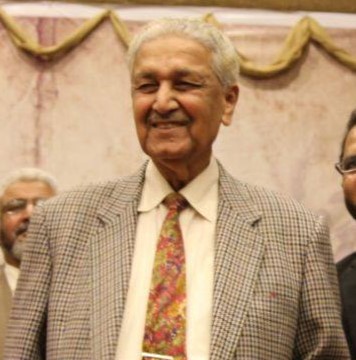
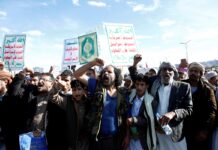
Source https://commons.wikimedia.org/wiki/File:On_Youth_Assemblage_to_Ignite_Khudi.jpg
Pakistan is a large Muslim nuclear state with one of the world’s most powerful armies, long-range missile capabilities, strong links to Gulf states and a public opinion that is overwhelmingly pro-Palestine and deeply suspicious of the Zionist state.
This does not mean Pakistan is about to enter a war in the Middle East. It does not mean Pakistan would use nuclear weapons on behalf of another country. Its nuclear doctrine is focused overwhelmingly on India. But Israeli planners cannot ignore the existence of a Muslim nuclear power when calculating the political and strategic consequences of its invasion and occupation of Muslim lands.
For Israel, Pakistan is not a frontline adversary. But it is a latent strategic variable: distant, restrained, yet impossible to dismiss. Israeli military action across the region may be planned with Iran, Lebanon, Syria or Gaza in mind, but any attempt to frame regional conflict as a wider confrontation with Muslim sovereignty gives Pakistan’s symbolic weight greater force.
The ‘Islamic bomb’ – feared by some, cherished by many
The phrase “Islamic bomb” has long been controversial. In Western and Israeli discourse, it has often been used with alarm, suggesting proliferation, ideological danger or the fear that Pakistan’s weapons might one day serve a wider Muslim cause.
But from a Muslim and Pakistani perspective, the phrase carries a very different meaning.
The Islamic bomb need not mean a reckless weapon of religious war. It can mean the arrival of undenial Muslim strategic clout in a world where power is respected more than justice and fairness. It can mean that at least one Muslim state possesses the ultimate deterrent and cannot be casually bombed, invaded or dismantled like Iraq, Libya or Syria.
That is why Pakistan’s nuclear weapons carry implications far beyond Pakistan’s borders. In strict legal terms, they belong to Pakistan alone. In symbolic terms, they belong to a much larger story: the recovery of Muslim pride after centuries of colonial subordination, military defeat and strategic dependency.
Pride, reassurance and powerful symbolism
For many Muslim countries, Pakistan’s nuclear status is a source of pride and a psychological guarantee of security. This is particularly true in a world where Israel is widely believed to possess nuclear weapons, Iran is under enormous pressure over its nuclear programme, and Arab states remain dependent on American protection.
This is why Chagai still resonates. It represents not only Pakistani survival, but the idea that Muslim sovereignty can be defended by more than speeches, protests and appeals to international law.
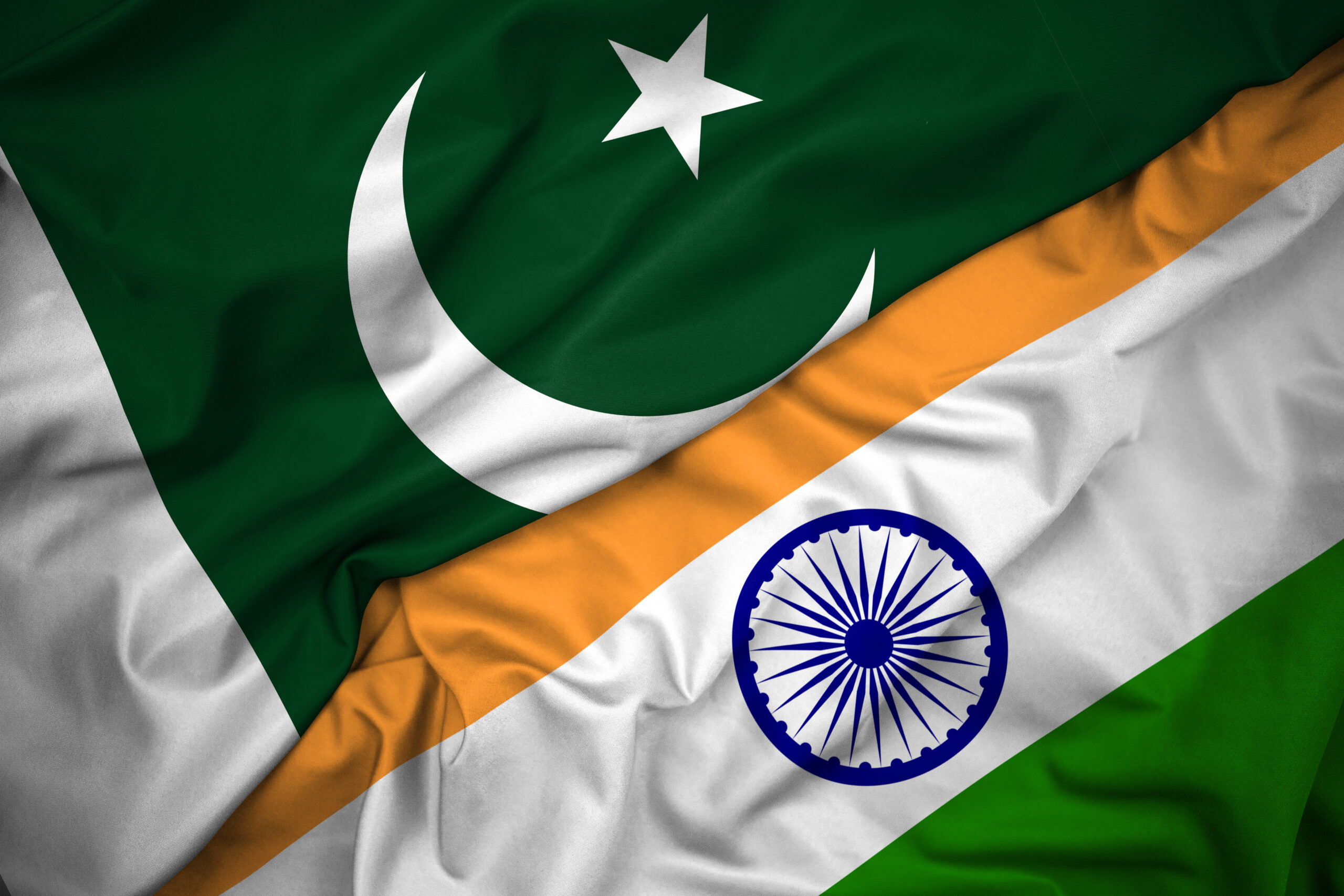
But Pakistan’s nuclear status also carries a burden. A nuclear state cannot afford political instability, economic dependency on the IMF and the World Bank or a leadership without ideological conviction.
This is perhaps Pakistan’s greatest vulnerability. Its nuclear weapons are powerful, but deterrence is not maintained by warheads alone. It requires a serious and sincere Islamic leadership behind them: disciplined command structures, economic resilience, scientific investment, political unity and leaders who understand the historical meaning of Pakistan.
A state founded on an idea cannot be led merely by managers, opportunists or nationalist players. Pakistan was not created as an ordinary administrative unit. It was born from the conviction that Muslims of the subcontinent required political sovereignty to preserve their identity, dignity and future. That founding idea gives Pakistan its moral compass. If that idea is weakened, the state’s strategic purpose is weakened too.
Chagai’s enduring message
The Chagai tests were explosions under a mountain, but their meaning rose far beyond the desert of Balochistan. They changed Pakistan’s destiny. They altered India’s calculations. They forced Israel and other regional powers to recognise that Muslim strategic power did not disappear with the end of the Ottoman empire. They gave many Muslims a rare symbol of strength in an age of humiliation.
At a time when Iran is being told it must never cross the nuclear threshold, the meaning of Pakistan’s achievement becomes clearer than ever.
Youm-e-Takbeer is therefore more than an anniversary. It is a reminder that in a volatile and dangerous world, sovereignty without power is fragile, and dignity without deterrence is easily ignored. Pakistan’s nuclear weapons are its shield – but for many Muslims, they are also proof that the age of Muslim helplessness need not be permanent.