




5Pillars has compiled a brief guide for Muslims living in the West on how to navigate LGBTQ Pride month during June.
Pride Month celebrates LGBTQ identities, promotes visibility and equality, and commemorates the 1969 Stonewall Riots, a key event in the LGBTQ rights movement. It is often marked by parades, community events and educational activities.
We have based the following guidance on publicly available guidance provided by mainstream Muslim scholars.
This is one of the most pressing challenges facing Muslim families in the West today: how to navigate LGBTQ-related issues while remaining grounded in Islamic teachings.
Drawing on the Quran, Sunnah, and contemporary social realities, we outline a framework aimed at helping parents, communities, and young Muslims engage with the topic in a manner which is faithful to Islamic principles.

An Islamic framework for sexual ethics
Islam recognises human desires and pleasures — including intimacy — as blessings from God. However, these blessings are accompanied by divinely prescribed limits.
Subscribe to our newsletter and stay updated on the latest news and updates from around the Muslim world!
Just as society places boundaries on other forms of pleasure and consumption, Islam also establishes clear guidelines regarding sexual conduct.
In this framework, moral standards are derived from divine revelation rather than individual desire or changing social norms.
The Quranic account of Prophet Lut (as) and related Hadith clearly show that same-sex sexual relationships are prohibited in Islam.
“Do you approach males among the worlds and leave what your Lord has created for you as mates? Rather, you are a transgressing people.” (Qur’an 26:165–166)
Similar passages appear in Qur’an 7:80–84, 11:77–83, 27:54–58, and 29:28–35. Classical scholars understood these verses as condemning same-sex sexual acts.
The Quran consistently describes spouses as male and female:
“And among His signs is that He created for you from yourselves mates that you may find tranquility in them…” (Qur’an 30:21)
Other relevant verses include Qur’an 4:1, 49:13, and 53:45. Traditional Islamic law recognises marriage only between a man and a woman.
The Prophet Muhammad ﷺ condemned the actions of the people of Lut in several hadith. These narrations were understood by classical scholars as further evidence that same-sex sexual acts are prohibited.
The four Sunni schools of law (Hanafi, Maliki, Shafi’i, and Hanbali), as well as mainstream Shia scholarship, agreed that same-sex sexual acts are haram. While scholars differed on legal details, there was broad agreement on the prohibition itself.
At the same time, Islamic teachings emphasise treating every person with dignity, respect, and compassion while maintaining the religious boundaries established by the Quran and Sunnah.
Marriage and lawful intimacy are restricted to the union of a husband and wife, which Islamic teachings view as the foundation for family life, lineage and social stability.
Distinguishing attraction from conduct
Experiencing same-sex attraction is not, in itself, considered sinful in Islamic theology, as individuals are not held accountable for involuntary feelings. Rather, accountability is tied to actions and choices.
Muslims who experience same-sex attraction should not be viewed as lesser believers. Instead, those facing such struggles should seek spiritual support, exercise patience, and pursue closeness to God in the same way Muslims are encouraged to resist any temptation viewed as religiously prohibited.
Advice for parents and communities
Parents should discuss Islamic teachings on sexuality with children from an early age, using age-appropriate examples to explain the purpose of desires and the importance of ethical boundaries.
Strong family relationships, regular religious education, and open communication are presented as key tools for helping young Muslims navigate contemporary cultural influences.
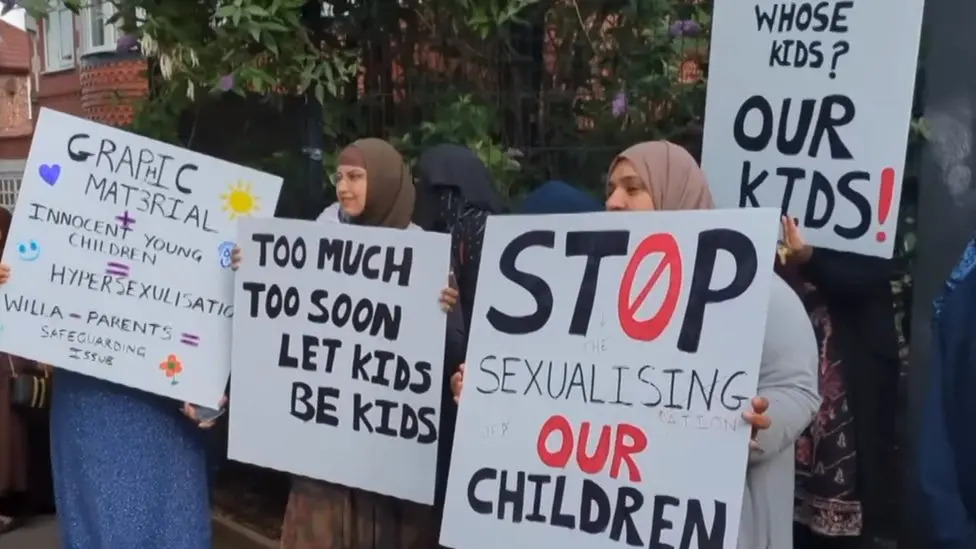
Muslim parents should remain informed about the messages their children encounter through schools, social media and popular culture. Developing critical-thinking skills and providing faith-based perspectives can help young people engage with competing worldviews.
At the same time, there should be “compassion without compromise” — supporting individuals who struggle with questions of sexuality while maintaining traditional Islamic positions on marriage and sexual ethics.
Counseling and professional support should be offered that aligns with a person’s religious values.
A broader moral argument
Without divine revelation, moral standards become subjective and increasingly difficult to define consistently. For Muslims, ethical principles are ultimately determined by God’s guidance rather than public opinion or social trends.
Muslim families should actively discuss these issues at home, engage with trusted religious scholarship, and reinforce the importance of deriving values from the Quran and Sunnah.
Believers should pray for guidance, strengthen family bonds, and support future generations in maintaining their faith.









An excellent practical guide for Muslims!
maybe support queer muslims and emphasize on stopping violence against us
This is so hilariously homophobic lmao
Short version: Brother, ewww?