


For millions of Muslims in West Bengal the BJP’s victory in recent local elections is not being seen as a democratic transition, but as another step towards an India where their identity, loyalty and belonging are constantly questioned, writes Ahmed Daiyan.
The recent political developments in the Indian state of West Bengal, where the BJP won local elections in a landslide, have reignited concerns over the future of Muslims under the growing influence of Hindutva politics.
Following a fiercely contested state election, reports of communal tension, targeted intimidation, and post-election violence emerged from several districts across the state.
While political violence is not new to West Bengal, the current atmosphere seems to be something deeper than ordinary electoral conflict.
For many Muslims in the state, the issue is no longer limited to party politics. It is increasingly about their citizenship and security in an India where extremist Hindu nationalist politics continues to expand its influence.

West Bengal’s political importance
West Bengal is home to more than 100 million people and contains one of the largest Muslim populations in India.
Subscribe to our newsletter and stay updated on the latest news and updates from around the Muslim world!
Muslims account for roughly 27 percent of the state’s population, with particularly high concentrations in districts such as Murshidabad, Malda, and Uttar Dinajpur.

For more than a decade, the state was governed by Mamata Banerjee and her party, the Trinamool Congress (TMC). She positioned herself as a protector of minority communities and maintained strong electoral support among Muslim voters.
In the 2021 state election, the TMC dominated nearly all Muslim-majority constituencies while the Bharatiya Janata Party (BJP) struggled to gain any traction in those areas.
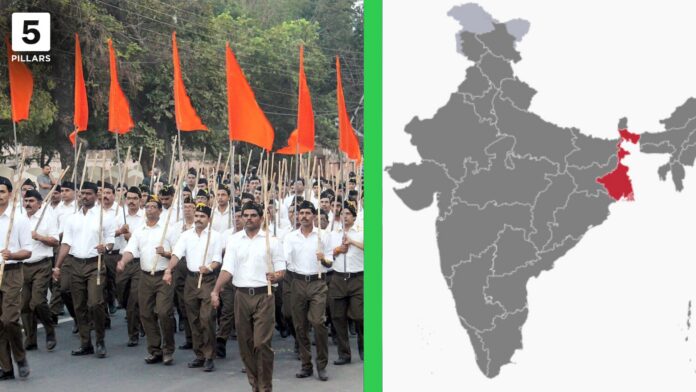
The recent election, however, marked a major political shift. The BJP achieved a historic landslide victory in the state, winning 207 out of 294 seats.
This has fundamentally altered West Bengal’s political landscape and raised concerns among minority communities about what may follow.
The rise of Hindutva politics
The BJP’s rise in West Bengal is part of a broader national transformation taking place under Prime Minister Narendra Modi and the wider Hindutva movement.
Hindutva, often described as Hindu nationalism, promotes the idea that India is fundamentally a Hindu civilisation.
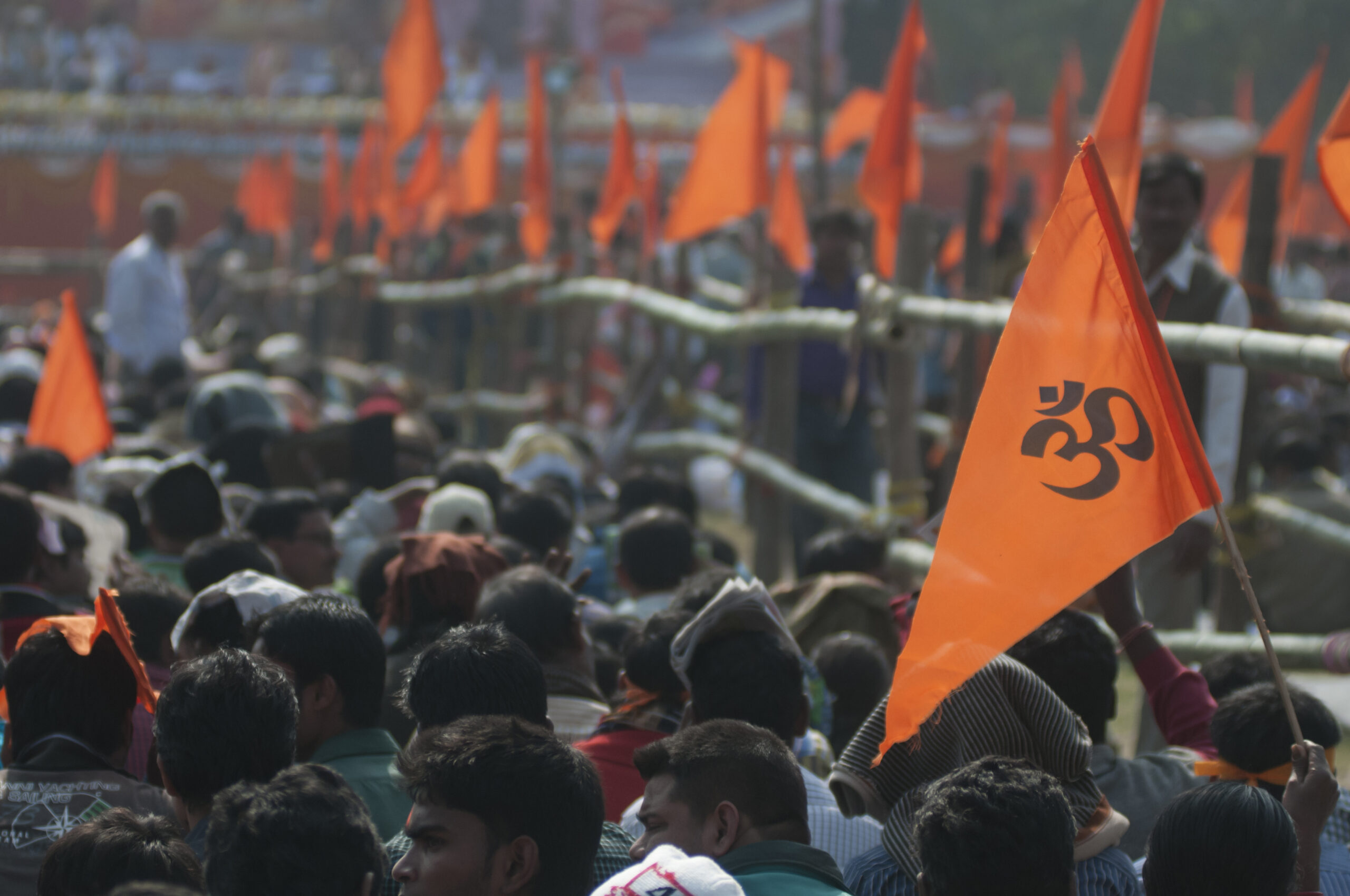
Editorial credit: arindambanerjee / Shutterstock.com
Supporters argue that the ideology seeks to restore cultural pride and national unity. Hindutva increasingly defines Indian identity in religious terms and leaves minorities, particularly Muslims, politically vulnerable.
Over the past decade, Muslims across India have expressed growing concern over the direction of national politics.
Debates surrounding the Citizenship Amendment Act, proposals for a National Register of Citizens, the revocation of Kashmir’s autonomy, and repeated communal flashpoints have contributed to fears that Muslims are gradually being portrayed as outsiders within their own country.
In West Bengal, those anxieties have become closely linked with political rhetoric surrounding illegal immigration and border security.
The “infiltrator” narrative
One of the BJP’s central political messages in West Bengal focused on allegations of illegal migration from neighbouring Bangladesh.
BJP leaders repeatedly referred to Indian Muslims as “Illegal Bangladeshi infiltrators” during campaign speeches and political rallies, particularly in border districts with large Muslim populations.
This rhetoric became especially controversial during revisions to voter rolls conducted before the election. Opposition figures and activists alleged that large numbers of Muslim voters were removed or flagged during the process.
Several residents reportedly claimed that despite possessing official documentation, their names were missing from electoral records.
Nine million names were either flagged or removed. Muslims were disproportionately affected while being a minority of the population.
Violence after the election
Shortly after the election results were announced, reports of violence and intimidation emerged from different parts of West Bengal.
Political clashes resulted in deaths, arrests, and widespread tension across several districts.
Multiple incidents carried a clear communal dimension. Videos circulated online allegedly showing groups chanting Hindu nationalist slogans while moving through Muslim neighbourhoods.
Reports also emerged of attacks on Muslim-owned businesses, intimidation near mosques, and vandalism targeting local political offices associated with Muslim candidates.
In some areas, residents claimed that police either failed to intervene effectively or arrived only after violence had already taken place.
Several incidents involving public harassment of visibly Muslim individuals, including women wearing the burqa, further fueled concerns that communal hostility was becoming increasingly normalized.
Murshidabad and earlier communal tensions
The tensions seen after the election did not emerge in isolation. In 2025, serious communal violence erupted in parts of Murshidabad during protests linked to India’s Waqf Amendment Act, legislation concerning Muslim religious properties.

The unrest resulted in deaths, arrests, and the deployment of security forces. Internet restrictions were also imposed in affected areas.
The violence quickly became a major political issue and was heavily referenced during subsequent campaign rhetoric.
For critics of Hindutva politics, the Murshidabad unrest reflected a larger pattern in which communal tensions are increasingly tied to electoral strategy.
Fear, suspicion, and identity-based narratives are often amplified during political campaigns, particularly in regions with significant Muslim populations.
Future of Muslims in India
The developments in West Bengal raise broader questions about the future of secularism and minority rights in India.
India is home to more than 200 million Muslims, making it one of the largest Muslim populations in the world.
The country’s constitution defines India as a secular republic, yet the growing dominance of Hindu nationalist politics is reshaping the meaning of citizenship and national identity.
Among many Muslims in the state, the atmosphere following the election has deepened feelings of insecurity.
Concerns over political representation, public hostility, and social exclusion continue to grow as Hindutva politics expands into regions that were once considered resistant to Hindu nationalist influence.
For many families in West Bengal today, the issue is not simply about who won an election. It is about whether they will continue to be safe and accepted in the country they have lived in for generations.
Ahmed Daiyan is the founder of Ekhoni Shomoi