Muslims in Britain have heard the same narrative for years, “If you don’t vote Labour, the far right will come to power.” However, with the undeniable rise of Reform UK after the recent elections, Muslims must face up to the reality and ask themselves a series of tough questions, Dilly Hussain writes.
For as long as I can remember — going back to 2010, when the Conservatives and the Liberal Democrats formed their coalition government — there has been a persistent and deeply manipulative narrative pushed within Muslim communities across Britain.
It intensified through the 2015, 2017 and 2019 general elections, as the Conservative Party grew increasingly Islamophobic, xenophobic and ever more aggressive in its approach to so-called “non-violent Islamist extremism.” The message, repeated endlessly within our communities was this:
If Muslims don’t vote Labour, the far right will come to power.
It was a narrative designed to instil fear and ensure that Labour remained the only option Muslims felt they had.

Under Jeremy Corbyn in 2017 and 2019, there was admittedly genuine scope for a different kind of Labour Party, one distinct from the Tony Blair era that gave us Afghanistan, Iraq, Prevent, and the entire counter-extremism framework now embedded within British law.
But that window has closed. And with the meteoric and now undeniable rise of Reform UK and the far-right, demonstrated so starkly in last week’s local elections, a far more urgent and uncomfortable question must now be asked, seriously and sincerely: what is the future of Muslims in Britain?
Subscribe to our newsletter and stay updated on the latest news and updates from around the Muslim world!

I want to be clear about what I am and am not saying. I am not presenting this as a binary choice. Nor am I advocating for hijrah from a position of privilege, without acknowledging the financial realities and complex circumstances of hundreds of thousands of Muslim households across this country.
Hijrah – a real possibility?
As Muslims, we know the Prophet ﷺ reminded us that the believer is like a traveller, here for a short time and simply passing through this world. But that hadith presents a complicated dilemma for Muslim families in Britain today.
What I am saying is this: we need to have an honest conversation, one that our forefathers, particularly those who came from the Indian subcontinent, were never afraid to have.
They warned their children never to sell their land or ties to their ancestral motherlands because the white man could, and would, remove you the moment it suited him.
That conversation, once confined to kitchen tables and community halls, is now taking place in policymaking circles. Within Reform, and even within Labour, there is open discussion about denaturalising citizens who are not deemed sufficiently “conducive to the public good” — a chilling phrase with an obvious target. It is not speculation. It is a policy direction.
If Reform comes to power — and we should be under no illusions about the direction Britain is heading — we are likely looking at sweeping censorship legislation, alongside attempts to ban Muslim civil society organisations across the board: media outlets, advocacy groups, charities, mosques, sharia councils, lobbying bodies and more.
The environment is being deliberately constructed to become unliveable, first for so-called illegal immigrants and then, incrementally, for politically aware and visible Muslims.
Build a future-proof plan
So here is what I am proposing: every Muslim family in Britain should have a contingency plan. Identify one or two countries where relocation would be viable if the situation here deteriorates further. Whether that is Turkey, Malaysia, your ancestral motherlands or elsewhere in the Muslim world, this is a conversation worth having now, before circumstances force it upon you.
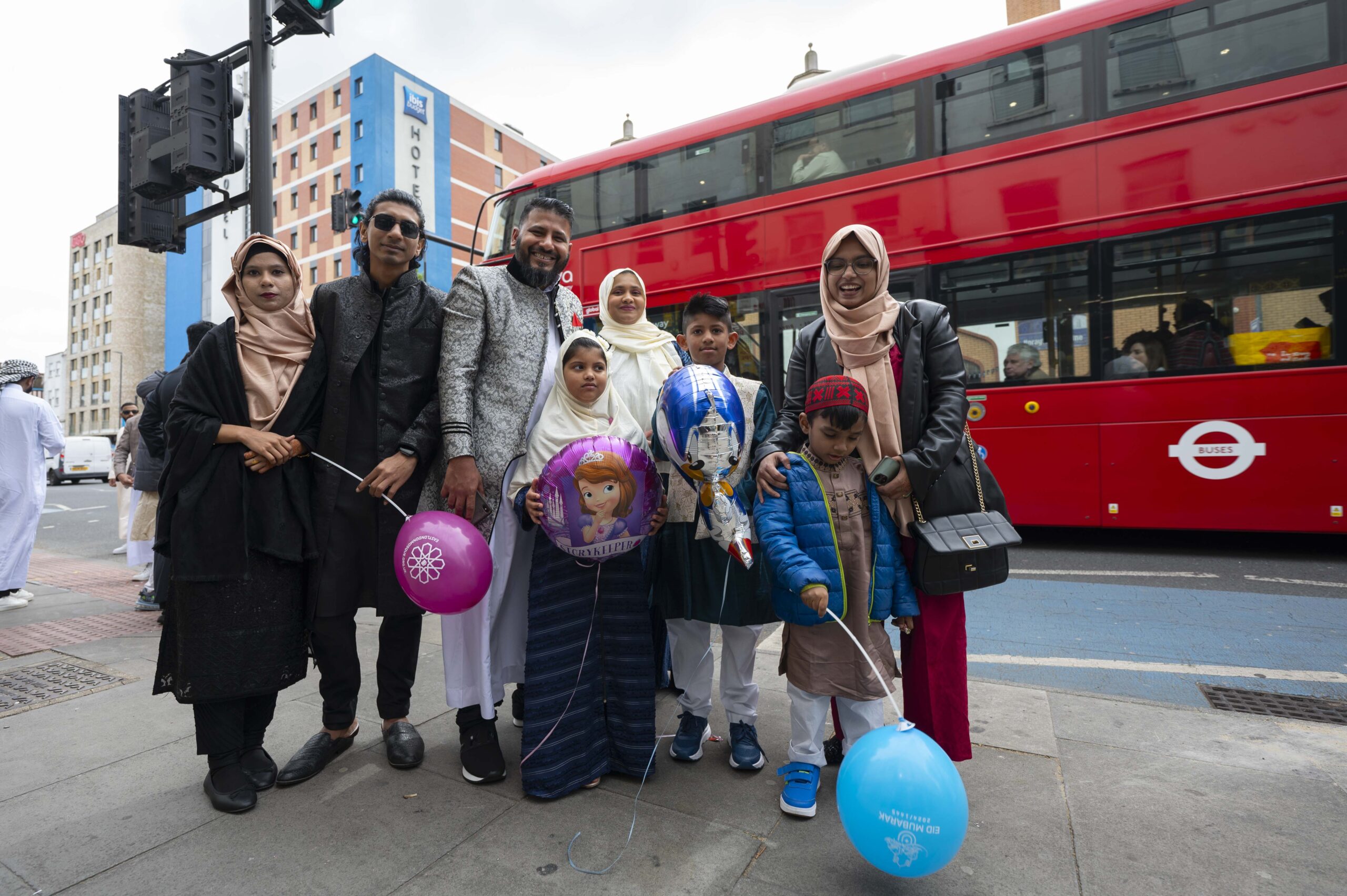
But in the same breath, classical Islamic jurisprudence is broadly clear on this point: the primary justification for Muslims living as minorities in non-Muslim majority lands is to convey the message of Islam to the people of those lands through dawah, good character and principled public engagement.
To those Muslims who are doing exactly that, directly or indirectly, through their own efforts or by supporting those who do, this piece is not directed at you. You already have your answer.
It is directed at the Muslims who are simply existing in Britain as economic units — working, accumulating wealth, repeating the cycle, while remaining entirely disengaged from the responsibilities of their faith and community. To them I ask: what do you genuinely believe your future here looks like?
And finally, a word to those who have “made it” financially and are considering moving out of Muslim-majority urban areas into predominantly white neighbourhoods, drawn by better schools or lower crime.
With Islamophobic attacks spiking to unprecedented levels and the far right emboldened at every turn, is it truly wise to make yourself a more visible and isolated target, however understandable the motivations may be?
This edition of Editor’s Dispatch is not a call to pack your bags. It is not a declaration that Britain is beyond saving. It is a question directed at every Muslim reading this about your role here, your responsibilities, and whether you are truly prepared for what may be coming.
Because the heat is rising. And it will reach every doorstep, whether you are paying attention or not.