



At least 13 people have been confirmed dead and 13 others rescued after a boat carrying dozens of Rohingya migrants capsized near the maritime border between Malaysia and Thailand.
Malaysian authorities are still searching for more than 40 people who remain missing following the deadly incident.
According to Malaysia’s state-run news agency Bernama, seven bodies were recovered by Malaysian authorities, while Thai officials found six others. Maritime First Admiral Romli Mustafa said the search operation has expanded to cover more than 250 square nautical miles, with strong currents drifting victims toward Malaysian waters.
“We expect to discover more victims today, as sea current patterns in the search area indicate that they are drifting towards Malaysian waters,” Mustafa told reporters.
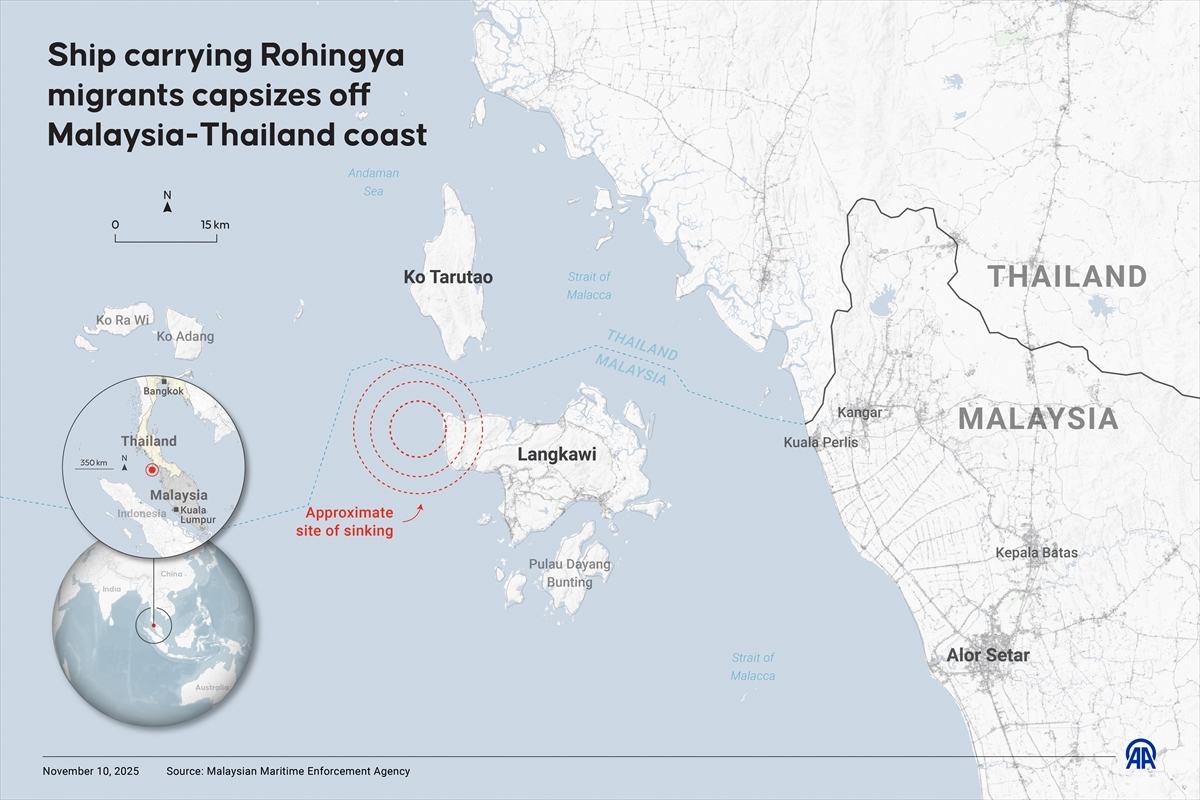
Malaysian police reports revealed that the group had departed from Myanmar aboard a large vessel carrying about 300 people. As they neared the border, passengers were transferred to three smaller boats — each carrying around 100 people — to evade detection by authorities.

One of these boats capsized three days before being discovered drifting in Thai waters. The status of the other two boats remains unknown.
Malaysia’s Kedah police chief, Adzli Abu Shah, confirmed that survivors included three Myanmar men, two Rohingya men, and one Bangladeshi man, while one of the deceased was identified as a Rohingya woman.
Subscribe to our newsletter and stay updated on the latest news and updates from around the Muslim world!
“The incident is believed to have occurred in Thai waters before they drifted into Malaysian waters,” he said.
Authorities have launched an extensive search-and-rescue operation, coordinated between Malaysian and Thai maritime forces. The tragedy underscores the growing desperation of the Rohingya people, who continue to risk their lives on perilous sea journeys in search of safety and stability.
Who are the Rohingya
The Rohingya are a Muslim ethnic minority from Myanmar, historically concentrated in Rakhine State, who have endured decades of persecution. Despite living in Myanmar for generations, they are not recognised as citizens under the 1982 Citizenship Law, rendering them the world’s largest stateless population.
As a result, they face systematic discrimination, restrictions on movement, and denial of basic rights such as education, healthcare, and employment.
Violence and military crackdowns have driven hundreds of thousands of Rohingya to flee Myanmar, particularly during the 2017 crisis when widespread atrocities were documented. Entire villages were burned, thousands were killed, and more than 742,000 people were forced to flee across the border into Bangladesh. The United Nations has described the Rohingya as “the most persecuted minority in the world.”
The Rohingya refugee crisis
Today, more than 1 million Rohingya live in Bangladesh, mostly in the overcrowded camps of Cox’s Bazar — the world’s largest refugee settlement. Many others have sought refuge in neighbouring countries such as Malaysia, India, and Thailand.
Humanitarian agencies report that 95 percent of Rohingya households in Bangladesh depend on aid, and over half the refugee population is under 18 years old, with limited access to education and livelihoods.
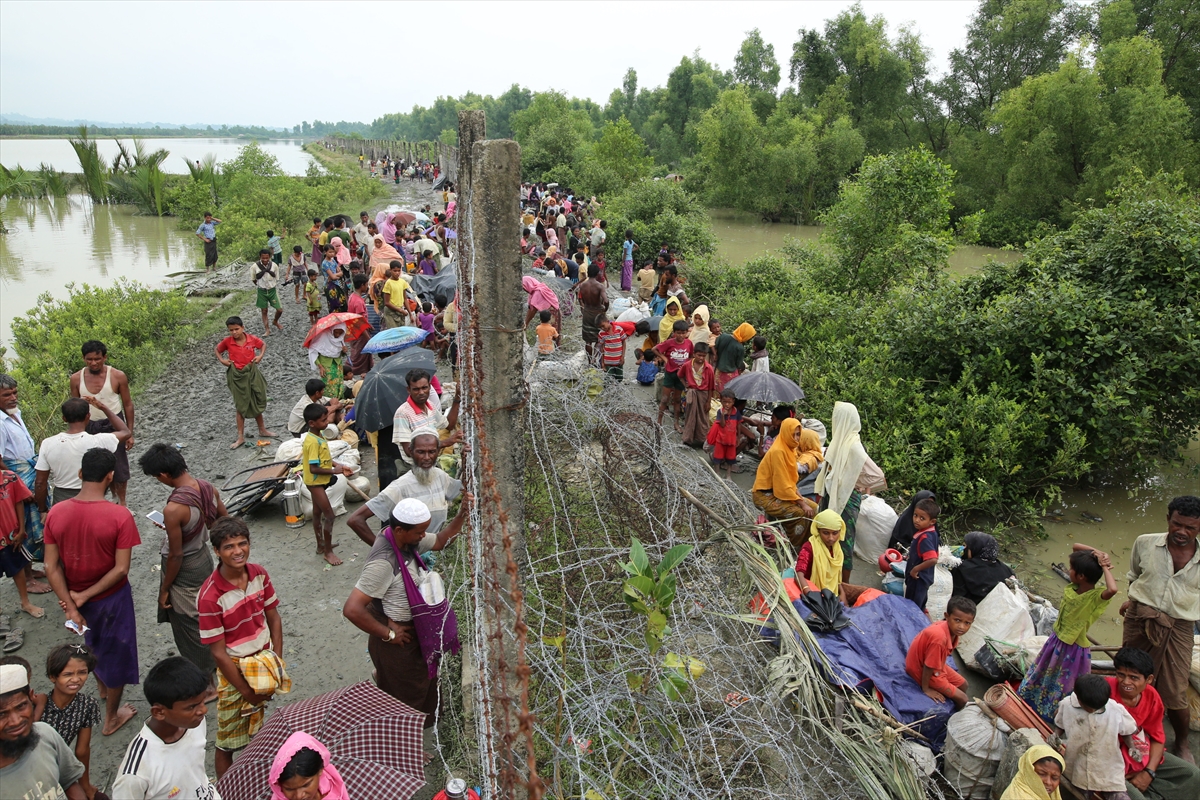
Since the military coup in Myanmar in 2021, violence and instability have worsened, displacing more than 2.6 million people nationwide. Around 1.3 million of them remain internally displaced, while many others have fled by sea.
The routes to Malaysia and Indonesia are among the world’s deadliest, with one Rohingya dying or going missing for every eight who attempt the journey.
The Government of Bangladesh has relocated nearly 30,000 Rohingya to Bhasan Char island to ease congestion in Cox’s Bazar. While aid efforts continue, significant gaps remain in food security, healthcare, and protection services, leaving refugees vulnerable to exploitation and natural disasters.
A tragedy rooted in desperation
The latest boat disaster reflects the worsening plight of the Rohingya, who continue to flee oppression, poverty, and displacement. With few safe migration routes and limited international resettlement opportunities, many are left with no choice but to embark on perilous sea crossings.
Human rights organisations have repeatedly called for greater regional cooperation to prevent further loss of life and to address the root causes of the crisis.
As rescue operations continue off the Malaysia-Thailand coast, families of those missing wait in anguish, hoping for news of their loved ones.
The tragedy once again highlights the urgent need for lasting solutions to the decades-long persecution and displacement of the Rohingya people.