


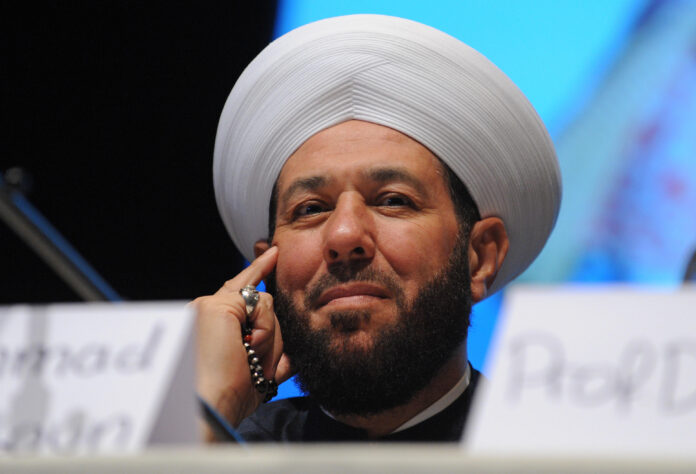
A Syrian court has opened the trial of former Grand Mufti Ahmad Hassoun on charges of issuing fatwas that authorised the killing of Syrians during the uprising against Bashar al-Assad’s regime.
The Fourth Criminal Court in Damascus launched proceedings against Hassoun, who served as Syria’s top religious authority under Assad until the regime’s fall in December 2024, Syria’s state news agency SANA reported.
The session was attended by the republic’s public prosecutor, Judge Hassan al-Turba, alongside representatives of local and international human rights organisations, the report said.
Hassoun faces charges of complicity in war crimes and crimes against humanity, incitement to murder and other offenses.
Syrian authorities arrested him in March 2025 as he attempted to flee the country under an existing arrest warrant.

A staunch defender of the Assad regime, Hassoun was known for public statements backing the use of force against opposition groups.
The trial forms part of a broader transitional justice process aimed at holding perpetrators of wartime violations accountable, SANA said.
Subscribe to our newsletter and stay updated on the latest news and updates from around the Muslim world!
Profile
Ahmad Badr al-Din Hassoun is a Syrian Sunni Muslim cleric who served as the country’s Grand Mufti from 2005 until the office was abolished by then-President Bashar al-Assad in 2021.
Long regarded as one of the Assad regime’s most prominent religious figures, Hassoun became internationally known for his unwavering public support for the government during the Syrian civil war.
Born in 1949 in Aleppo, Hassoun studied Islamic theology and Arabic literature, earning a doctorate in Islamic jurisprudence. Before becoming Grand Mufti, he served as the imam of the Al-Rawdah Mosque in Aleppo and was elected to Syria’s parliament in the 1990s. He was appointed Grand Mufti in 2005 by President Bashar al-Assad, succeeding Sheikh Ahmad Kaftaro.

Following the outbreak of the Syrian uprising in 2011, Hassoun emerged as one of the regime’s most vocal religious defenders. He repeatedly justified the government’s military campaign against armed opposition groups and denounced the uprising as a foreign-backed conspiracy.
Critics accused him of providing religious legitimacy for state violence and of issuing statements interpreted as endorsing the killing of regime opponents.
His public role during the conflict earned him the nickname “Mufti of Barrels” among many Syrians, referring to the Assad regime’s widespread use of barrel bombs against opposition-held civilian areas.
Hassoun also attracted international attention in 2011 after warning that suicide attacks could target Europe and the United States if Syria were attacked militarily. The remarks were widely condemned by Western governments, although Hassoun later said they had been misinterpreted.
In November 2021, Assad abolished the office of Grand Mufti, transferring many of its functions to the Ministry of Religious Endowments (Awqaf) and a newly expanded council of Islamic jurists. The move effectively ended Hassoun’s official religious role.