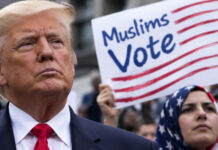

American Muslims overwhelmingly backed the Democrats in the U.S. midterm elections, with Israel’s genocide in Gaza, the war on Iran and rising Islamophobia dominating their concerns, according to a nationwide exit survey.
The survey, published on Wednesday by the Council on American-Islamic Relations (CAIR) and CAIR Action, found that 80% of Muslim respondents who voted supported Democratic candidates, compared with just 6% who backed Republicans.
The findings emerged as Democrats seized control of both houses of Congress in a major setback for President Donald Trump, while Muslim candidates made historic electoral gains, including the election of America’s first Muslim senator.
Gaza and Palestinian human rights emerged as the single most frequently cited issue among Muslim voters, with 76% identifying them among their most important electoral concerns. Furthermore, 80% said Israel’s genocide in Gaza had a major influence on their vote.
The U.S.-Israel war on Iran was another major factor, with 76% saying it influenced their vote and 66% listing it among their most important issues.

Some 72% said their vote was intended to send a message against a wider war in the Middle East.
Economic pressures were equally significant, with 80% saying the economy influenced their vote and 66% identifying inflation and economic conditions among their leading concerns.
Subscribe to our newsletter and stay updated on the latest news and updates from around the Muslim world!
Rising Islamophobia also played a substantial role in mobilising Muslim voters. Some 70% said increasing anti-Muslim prejudice motivated them to participate, including 55% who said it made them much more likely to vote.
In a joint statement, CAIR and CAIR Action said: “Rising Islamophobia strengthened their motivation to vote.”
The organisations added that Muslims overwhelmingly supported Democrats but many remained unconvinced that either political party was listening to their concerns.
Democrats win votes but not complete trust
Despite overwhelming support for Democratic candidates, the survey revealed considerable dissatisfaction with America’s two main political parties.
Only 53% of respondents believed Democrats were more responsive to Muslim concerns, while 33% said neither party was responsive. Just 4% identified Republicans as more responsive.
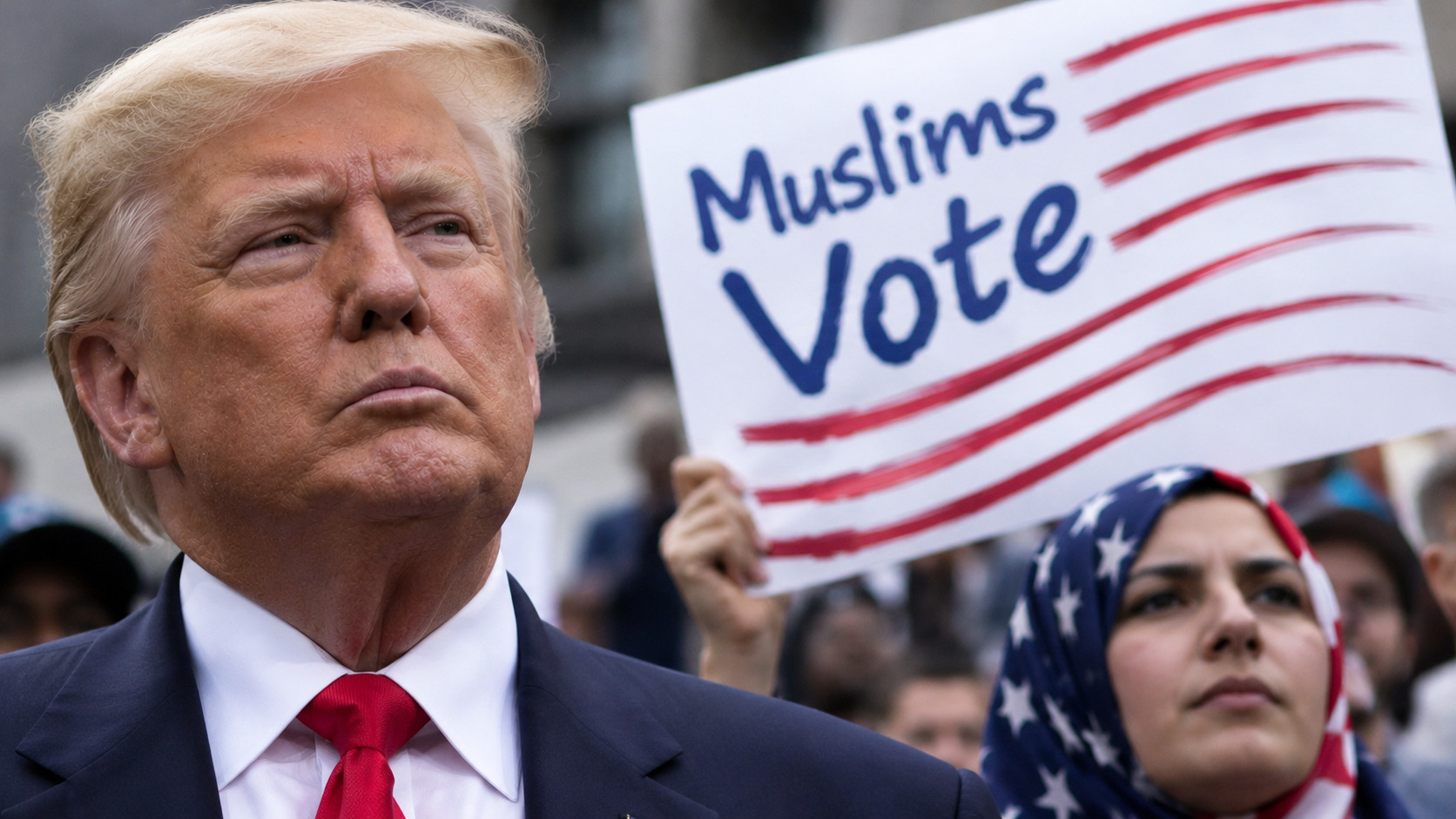
The findings suggest that Democratic electoral support should not automatically be interpreted as unconditional loyalty to the party.
Indeed, 69% of respondents said their vote was intended to send a message about protecting civil rights and religious freedom, while 66% wanted to hold elected representatives accountable.
Only 16% identified supporting their political party’s agenda as a message behind their vote.
CAIR and CAIR Action declared: “Muslims are no longer on the political menu, but at the political table.”
The organisations said their community wanted Congress to address economic hardship, protect civil liberties and change American policy towards Israel and the Middle East.
Major Muslim gains in House of Representatives
The elections also delivered a historic breakthrough for Muslim political representation.
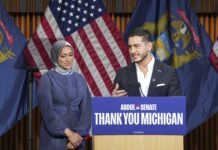
In Michigan, Egyptian-American Democrat Abdul El-Sayed defeated Republican Mike Rogers to become the first Muslim elected to the United States Senate.
The 42-year-old former public health official won the seat vacated by retiring Democratic Senator Gary Peters.
El-Sayed had campaigned on reducing living costs, expanding healthcare and challenging corporate influence in American politics.
He was also a prominent critic of American military support for Israel, calling for a comprehensive arms embargo and describing Israel’s actions in Gaza as genocide.
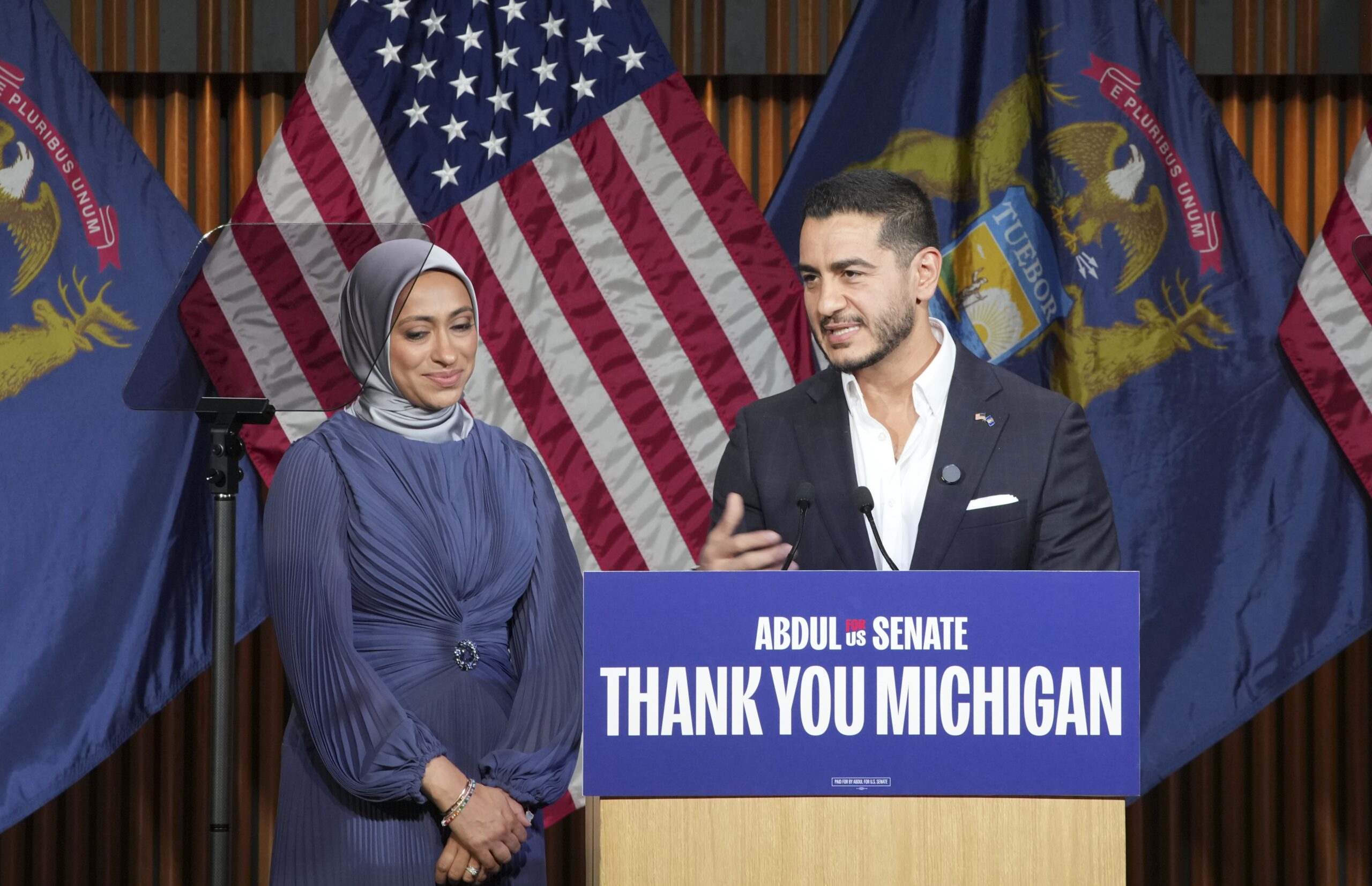
His campaign faced repeated attacks over his Muslim identity, including allegations of links to the Muslim Brotherhood that he denied and for which no supporting evidence was produced.
President Trump also attacked El-Sayed during the campaign, using accusations of extremism that drew condemnation from Democrats.
His victory came despite these attacks and marked a significant milestone for Muslim representation in Washington.
Muslim candidates also secured important victories in the House of Representatives.
Among those re-elected were Ilhan Omar in Minnesota, Rashida Tlaib in Michigan, André Carson in Indiana and Lateefah Simon in California.
Omar and Tlaib, two prominent congressional critics of Israel, retained their seats despite years of political controversy surrounding their positions on Palestine.
New Muslim representatives included Dr Adam Hamawy, a surgeon and U.S. Army veteran who treated wounded Palestinians during medical missions to Gaza, and Darializa Avila Chevalier, a Dominican-American Muslim and outspoken supporter of Palestinian rights.
Hamawy won in New Jersey, while Avila Chevalier secured victory in New York, becoming the first Latina Muslim elected to Congress.
Aisha Wahab was also reported to have secured a full congressional term in California, bringing the number of Muslim congressional election winners reported by Thursday to eight, including El-Sayed.
Muslim candidates additionally recorded victories in state legislatures across the country, including in Michigan, Illinois, Ohio and Pennsylvania.
Growing Muslim political influence
The Democratic victories mean Trump will face a Congress with greater power to investigate his administration, challenge domestic policies and scrutinise government spending.
However, the president will retain significant authority over foreign policy, meaning the election results do not automatically guarantee a change in American military support for Israel.
Nevertheless, the arrival of additional Muslim and pro-Palestinian lawmakers could strengthen calls within Congress for greater scrutiny of US policy towards Israel.

CAIR and CAIR Action said they were tracking more than 160 Muslim candidates who sought local, state and federal office during the election cycle.
They argued that the results demonstrated the growing political organisation of American Muslims despite hostile campaigning directed at Muslim candidates.
The organisations said the elections had demonstrated that Muslim voters were increasingly willing to use their electoral influence to demand accountability over Palestine, foreign wars and civil rights.
The exit survey was conducted between November 2 and 4 among 522 self-identified Muslim registered voters. The findings were weighted to reflect the American Muslim electorate, with a reported margin of error of plus or minus 6.6 percentage points.
Some 93% of respondents reported having voted, although the researchers stressed that this figure should not be confused with the national turnout rate among Muslim voters.
The mobilisation of the broad Muslim voting movement in America has demonstrated its ability to deliver serious electoral results, as evidenced by the election of El-Sayed in Michigan and Zohran Mamdani in New York.
Michigan, in particular, has long been regarded as a key swing state in several closely contested elections in recent history. This has positioned areas with large Muslim and Arab populations as potential kingmakers, giving a community that has faced growing discrimination significant political leverage.