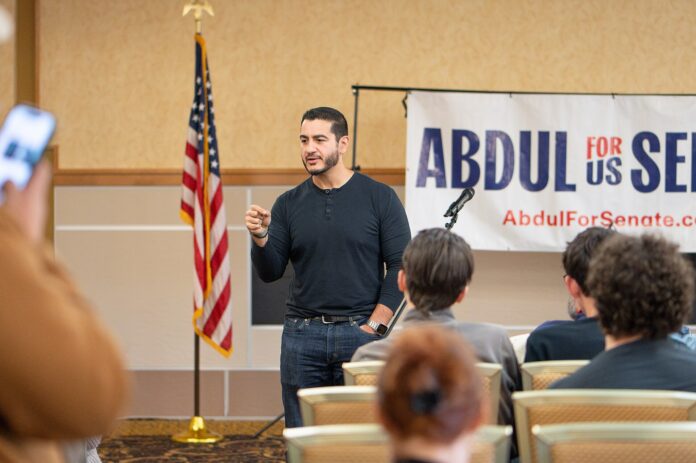
Anti-Muslim hate targeting newly nominated U.S. Senate candidate Abdul El-Sayed increased twentyfold in the week after his shock primary victory in Michigan, according to a new study.
The Centre for the Study of Organised Hate (CSOH) analysed tens of thousands of social media posts and found a dramatic surge in Islamophobic abuse directed at El-Sayed after he won the Democratic nomination for a U.S. Senate seat on August 4.
According to the study, posts containing anti-Muslim bigotry and targeting El-Sayed averaged 155 a day between June 1 and August 3.
That figure soared to an disturbing average of 3,099 posts per day between August 4 and 10 – an increase of 1,895 percent.
CSOH said 21,690 Islamophobic posts targeting El-Sayed were recorded during those seven days, accounting for 56.7 percent of all 38,280 such posts identified since the beginning of the year.

The organisation analysed posts published across X, Facebook, Instagram, YouTube, Reddit and Bluesky.
The volume peaked on August 5, when El-Sayed’s victory was formally reported, with 6,923 Islamophobic posts targeting him recorded in a single day.
Subscribe to our newsletter and stay updated on the latest news and updates from around the Muslim world!
CSOH also found that wider anti-Muslim bigotry on X reached its highest single-day level of the summer on August 5, with 11,883 posts promoting anti-Muslim hate and conspiracy theories.
The organisation said the abuse was driven by a series of familiar Islamophobic narratives.
These included accusations that El-Sayed had links to proscribed groups including Hamas and Hezbollah or other Middle Eastern Islamic movements including the Muslim Brotherhood, claims that he intends to impose Sharia law in America, accusations of dual loyalty and suggestions that Muslims are involved in an alleged attempt to “take over” the United States.
Other posts promoted the far-right concept of “remigration” – the mass removal of Muslims from Western countries.
CSOH said the rhetoric was not simply a reaction to El-Sayed’s political positions, but repeatedly targeted him because of his Muslim identity.
“The content is organised around a small number of recurring anti-Muslim tropes and conspiracy theories, applied to him because of his religious identity,” the organisation said.
Researchers identified posts describing him as an “Islamic jihadist”, accusing him of being connected to terrorist organisations and portraying his campaign as part of an alleged Islamic takeover of America.
The attacks also seized upon ordinary expressions of his Muslim faith.
The study also identified striking similarities between the abuse aimed at El-Sayed and the Islamophobic attacks directed at New York City mayoral candidate Zohran Mamdani during last year’s election.
CSOH said the repetition suggested there was now a “stable repertoire” of anti-Muslim narratives that becomes activated when a Muslim candidate becomes electorally competitive.
High profile attacks
The Islamophobic hate spewed against El-Sayed hasn’t been limited to online trolls, high profile political and media figures have also launched slanderous claims against El-Sayed based on his race and religious heritage.
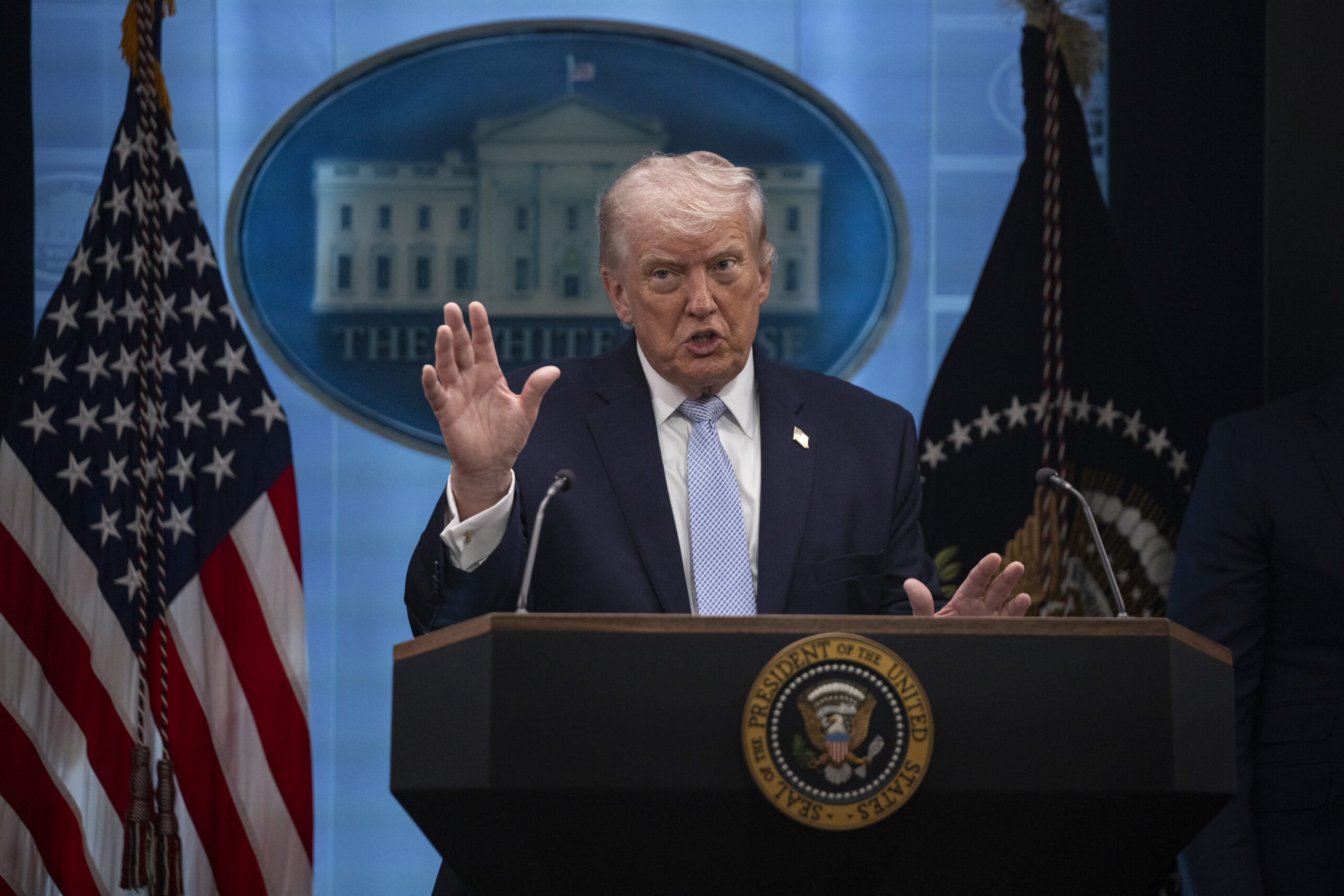
The biggest personality to smear El-Sayed has been U.S. President Donald Trump.
On August 6, Trump accused El-Sayed of hating Jews and Israel, calling him “a man of hate.” The remarks come amid heightened political rhetoric ahead of the U.S. midterm elections.
Discussing general Democratic electoral gains on August 10, Trump told journalists “you have jihadists being elected all over the place.” Although Trump did not name him in that particular quote it was widely seen as a direct response to El-Sayed’s success and the growing gains of the pro-Palestine Muslim vote in U.S. politics generally.
On August 10, Republican Congresswoman Nancy Mace of South Carolina appeared on CNN to defend anti-Muslim comments she had made online in relation to Muslims being elected in the U.S..
She posted on X: “Every single Muslim holding public office in America is a trojan horse, and a threat to both national security and our republic.”
In the media realm, pro-Israel conservative platform The Daily Wire published an article titled: “Abdul El-Sayed Dedicated His Life To Sharia Law.”
The article, published on August 12 by Leona Salinas, is essentially an attempt to portray El-Sayed as someone whose Islamic beliefs demonstrate a commitment to Sharia that could negatively influence his political conduct as an American politician.
The article highlights his past Islamic activities or lifestyle in a negative light, such as his use of an Islamic mortgage, has defended Islamic beliefs during his university years, or the fact his wife wears hijab. The article has been slammed as “an insanely Islamophobic piece” by critics.
An investigation by Al Jazeera found that far-right accounts circulated clips of El-Sayed using the Arabic expression “inshallah”, meaning “God willing”, during his election-night speech.
The expression was presented by some accounts as evidence of an alleged Islamic political takeover, despite being a common expression used by Arabic-speaking Muslims and Christians alike.
Al Jazeera’s analysis mapped 1,966 X accounts and more than 2,500 connections involved in spreading anti-El-Sayed material during the first 24 hours of the campaign.
The study adds to growing concerns about the treatment of Muslim politicians in Western democracies.
Who is Abdul El-Sayed?
El-Sayed, 41, is an Egyptian-American physician, epidemiologist and former public health official from Michigan.
The son of Egyptian immigrants, he studied at the University of Michigan before attending medical school at Columbia University and completing a doctorate at Oxford University as a Rhodes Scholar.
He previously served as executive director of the Detroit Health Department and later became director of Wayne County’s Department of Health, Human and Veterans Services.
El-Sayed first attracted national attention in 2018 when he ran unsuccessfully for the Democratic nomination for governor of Michigan, losing to Gretchen Whitmer.
His latest campaign, however, has propelled him onto the national political stage.
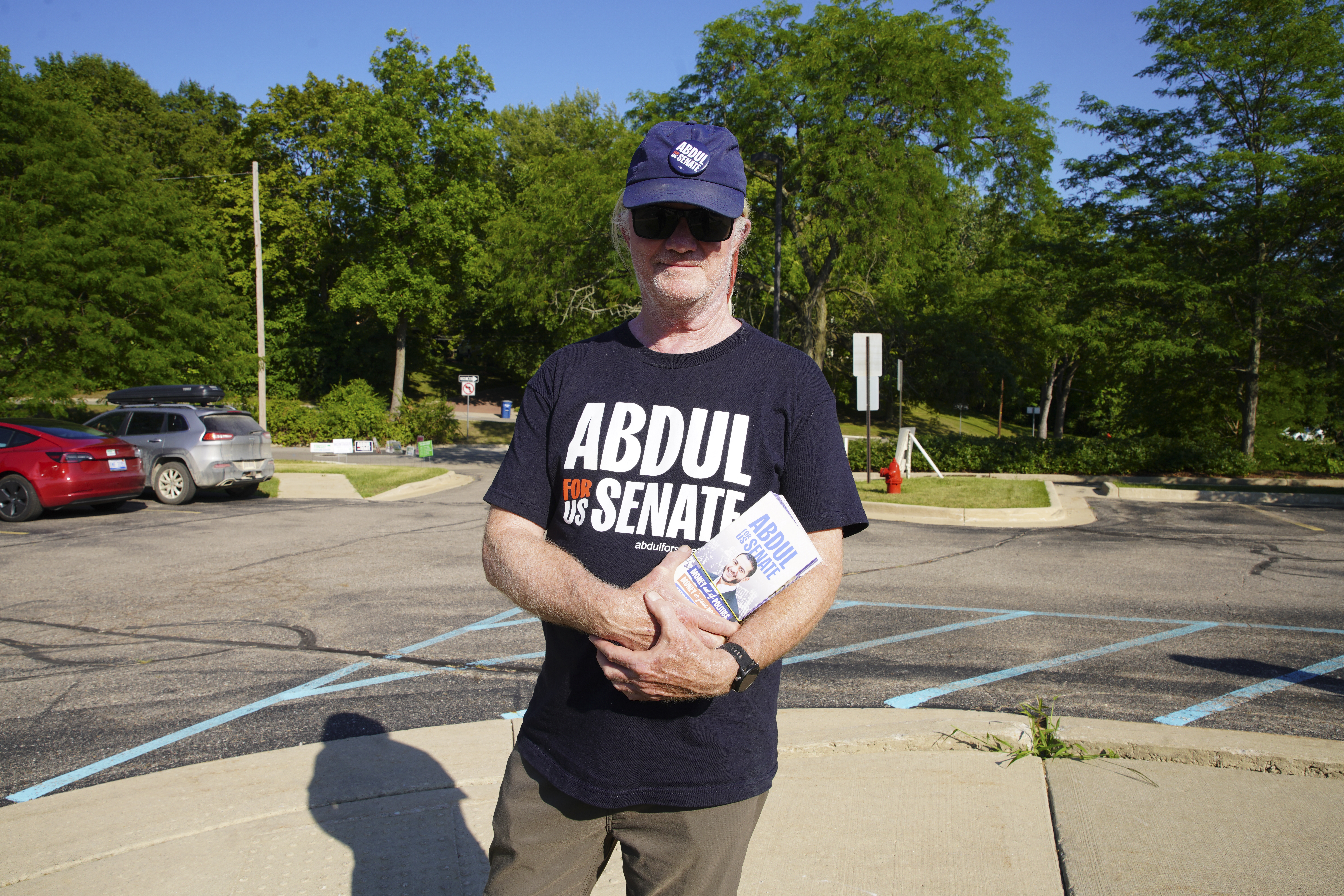
On August 4, El-Sayed narrowly defeated pro-Israel U.S. Representative Haley Stevens in the Democratic primary for Michigan’s open Senate seat, winning approximately 48.5 percent of the vote to Stevens’ 47.5 percent.
The victory was particularly significant because Stevens had received substantial support from the Democratic establishment and Zionist groups.
El-Sayed positioned himself as a progressive, grassroots candidate and campaigned on policies including Medicare for All, campaign finance reform and ending U.S. military aid to Israel.
His outspoken criticism of Israel’s actions in Gaza also made Palestine a significant issue throughout the campaign in a similar way to the campaign by Zohran Mamdani in NYC.
The American Israel Public Affairs Committee (AIPAC) and affiliated groups reportedly spent tens of millions of dollars supporting Stevens and opposing El-Sayed, making the result a notable defeat for the pro-Israel lobby.
El-Sayed’s victory means he will now face Republican former congressman Mike Rogers in November’s general election. If he wins, he would become the first Muslim elected to the United States Senate.
His success has also energised Arab and Muslim Americans in Michigan, a state with a large Arab-American population and where the war in Gaza has become an increasingly important political issue.