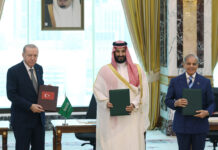



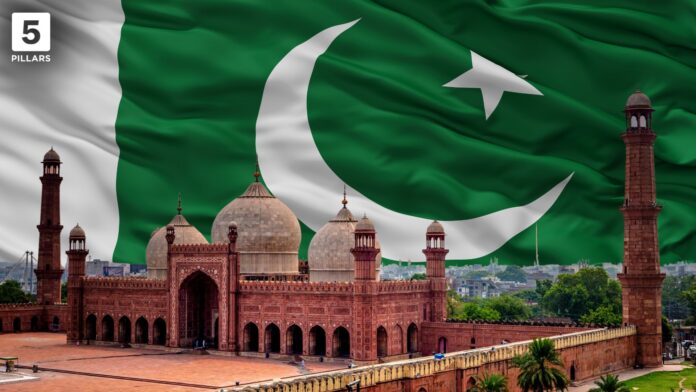
Blogger Najm Al-Din says that Pakistan was supposed to secure the future of the subcontinent’s Muslims. Instead, it helped institutionalise a nationalist order that divided Muslims between hostile states and placed nationality above the bonds of the Ummah.
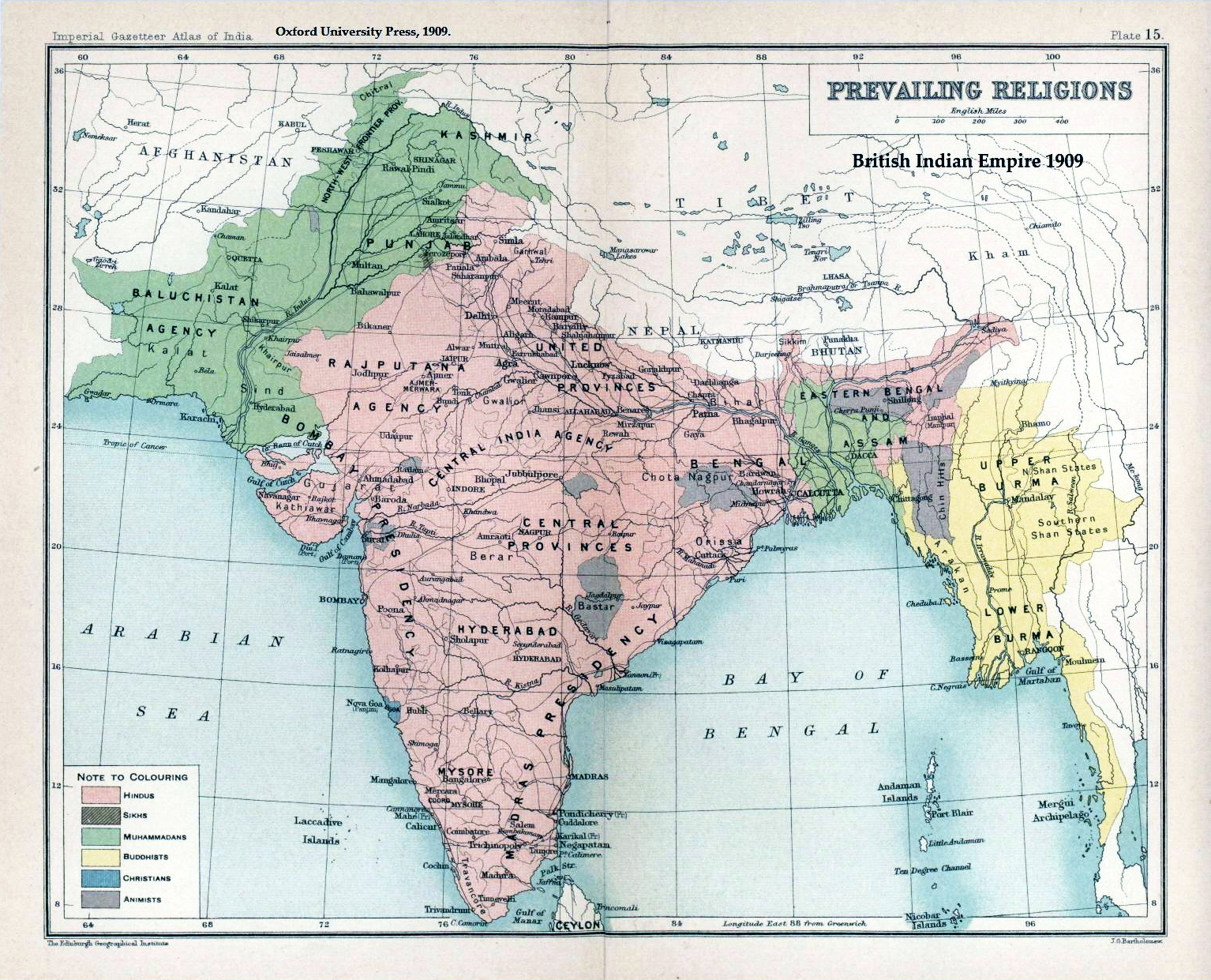
Before the partition of British India in 1947, Muslim dynasties like the Mughal Empire had ruled the subcontinent for centuries.
But when the British Crown established direct rule in 1858, Muslims lost their political dominance, intensifying anxieties over preserving their cultural and social identity.
The shifting power dynamics coupled with the formation of the secular Indian National Congress compounded fears among Muslim leaders that an independent India would permanently empower a Hindu majority and marginalise Muslims as second-class citizens.
This apprehension ultimately drove the movement for Pakistani independence and the Two-Nation theory, which posited that Hindus and Muslims were not merely distinct religious groups, but separate nations with fundamentally incompatible cultural, social and political identities.

Ummah vs Nation state
Unlike post-colonial states that gained independence within existing borders, Pakistan was carved out as a new territory defined entirely by the nationalist and religious aspirations of British India’s Muslims.
Subscribe to our newsletter and stay updated on the latest news and updates from around the Muslim world!
Therefore, observers often assume Pakistani nationalism is uniquely religious rather than secular, given that its foundational identity was anchored in faith as opposed to a shared historical land.
However, closer inspection reveals that Pakistan’s national identity aligns very little with orthodox Islamic teachings.
This conflict centers on the incompatibility of the universal Islamic Ummah with the modern Westphalian nation-state.
In Islam, the Ummah represents a global community of believers bound by faith, transcending race, language, and geography. Established by the Prophet Muhammad (pbuh) in the 7th century, it shifted allegiance from tribal kinship to a common spiritual worldview.
Membership is determined solely by a shared faith in Islamic monotheism rather than ancestry or soil. As a supranational and borderless identity, the Ummah expands to wherever believers reside. Ultimately, God-consciousness is the basis of its unity, operating under an ethical framework where sovereignty belongs exclusively to Allah.
In contrast, modern nation-states like Pakistan require the drawing of arbitrary borders.
Defined by lines on a map, the nation becomes an object of supreme devotion, with a shared identity built on common language, culture, geography, or historical ethnicity.
Furthermore, sovereignty typically rests with the people or the state, enforced through man-made laws. In Pakistan, this entails a blend of British-colonial, secular common laws and civil codes, which utilises Sharia only as a moral guide within a secular state apparatus maintained by the political elite.
Although many label Pakistan an “Islamic Republic,” its foundational machinery relies on a British colonial legal framework and constitution defined by geographic borders.
Therefore, the concept of Ummah differs from the nation-state in its core purpose, membership criteria, geographical boundaries and source of sovereignty.
Pakistan’s identity presents a unique paradox as it used Islam to justify a nationalist separation. The logic of the Two Nation Theory erroneously turned Islam-a universal faith-into a localised nationality to claim a piece of land. This fragmented an already splintered global Muslim community into modern nation states, artificially dividing what God ordered to be united.
While the rhetoric used to mobilise the public was religious, the founding fathers, such as Muhammad Ali Jinnah, were largely Western-educated constitutionalists who envisioned a Muslim-majority secular state rather than a traditional Islamic system, resulting in an identity crisis that persists today.
While the Quran notes that humanity is divided into “nations and tribes so that you may know one another,” it explicitly forbids using these distinctions as a basis for supremacy. In fact, the Prophet Muhammad (pbuh) denounced Asabiyyah-a term for tribalism that modern scholars widely apply to nationalism-branding blind pride in lineage or land as a “filth”.
Therefore, Islam condemns nationalism as it entrenches artificial divisions which ultimately stifles a unified Muslim response to global crises in places like Palestine and Sudan.
A fractured subcontinent
The intersection of Pakistani nationalism and independence has profoundly fractured the unity among the Muslims of the subcontinent.
Rather than uniting under a single identity, these populations remain divided by national frameworks that created lasting geopolitical fault lines.
The structural rivalry with India enforces strict visa regimes and closed borders, severing cross-border cultural, religious, and familial ties among millions of Muslims.
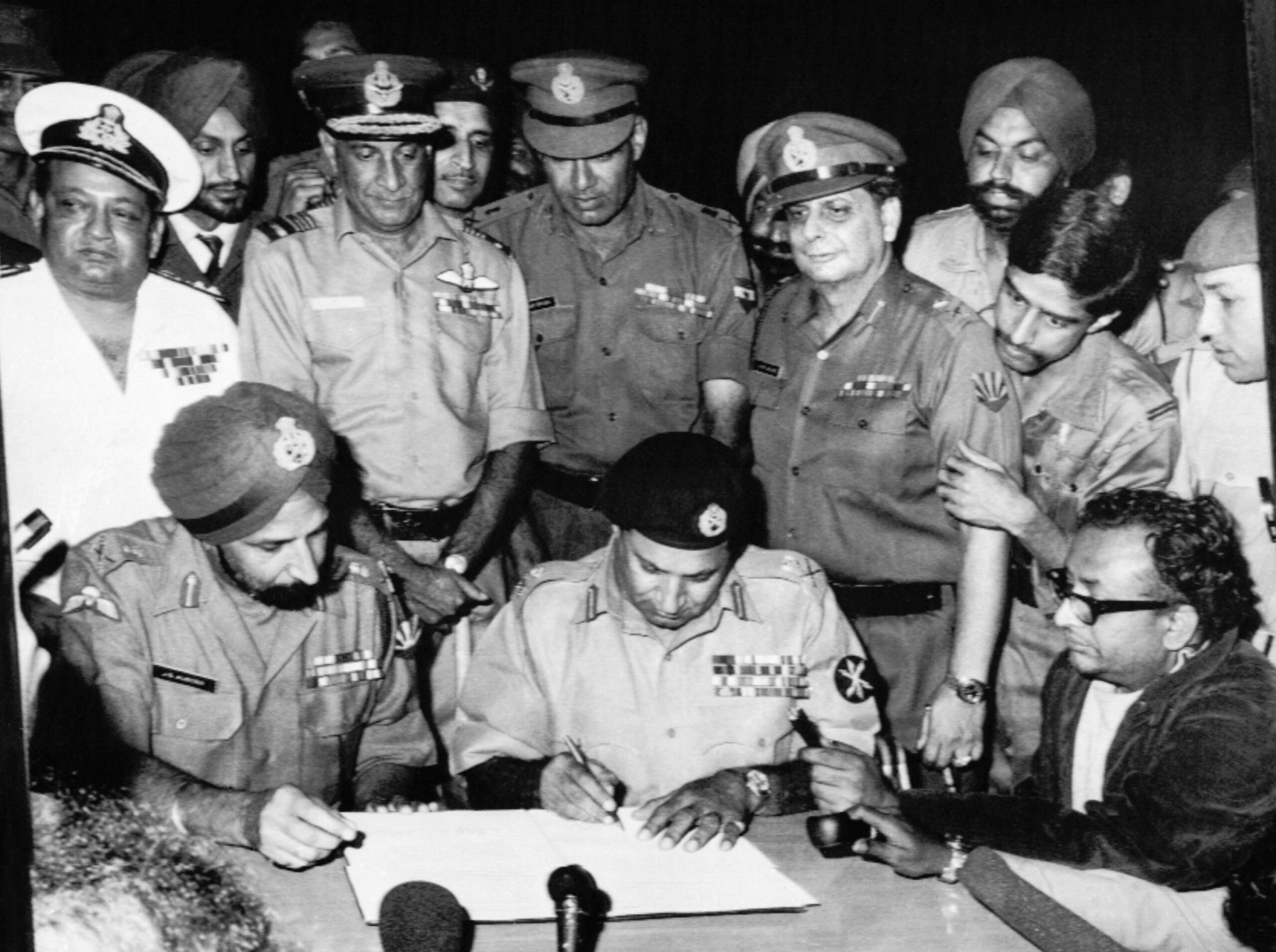
Furthermore, subcontinental nationalism has triggered competing regional and linguistic movements, as exposed by the 1971 alienation of East Pakistan’s Bengali-speaking majority.
The secession of East Pakistan into Bangladesh created another distinct Muslim-majority centre in the subcontinent, rooted in secular nationalism.
The split reinforced the notion that the religious nationalism championed by Pakistan was insufficient to sustain a unified nation-state when confronted with competing ethnic and linguistic nationalisms.
It is essential to recognise that the Westphalian nation-state remains the primary structural barrier to Muslim unity in the subcontinent.
Despite a combined Muslim population of nearly 600 million, Pakistan, Bangladesh and India pursue divergent geopolitical objectives and deploy divisive nationalistic rhetoric for domestic support, often framing neighbours as permanent adversaries.
Amplified by unresolved border and resource disputes, this state-level hostility has stymied regional integration, conditioned public perception and cemented rivalry over cooperation for generations.
The way forward
For this reason, Muslims in the subcontinent must reject nationalistic ideals and restore the communal bonds of faith by re-establishing the Khilafah.
In this system, ultimate sovereignty belongs to Allah, and the Ummah is the repository of political power. The Ummah delegates this authority to a single leader (Khalifah) via the Bay’ah (pledge of allegiance) and obeys him on the condition that he implements the Shariah (divine law) in his governance.
Whereas the Ummah represents an ideological brotherhood unified by tawhid (monotheism), the Khilafah is the political institution designed to protect this unity. Under this social contract, nationalist interests are subjugated to the collective welfare of the community.
Achieving this does not require the immediate, chaotic dissolution of existing borders, but rather a paradigm shift in how Muslims conceptualise identity, cooperation and governance.
The time is long overdue for Muslims in the subcontinent to dismantle the tribalistic mindset shattering their unity. They must prioritise their Islamic identity as primary, viewing national citizenship as a secondary, administrative reality.
Rather than remaining passive, under an Islamic system, the populace is the organic backbone and source of legitimacy for the Khilafah. Citizens are legally empowered to hold the ruler accountable through councils, public discourse and judicial oversight, preventing power from mutating into the tyranny currently plaguing Pakistan and the broader subcontinent.
Once Muslims unlearn the post-colonial frameworks shaping thought across the subcontinent and restore pan-Islamic brotherhood, they can establish the ideological foundation for a transnational Islamic union. This will pave the way for military and economic integration and shared resource pools among Muslim-majority countries.
Towards a united Ummah
The fact that European nations achieved lasting peace after centuries of conflict should compel the Ummah to urgently discard the divisive ideologies preventing our reconciliation.
If non-Muslim nations could merge industries, establish common markets and pool resources for collective unity, Muslims have a greater obligation to build transnational frameworks.
These institutions must do more than just de-escalate territorial friction; they should serve a long-term vision to unite Muslims across borders. By integrating Muslim countries into military alliances rooted in a shared spiritual and ideological vision, the ummah can finally operate as a cohesive global power.
I appreciate that applying a purely faith-based unity model across Pakistan, Bangladesh, and India faces clear challenges. State loyalties and ethnic or linguistic identities often supersede religious alignment, while Indian Muslims navigate complex civic priorities as a minority in a secular state.
Despite these obstacles, South Asian Muslims share several foundations for cooperation, including a common faith, scripture, intertwined history and cross-border cultural ties.