


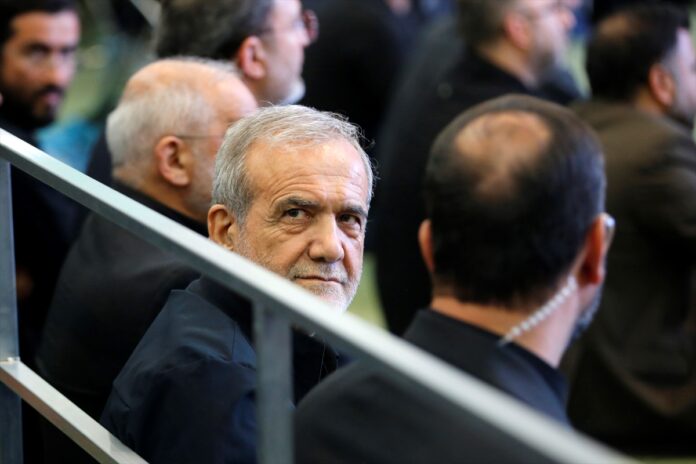
It appears that Israel attempted to assassinate Iranian President Masoud Pezeshkian in June, according to local media.
Fars News confirmed that he sustained a leg injury during an Israeli missile strike last month that targeted a top-level security meeting in the capital, Tehran.
The attack took place on June 16 as Pezeshkian and senior officials convened a session of Iran’s Supreme National Security Council in a government building located in western Tehran.
Also in attendance were Parliament Speaker Mohammad Bagher Ghalibaf and Judiciary Chief Gholam-Hossein Mohseni-Eje’i.
The missile strike, which reportedly involved six separate projectiles, targeted the entrances and exits of the building, cutting off power and damaging infrastructure.

Fars News Agency, which is affiliated with Iran’s Islamic Revolutionary Guard Corps (IRGC), reported that the strike bore similarities to previous Israeli assassination operations, including one that killed Hezbollah leader Hassan Nasrallah in Beirut last year.
Although no fatalities occurred, several attendees sustained minor injuries, including Pezeshkian, who was wounded in the leg while evacuating.
Subscribe to our newsletter and stay updated on the latest news and updates from around the Muslim world!
Iranian authorities believe the precision of the attack points to a possible internal leak, and investigations are reportedly underway to identify potential collaborators.
Fars stated that the accuracy of the strike raised suspicions of espionage, with one IRGC general confirming that Israel had struck six key points at the location of the security meeting.
Iranian media said the escape was only possible due to a pre-planned emergency hatch built into the facility.

Speaking to American commentator Tucker Carlson in the aftermath of the war, Pezeshkian confirmed that Israel had attempted to assassinate him.
“They did try [to kill me], yes… They acted accordingly, but they failed,” he said. His remarks sparked controversy inside Iran, with some politicians accusing him of weakening the country’s security posture.
The missile strike came during a 12-day war between Israel and Iran that began on June 13, following escalating tensions over Iran’s nuclear programme and regional influence.
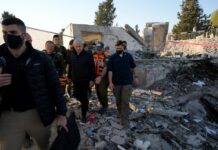
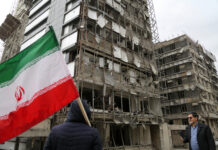
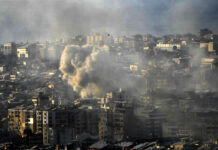
Israel launched a sweeping air campaign targeting Iran’s military, nuclear, and civilian infrastructure, including strikes on ballistic missile facilities and uranium enrichment sites.
According to Iran’s Health Ministry, at least 606 people were killed and over 5,300 injured during the Israeli bombardment.
Tehran responded by firing more than 500 ballistic missiles and 1,100 drones at targets across Israel. Israeli officials said 28 people were killed in the attacks and more than 3,000 injured.
Despite the scale of the conflict, Israeli Defence Minister Israel Katz stated that regime change in Iran was “not a goal” of the war.
However, several senior Iranian military officials were killed, including IRGC commander Gen. Hossein Salami and missile programme chief Gen. Amir Ali Hajizadeh. Iran’s Supreme Leader Ayatollah Ali Khamenei escaped harm.
The war came to a halt under a US-brokered ceasefire that took effect on June 24. In the weeks that followed, Iranian authorities arrested over 700 individuals accused of spying for Israel or collaborating with foreign intelligence.
Tehran has also proposed sweeping new national security laws that would impose harsher penalties, including the death sentence, for espionage-related offences.
While Israel claimed its actions were necessary to disrupt Iran’s alleged plans to develop nuclear weapons, critics have labelled the strike on the presidential meeting a reckless escalation that endangered regional stability and set a troubling precedent for targeting political leaders during wartime.