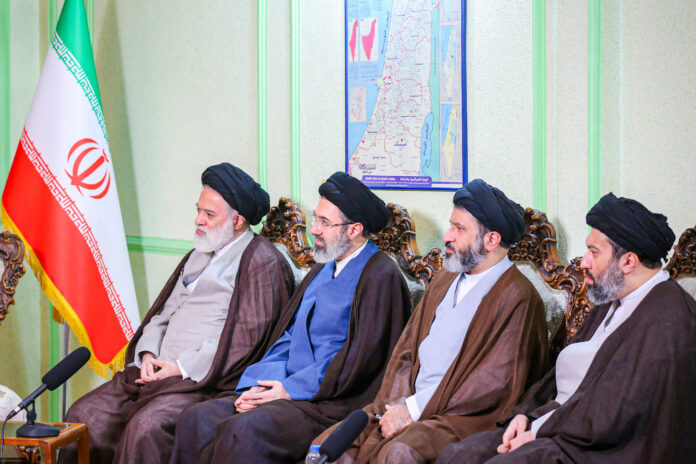
56-year-old Ayatollah Seyyed Mojtaba Khamenei, son of former supreme leader Ali Khamenei who was killed in a US-Israeli airstrike, has been named as the third leader of Iran’s Islamic Republic after a week-long rigorous decision process.
The Assembly of Experts in Iran announced late on Sunday that Ayatollah Seyyed Mojtaba would become the “third leader of the Islamic Revolution”.
The decisive vote from the Assembly of Experts to put Mojtaba Khamenei in power has come after his father, Ayatollah Ali Khamenei, was killed on February 28 at his residence alongside numerous members of his family.
Mojtaba Khamenei is considered a hard-line cleric and has long been seen as one of the most influential figures in Iran’s political establishment, working behind the public eye.
Consisting of an 88-member body, the Assembly is responsible under Iran’s constitution for appointing the country’s top political and religious authority figures.

The Assembly ensures that a constitutional process takes place in the appointment of key positions, rather than a hereditary transfer of power, despite Mojtaba Khamenei being the son of the late Ali Khamenei.
With Mojtaba’s appointment, he now becomes the third supreme leader of the Islamic Republic of Iran since the 1979 revolution, inheriting leadership at a moment of intense regional conflict and uncertainty.
Subscribe to our newsletter and stay updated on the latest news and updates from around the Muslim world!
Profile: Mojtaba Khamenei’s life and career
Born on September 8 1969 in the northeastern Iranian city of Mashhad, Mojtaba is the second son of the late Ayatollah Ali Khamenei, who had ruled the Islamic Republic for 37 years since 1989, up until his killing just over a week ago.
Mojtaba spent his formative years in Tehran where he witnessed the rise of his father as a key power figure in the aftermath of the Islamic Revolution.

He was educated in Tehran, completing his secondary school education at the Alavi School, an institution known for producing many prominent figures of Iran’s intellectual and political scene.
Mojtaba’s wife, Zahra Haddad-Adel, daughter of Gholam-Ali Haddad-Adel, a prominent conservative politician in Iran, was also killed in the US-Israeli strikes that targeted the Khamenei family’s residential compound in Tehran.
Mojtaba survived, but lost his father, wife, mother, sister, brother-in-law, and nephews.
Like many figures within Iran’s clerical establishment, Mojtaba pursued religious education in the city of Qom, the country’s most important centre of knowledge for Shia theological learning.
According to Iranian analysts, Mojtaba spent the bulk of his career teaching at Qom in the highest level of Islamic seminaries.
Despite Mojtaba’s decades-long experience in the clerical establishment, he has never held a formal government position or served in office.
Influence and role
Mojtaba has long been portrayed by foreign media as a possible behind-the-scenes power player, reinforced by his limited appearances in public, with no formal public speeches, interviews, or specific political ideas having been published in his name.
The last time he was publicly seen was during a pro-government rally during widespread protests earlier this year.
According to state media, Mojtaba also participated in the Iran-Iraq war when he was just seventeen years old, having fought on the front lines.
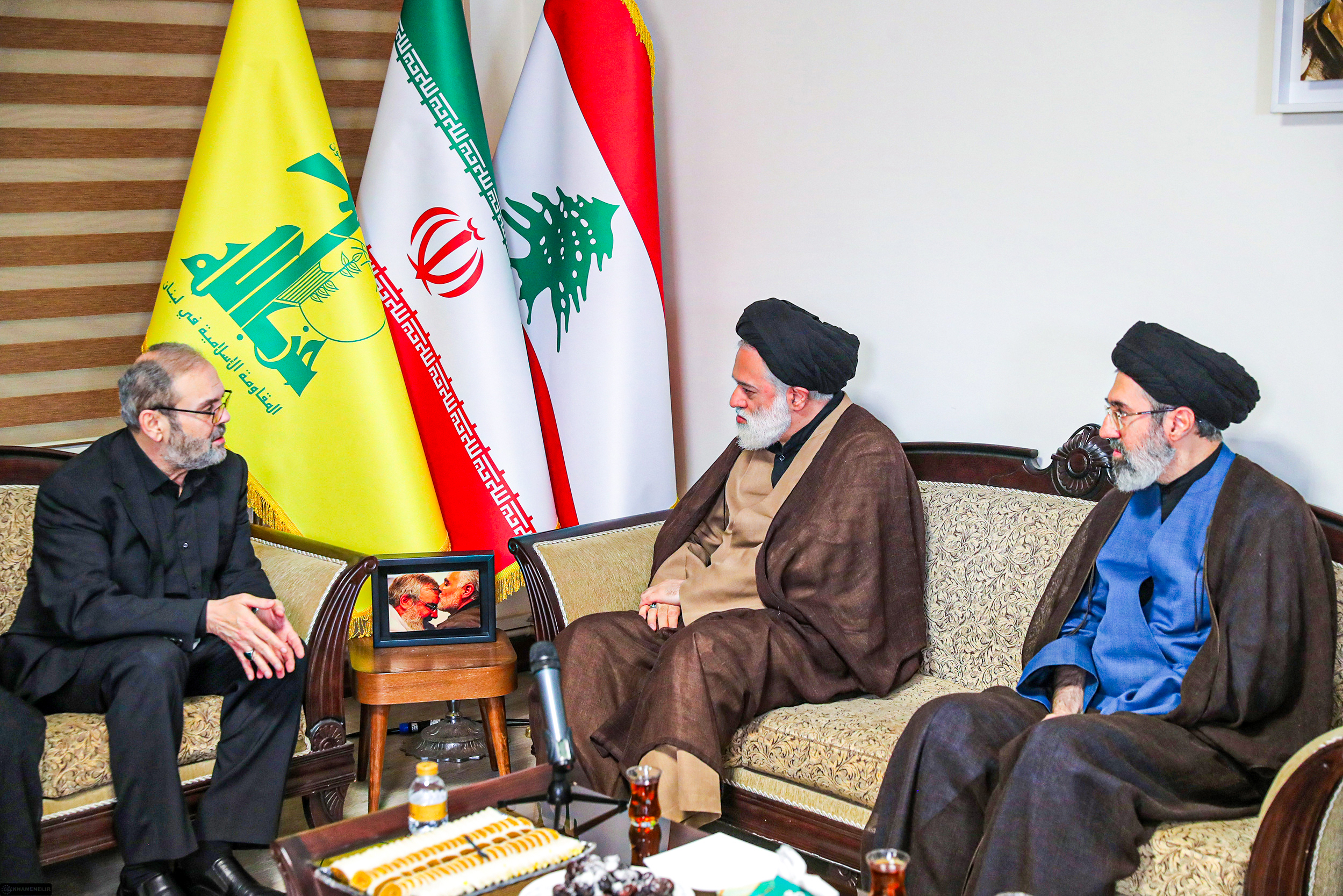
Due to this and further speculation surrounding his role within Iran, some Western media outlets have linked him to the Islamic Revolutionary Guards Corps (IRGC).
Mojtaba Khamenei’s rise to power marks an uncertain transition, with direct threats from Israel and the US, who have vowed to assassinate any Iranian leader picked to succeed Khamenei.
Both the US and Israel are pro-regime change and set on collapsing Iran’s current clerical establishment.
“Any leader selected by the Iranian terror regime to continue leading the plan for Israel’s destruction, threatening the United States, the free world and countries in the region, and suppressing the Iranian people, will be a certain target for assassination, no matter his name or where he hides,” Israel’s Defense Minister Israel Katz said in a statement on X.
The direct threats to Mojtaba’s seat of power highlight the fragility and pressure around his position as Iran’s new supreme leader, placing him at the centre of an escalating broad geopolitical conflict.