


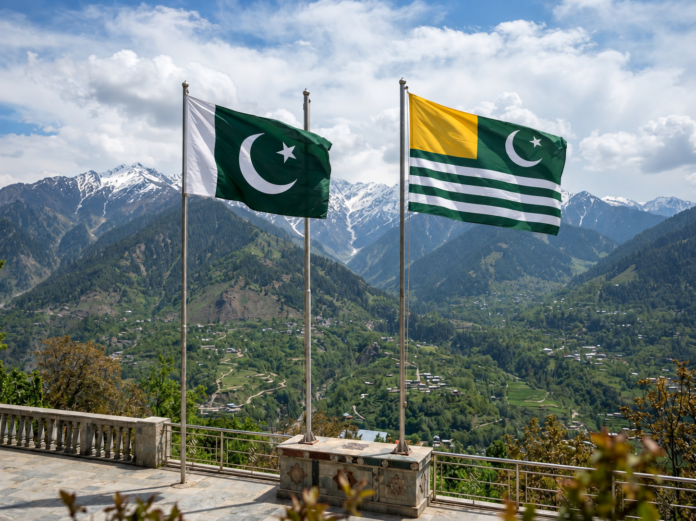
Hassan Saleemi argues that legitimate grievances in Azad Kashmir must be addressed, but warns that breaking away from Pakistan would further divide Muslims and leave Kashmir dangerously vulnerable.
We write this as Kashmiri activists, Ulamaa, and Muslims who hold Islamic identity above all ethnic identities. Allah ﷻ commands us:
“Hold firmly together to the rope of Allah and do not be divided.” (3:103)
We firmly believe in the unity of the Ummah — regardless of the current and temporary state of the regimes. One Hajjaj ibn Yusuf (the notoriously harsh Umayyad governor) uniting the Ummah is preferable to us to fifty divided, indefensible states.
The Prophet ﷺ said:

“There will be troubles upon troubles. Whoever seeks to divide this Ummah and it is united, strike him with the sword, whoever he may be.” (Sahih Muslim)
Scholarly consensus (ijmaa) holds that Muslims must seek to be united as much as possible.
Subscribe to our newsletter and stay updated on the latest news and updates from around the Muslim world!
Asabiyyah is the term the Prophet ﷺ used for division among Muslims based on blood, tribe, ethnicity, or nation. He ﷺ said:
“He is not one of us who calls to ’asabiyyah, he is not one of us who fights for ’asabiyyah, and he is not one of us who dies for ’asabiyyah.” Sunan Abi Dawud (Hadith 5121).
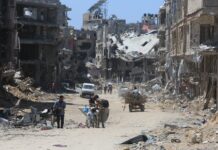
Divisive nationalistic rhetoric should be shunned. We have suffered centuries of humiliation and genocides. Which of us was not reduced to tears watching Gaza flattened, and babies pulled from the rubble, live on air, day after day?
“Those who disbelieve are united as allies of one another. And unless you (Muslims) do the same (unify), there will be great oppression (fitnah) and corruption on the earth.” (8:73)
Have we not seen enough oppression and corruption from our disunity?
The Assad regime slaughtered and displaced millions in Syria, but we never supported the division of Syria. Saddam Hussein chemically bombed the Kurds but we never supported dividing Iraq into three. Muslims who genuinely value ummatic unity should not support further division of our people, precisely because it causes more “oppression and corruption on earth.”
Applying the Islamic standard to Kashmir and Pakistan
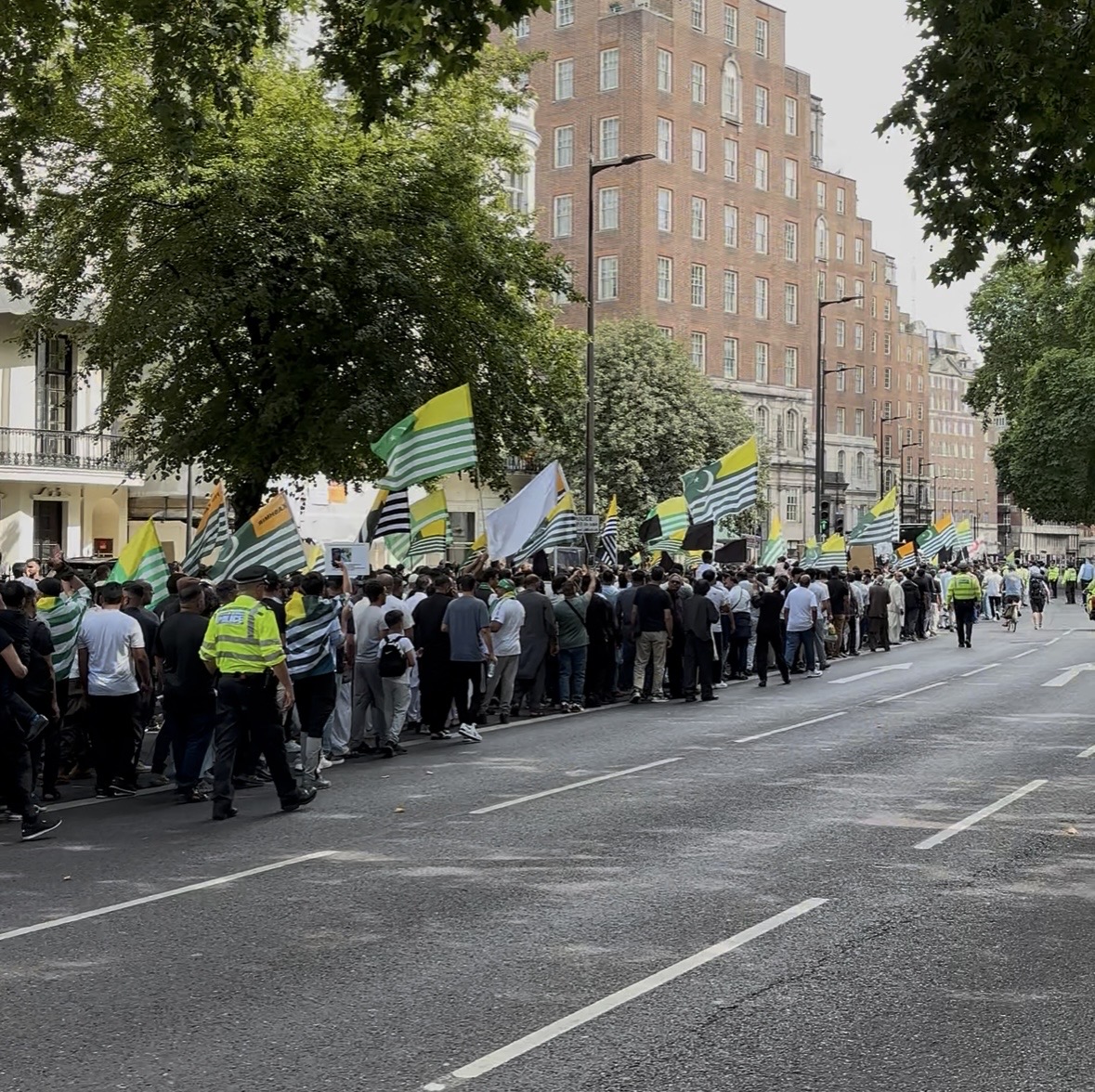
We heard slogans from people in demonstrations in Azad Kashmir and in the UK declaring things like “This is not a disputed territory… this is an occupied territory… it has been occupied (by Pakistan)” and “PoK (Pakistan Occupied Kashmir) is not a part of Pakistan,” and open calls for independence and far worse online.
We absolutely identify with the legitimate political grievances of our Kashmiri people; our grievances must be heard, but there is a difference between demanding justice and sloganeering for another partition of Muslim lands.
Never forget our deen or history.
A forgotten slavery, and a forgotten genocide
By independence in 1947, Kashmiri Muslims had been taxed and indebted into debt slavery by the Dogra rulers for a century; nearly the entire Muslim population had been stripped of land and driven into forced labour.
The king, Hari Singh, knew — given his dynasty’s record of impoverishment and slavery — that the people would want to join Pakistan. But Hari Singh had other intentions; they were clear to the Kashmiri people.
In 1947 Kashmiris, Gilgitis and Baltistanis launched various rebellions overthrowing Dogra governors in their regions, such as the Poonch Rebellion, and explicitly demanded to join Pakistan.
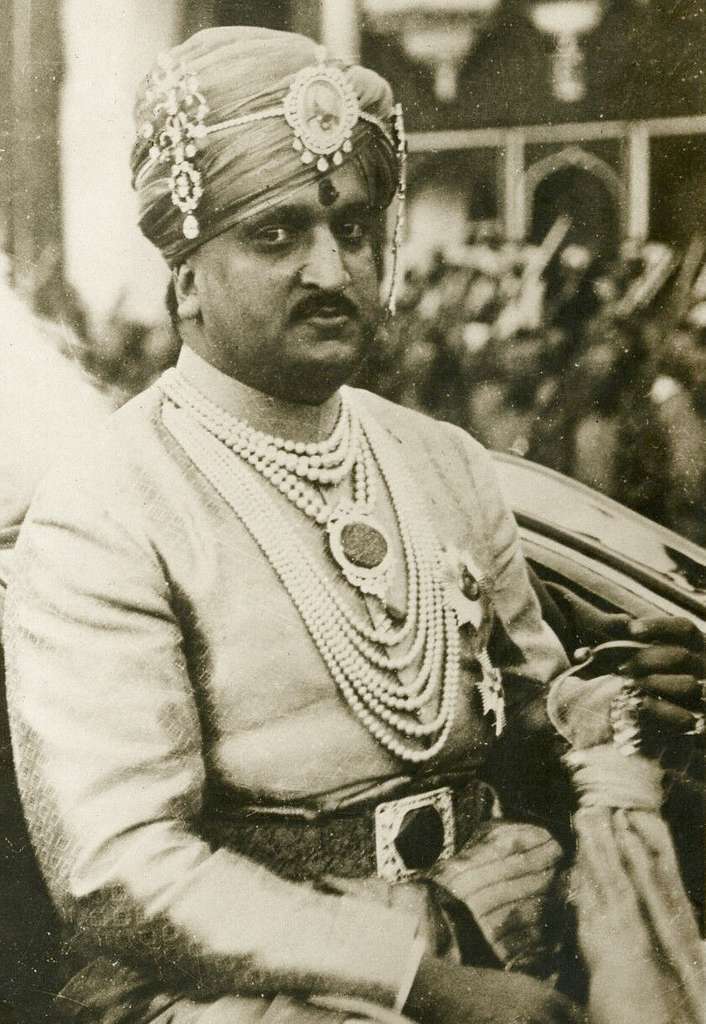
Hari Singh, trying to cut his losses, called on the Nazi-inspired RSS — the same group India’s Prime Minister Modi is linked to — who initiated the ethnic cleansing of Muslims in Jammu to make it Hindu-majority before any plebiscite (vote) could occur.
In Jammu — 62% Muslim but home to the kingdom’s largest Hindu population — the resulting “Jammu Massacre” killed as many as 237,000 people, according to a contemporary Times of London report. Jammu went from Muslim-majority to Hindu-majority in days. Today, this meets the threshold of genocide under international law.
Refugees fled the massacres into Pakistan, so Potohari and Pakhtoon civilian militias, enraged and backed by a fledgling Pakistani army, marched into Kashmir to stop the RSS’s slaughter. Kashmiri leaders petitioned Jinnah to intervene militarily; Muslim rebels established their own governance structures in liberated regions to unify with Pakistan.
Hari Singh panicked and called the Indian army. As a condition of Indian support, he was forced to sign the “Instrument of Accession.” Pakistan’s newly formed army fully engaged. The war ended with Kashmir split in two under a UN-brokered ceasefire, on the fudged promise of a plebiscite (vote) letting Kashmiris choose India or Pakistan even though it was abundantly clear the people wanted to join Pakistan (that was the basis of the rebellions).
No third option was imagined under the terms all parties signed. Both countries’ citizens were barred from buying land in Kashmir while its status remained disputed. India broke that ban on Indians buying property by fully annexing the territory; Pakistan still restricts land ownership in Azad Kashmir to Kashmiris only.
Equating Pakistan with Israel insults Palestinians
India and Israel are foreign, non-Muslim powers settling and displacing native Muslim populations. Pakistan, a Muslim country, has never attempted ethnic cleansing or displacement of Kashmiris — the opposite in fact; Pakistanis are still not allowed to buy property there.
Pakistan’s Potohari people are indistinguishable from those of Azad Kashmir; Pahari-Potohari is considered one language, one culture, spanning North Punjab and Azad Kashmir.
Did Palestinians ever call Israel to send their army because they wanted to be Israeli? Has anyone seen Azad Kashmir flattened the way Israel flattened Gaza? Has Pakistan, sincerely, done anything close in scale to what India has done in Kashmir, detailed below?
Mass gang rape of Kashmiri women
In the most famous example, 300 soldiers of the Indian Army’s 4 Rajputana Rifles cordoned off the twin villages of Kunan and Poshpora. The women were systematically raped; District Magistrate S.M. Yasin reported that the women were gang raped “at gunpoint… without any consideration of their age, married, unmarried, pregnancy.”
No soldier has been tried, let alone convicted. This is systematic, organised gang rape of whole villages with legal cover; India’s own Justice Verma Committee (2013) found that the Armed Forces Special Powers Act (AFSPA) enables such acts with legal impunity.

Kashmiris in unmarked mass graves
India’s own Jammu & Kashmir State Human Rights Commission (SHRC) found thousands buried in unmarked graves at 38 sites across Baramulla, Bandipora, and Kupwara, and 2,080 more unmarked graves in Poonch and Rajouri.
Most bodies showed bullet wounds; some were burned; some were beheaded, with skulls recovered separately. Police told villagers these were “unidentified militants,” but local families identified many as relatives and civilians.
These are the official figures; Kashmiri NGOs cite higher numbers and maintain 8,000 enforced disappearances remain unresolved.
Collective punishment
India’s Supreme Court ruled in 2024 that “bulldozer justice” — demolishing the homes of suspects’ or accused persons’ families without trial — is unconstitutional.
Despite that ruling, UN human rights experts issued an alarmed statement in November 2025 documenting continued demolitions of houses targeting the families of people merely “perceived as supporting” Kashmiri freedom, stating: “Such actions constitute collective punishment and defy the 2024 ruling.”
Mass preventive detention under the Public Safety Act (PSA)
Amnesty International has called the PSA a “lawless law” — it allows detention without trial for up to two years. JKCCS documented 387 preventive detention cases in the weeks after the August 2019 abrogation of Article 370 alone, including three former state Chief Ministers.
Indian ministers using genocidal language against Kashmiris
India is replicating every vile act from the Israeli playbook, and this is not something hidden. The RSS now holds power in India. Sandeep Chakravorty, India’s then-Consul General in New York, was recorded explicitly invoking Israel’s settlement model for Indian-occupied Kashmir, asking why India shouldn’t do “what Israel has done.”
BJP MLA Ravinder Raina said the Indian army would be used to protect Hindu settlements in Jammu and Kashmir, explicitly modelled on Israeli settlements in the West Bank.
The repeal of the law that barred non-Kashmiris from buying land in Kashmir was a deliberate move to dilute the Muslim majority. Repeated academic/journalistic assertions (such as in 972 Magazine and New Lines Institute) argue the RSS has long pushed to repeal Kashmir’s separate status specifically to enable this kind of demographic change, modelled on Israeli settlement policy.
What happens if Azad Kashmir breaks away?
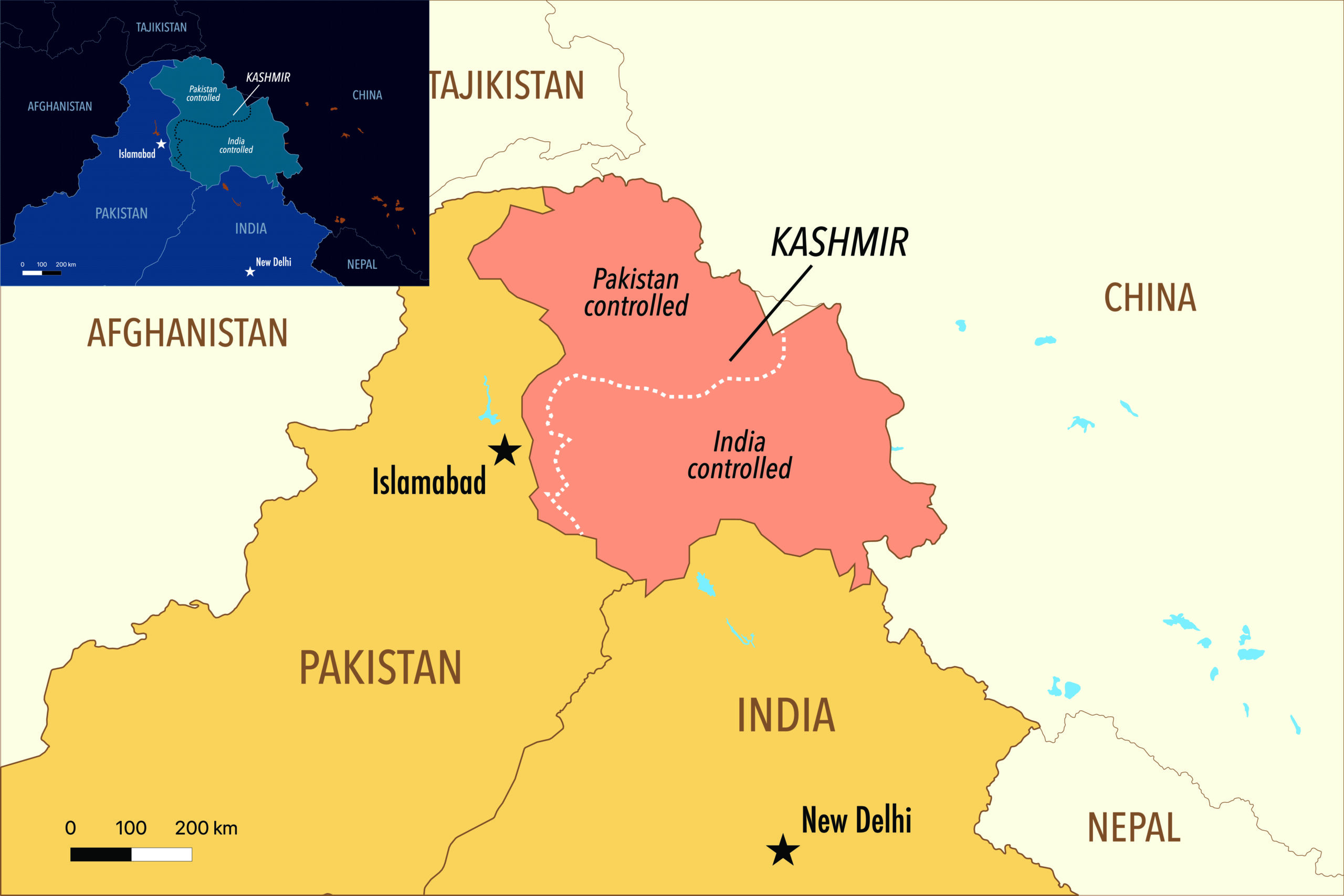
Azad Kashmir is sandwiched between Indian-occupied Kashmir and Pakistan; only about 13 miles wide at its thinnest point.
Consider what major unrest would mean for a strip of land so thin. The Indian army will be waiting for this to happen. This is neither a viable country nor a viable foundation for a larger independent Kashmir.
Note: Gilgit-Baltistan was conquered by the Dogra state by 1860. The promised plebiscite includes votes from Gilgit-Baltistan, which overwhelmingly favours integration with Pakistan.
Moving forward
Demand justice and our rights without further dividing the Ummah. Azad Kashmir’s grievances are real but not unique; demonstrators have been shot at in Lahore and Islamabad too. Nor is bad governance unique; all of Pakistan has suffered from bad governance, disproportionate use of force by authorities, poor infrastructure and poor access to justice.
If Pakistan is badly governed, join with your other oppressed brothers to fix Pakistan. In the next article we will address potential solutions and actions to help resolve these differences and directly address the Pakistani authorities too.
Endorsements
Mudassir Rashid – Founder & Amir of TheRevival Movement, Graduate of the Quran Academy, and student of Dr Israr Ahmed (Tanzemi Islami Founder). Originates from the Indian-occupied side of Kashmir.
Jarrar Mughal – Founder of “Kashmir Awareness UK” – aims to raise awareness in universities. Lifelong Kashmiri activist lobbying at UK national and international forums.
Hassan Saleemi – on behalf of the 20+ members of the Shura of Wapistanis.org, whose members are almost entirely Pahari, ethnic Kashmiri or Pakistanis of mixed Kashmiri background. Graduate of Al-Azhar Cairo, Former Islam Channel Presenter, founder of multiple Islamic activities or organizations across 3 continents.