


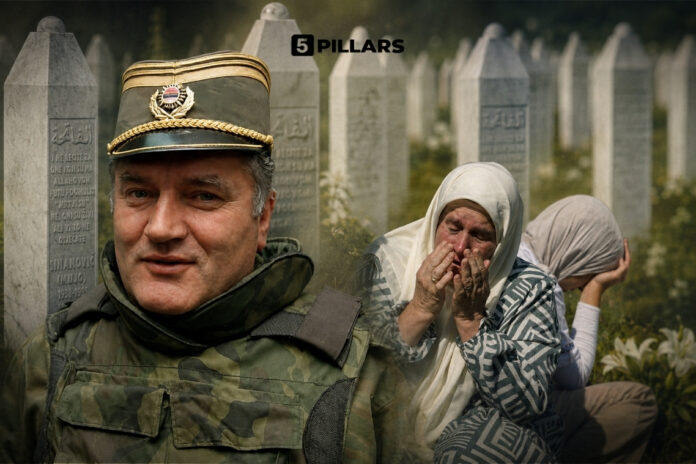
The Butcher of Bosnia Ratko Mladić may be dead, but the hatred that fuelled the Bosnian genocide is thriving in a Europe increasingly comfortable with demonising Muslims, writes Roshan Muhammed Salih.
The death of Ratko Mladić yesterday should bring back powerful memories for any Muslim old enough to remember the Bosnian War in the 1990s.
For Muslims in Europe, Bosnia was a seminal moment. It was when many of us realised that it did not really matter what colour our skin was. There were still people on this continent prepared to hate, persecute and even slaughter us simply because we were Muslim.
After all, Bosnian Muslims were white Europeans, physically virtually indistinguishable from their Serb and Croat neighbours. And many were not particularly religious or practising Muslims at all.
Decades of socialist rule in Yugoslavia had produced a largely secular society, and for many Bosniaks their Muslim identity was as much cultural and ancestral as it was religious. Some barely practised Islam at all.

Yet that did not save them. They could still be identified as Muslims by their names, their families and their identity, and that was enough for them to be targeted.
And there was a profound irony in this. As Bosnian Muslims realised that they were being persecuted and killed because they were Muslims, the war itself contributed to an Islamic revival among sections of the Bosniak population. A people whose Muslim identity their enemies wanted to eradicate began rediscovering and asserting that very identity.
Subscribe to our newsletter and stay updated on the latest news and updates from around the Muslim world!
British Muslim awakening
For many British Muslims, Bosnia produced a similar awakening. It was a moment when a generation began to identify themselves more consciously as Muslims rather than primarily through their racial or ethnic identities as Asians, Arabs or something else.
I distinctly remember British Muslims travelling to Bosnia to deliver desperately needed aid to a population being slaughtered. Among them was Moazzam Begg, who would later become one of Britain’s best-known Muslim campaigners.
We remember, too, the international arms embargo imposed on the former Yugoslavia, which left the poorly-armed Bosnian government at an enormous disadvantage against Bosnian Serb forces that had inherited access to much of the weaponry and military infrastructure of the Yugoslav People’s Army.
And we remember how the Bosnians fought back despite those odds. It was only much later in the war, after years of killing and ethnic cleansing and the Srebrenica genocide, that decisive Western military intervention finally came.
Bill Clinton himself would later acknowledge in his autobiography My Life that religion had played a part in Europe’s disastrous response to the war. Reflecting on why Bosnia had been neglected for so long, the former US President wrote that “some European leaders were not eager to have a Muslim state in the heart of the Balkans,” fearing that it might become a base for exporting extremism.
My own visits to Bosnia
I never went to Bosnia during the war itself. But I remember holding university debates where we showed horrifying footage of the slaughter of Bosnian Muslims and heard testimony about the systematic rape of Muslim women by Bosnian Serb forces.
Those images and testimonies had a profound impact on my generation.
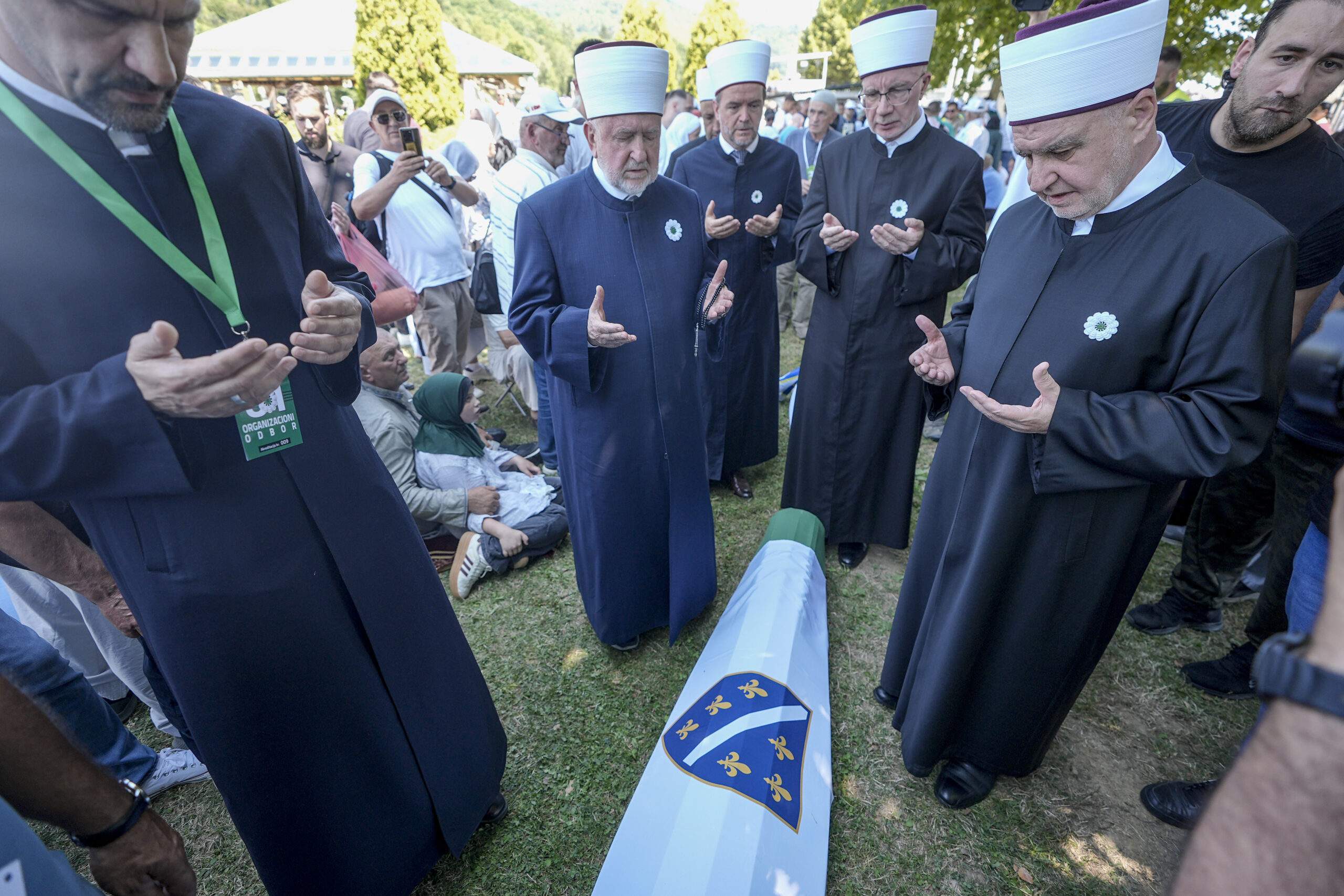
Years later, I finally travelled to Bosnia myself. I visited Sarajevo, Mostar, Srebrenica and other parts of what is an extraordinarily beautiful country. But Srebrenica was the most poignant.
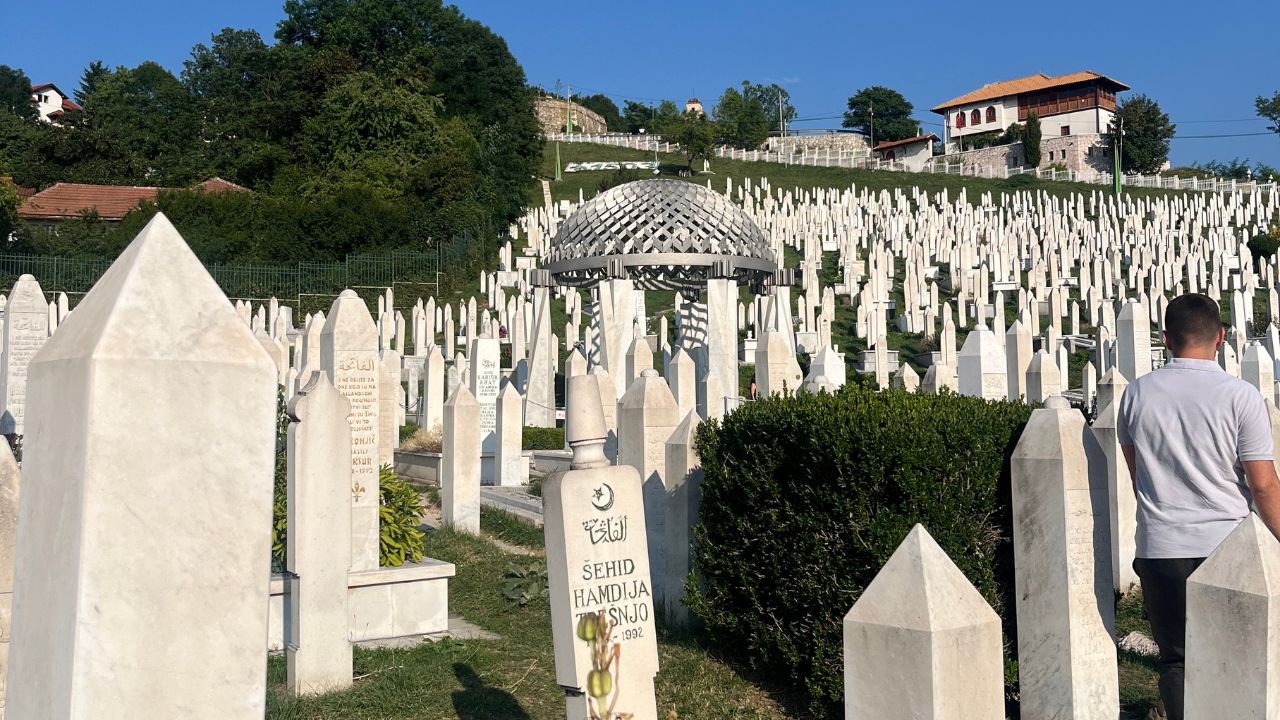
To stand in the place where more than 8,000 Muslim men and boys were massacred was to confront physically what we had watched from afar during the 1990s. And it was impossible to forget that these people had supposedly been under the protection of the international community. Srebrenica had been declared a United Nations “safe area”, yet the international system catastrophically failed the people it was supposed to protect.
But we should also be careful not to allow the enormity of Srebrenica to obscure what happened elsewhere.
The killing and ethnic cleansing of Bosnian Muslims took place across vast areas of eastern and northern Bosnia. Places such as Prijedor, Zvornik and Višegrad became synonymous with massacres, detention camps, expulsions, rape and the destruction of Muslim communities that had existed there for generations.
Thousands of Bosniaks were killed in these areas. In Višegrad alone, estimates cited by the International Criminal Tribunal for the former Yugoslavia put the number of murdered Bosniaks at around 3,000. The atrocities were not confined to one terrible week in Srebrenica in July 1995. They formed part of a much wider campaign to permanently remove Muslims from territory claimed by Serb nationalists.
My wider travels through Bosnia also left me with an uncomfortable impression: that the peace agreement which ended the war had stopped the killing, but had not necessarily resolved the hatreds which produced it.
In some respects, a sticking plaster had been placed over a much deeper wound.
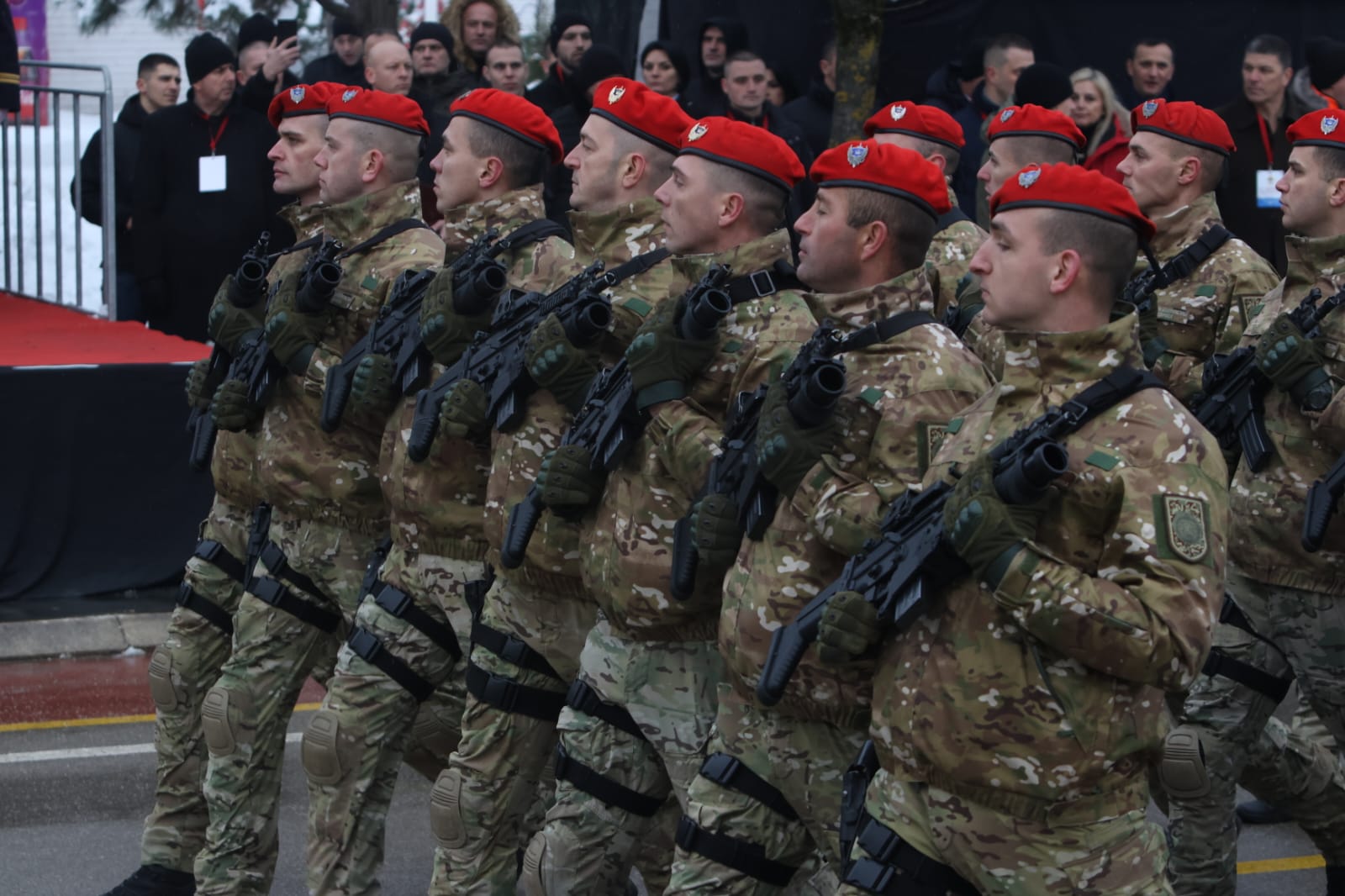
The political project pursued by Mladić and Radovan Karadžić helped create Republika Srpska, the Serb entity that still constitutes almost half of Bosnia and Herzegovina. Serbian nationalism did not disappear with the end of the war, and Mladić and Karadžić have continued to be glorified as heroes by sections of the Serb population despite their convictions for genocide and other war crimes.
The precursor to genocide
And that brings us to the most disturbing lesson of all: the Bosnian genocide did not emerge from nowhere, and nor did the ideology behind it suddenly appear in the 1990s.
The Greater Serbian nationalist tradition which demonised Slavic Muslims had roots stretching back into the nineteenth century. Anti-Muslim ideas and violence had existed in the Balkans through successive periods of upheaval, conflict and population displacement long before Mladić and Karadžić appeared on the scene.
Under socialist Yugoslavia, these nationalist divisions were officially suppressed in favour of a common Yugoslav identity and the ideal of unity among the South Slavic peoples. But they were never completely extinguished.
As Yugoslavia began to unravel, particularly during the 1980s, Serbian nationalism re-emerged with enormous force. Old historical grievances and myths were revived and Muslims were increasingly portrayed as an alien and threatening presence on land claimed by Serbian nationalists.
By the time war came to Bosnia, therefore, the propagandists did not have to invent anti-Muslim hatred from scratch. They were drawing upon an existing historical reservoir of nationalism, grievance and prejudice and adapting it to the politics of the late twentieth century.
That propaganda was then reinforced by political incitement, media demonisation and ultimately street-level and military violence. Muslims were portrayed as a threat, as an alien presence and eventually as people against whom extraordinary measures could be justified.
The legacy of Mladić and Karadžić lives on
Look around Europe in 2026 and some of those warning signs are disturbingly familiar.
Ratko Mladić may be dead, but the ideology he represented has not disappeared. His legacy continues to be celebrated and defended by sections of society in Republika Srpska and Serbia.
Nor is that phenomenon confined to those places. Mladić and the wider ultranationalist ideology with which he is associated have also been glorified among sections of the Serb population in Montenegro and in Serb-majority areas of Kosovo.
Murals, graffiti, commemorations and public displays honouring convicted war criminals demonstrate that this ideology did not die at Dayton, nor with the convictions of Mladić and Karadžić at The Hague.
And beyond the Balkans, the wider ideology of hatred towards Muslims simply because they are Muslims has become deeply embedded in European political discourse.
Anti-Muslim rhetoric that would once have been confined to the political fringes is increasingly mainstream. Muslims are routinely portrayed as a demographic, cultural and security threat. Politicians build careers around hostility towards Islam. And inflammatory rhetoric is amplified through sections of the media and across social media.
That is why Muslims who remember Bosnia should pay particular attention to what is happening in Europe today.
We have seen this process before. We know that genocides do not begin with massacres. They begin with words, with dehumanisation, with political movements convincing populations that a minority among them represents an existential threat.
Bosnia should have taught Europe where the systematic demonisation of an entire religious community can ultimately lead.
Thirty years later, as Ratko Mladić passes into history, the uncomfortable question is whether Europe learned that lesson at all.