



Vigilante groups in South Africa have been conducting anti-immigrant marches since April, largely targeting African and Asian Muslim migrants, with daily reports of harassment, intimidation and extortion against Muslim-owned businesses and communities — echoing far-right sentiments seen across Europe and North America.
South Africa has been gripped by months of violent anti-migrant protests, as the country is home to hundreds of thousands of migrants from across Africa and Asia, many of whom are Muslim.
The UN Refugee Agency says the country hosts more than 167,000 refugees and asylum seekers from countries such as Burundi, Congo, Somalia, South Sudan, Rwanda and Zimbabwe.
Many of those migrants are either being repatriated, deported, or forced to choose between leaving a country they once called home due to the instability and insecurity facing their communities.
Muslim businesses and homes have also been targeted, as protesters have been going door-to-door asking African and Asian migrants to show their passports and identity documents.

The daily incidents of harassment, intimidation and racial profiling have led many refugees and migrant communities to fear for their livelihoods, despite receiving support through various anti-xenophobia protests.
The global far-right threat
Subscribe to our newsletter and stay updated on the latest news and updates from around the Muslim world!
One Nation Media editor Dilly Hussain, he said: “When I left the U.K I thought it was going to be different in South Africa, but it’s not.”
Having recently relocated to South Africa, Hussain said he has found himself confronted by a wave of anti-migrant sentiment that bears a striking resemblance to the far-right movements we are currently witnessing in Britain.
The anti-migrant movement is being led by a group called March and March, a vigilante organisation that has been conducting weekly operations — predominantly on Thursdays — targeting migrant-owned businesses, known locally as “spaza shops.”
Hussain said: “They would say they’re anti-illegal migrants, anti-undocumented migrants, but in reality they’re basically going around every Thursday, going to mainly spaza shops, and running people out of their businesses. These are non-governmental bodies. They’re acting like vigilantes, going around asking people to provide documentation, beating people up.”

The movement, led by a woman known as Jacinta Ngobese-Zuma, staged a major national mobilisation on June 30, drawing significant attention to what has become one of South Africa’s most pressing social and political flashpoints.
Echoing the words of the protesters, Hussain said: “‘They are saying migrants are taking our jobs, using all the amenities and resources meant for South Africans, taking our women, taking our money — they’re leeches, not giving anything back’. It’s exactly the same rhetoric we hear in the U.K.”
Anti-Muslim, not just anti-migrant
What is unfolding in South Africa is not simply an anti-migrant movement but one with a distinctly anti-Muslim and Islamophobic undercurrent running through it.
Hussain said: “There is a growing suspicion that there is a Zionist hand in some of these activities. In the same way that in the U.K. we know the pro-Israel lobby and Zionist agitators are whipping up hatred against migrants, particularly Muslim migrants — the exact same thing is happening in South Africa.”
Crucially, the Islamophobic dimension of the movement extends beyond newly arrived migrants.
Muslims of Indian and Malay heritage — communities with roots in South Africa stretching back 150 to 200 years — are also being viewed with suspicion.
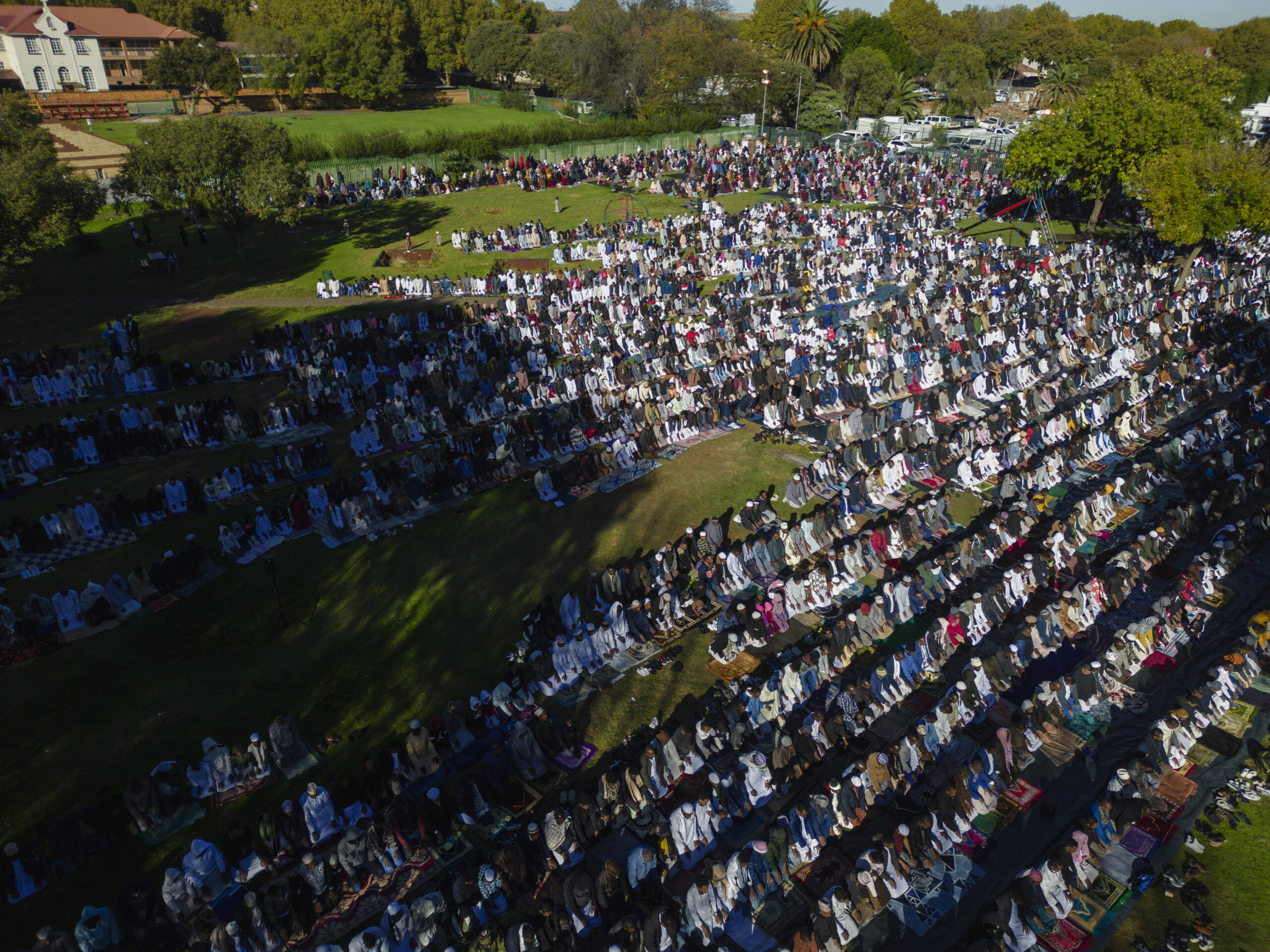
Even Indian Muslims who have been in South Africa for for up to 150 years are being questioned over their loyalty, and are seen as being more sympathetic to the new migrant Muslim community than to indigenous South Africans.
Xenophobic rhetoric accuses Muslims of similar tropes heard in the U.K. — that Muslim birth rates will outpace those of native indigenous South Africans and that Muslims put their religion before their country.
The March and March movement is predominantly associated with the Zulu community and is strongest in KwaZulu-Natal — particularly around Durban — though significant mobilisation has also taken place in Johannesburg and Cape Town.
Human cost
South Africa’s Justice Minister Mmamoloko Kubayi said last week that 53,000 African migrants from Malawi, Nigeria, Ghana and other African nations have been forced to return to their home countries through “voluntary repatriation and deportation processes.”
The crisis has triggered a diplomatic fallout, with Ghana, Nigeria, Uganda and several other nations warning South Africa of serious consequences unless the situation is addressed.
There are estimated to be more than 3 million undocumented migrants in a country of roughly 65 million people, which March and March argue is responsible for the national crisis of unemployment and lost trading opportunities.
Migrant blame not warranted
South Africa’s unemployment, housing and public-service crises are being blamed on migrants and refugees.
However, Nasiha Soomar, a candidate attorney and member of the Operation Ubuntu organising team, told One Nation Media that migrants account for around 5.1% of the population, while South Africa’s unemployment rate stands at about 32%.
She said: “There is no version of the maths where 5% of the population is responsible for an unemployment crisis of that scale.”
Soomar said the country’s problems are rooted in corruption, poor governance and economic inequality.
The anti-migrant campaigns have triggered a growing response from South Africans who reject the violence.
On Saturday, hundreds marched in Johannesburg, Pretoria, Cape Town and Durban demanding an end to attacks against foreign nationals. More than 60 civil society organisations representing communities across South Africa joined the counter-protests.