


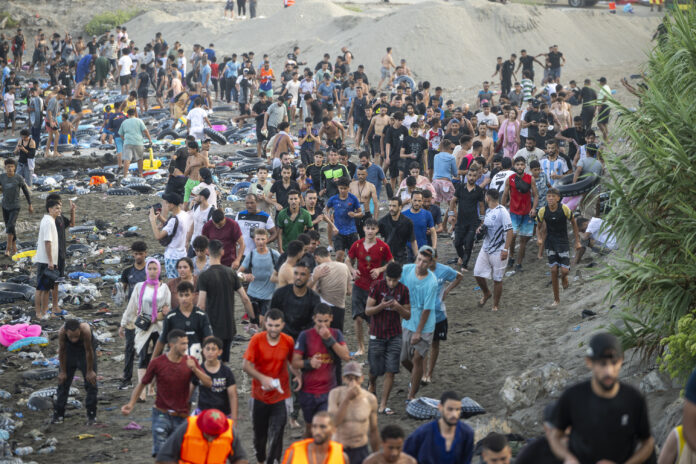
Spain has deployed military personnel and mobilised all available resources after an unprecedented surge of migrants attempted to enter its North African enclaves of Ceuta and Melilla from Morocco, triggering one of the largest border crises in recent years.
The scale of the crossings remains disputed. Spanish daily El País, citing security force estimates, reported that more than 40,000 migrants may have entered or attempted to enter Ceuta in recent days, with some estimates placing the figure closer to 50,000.
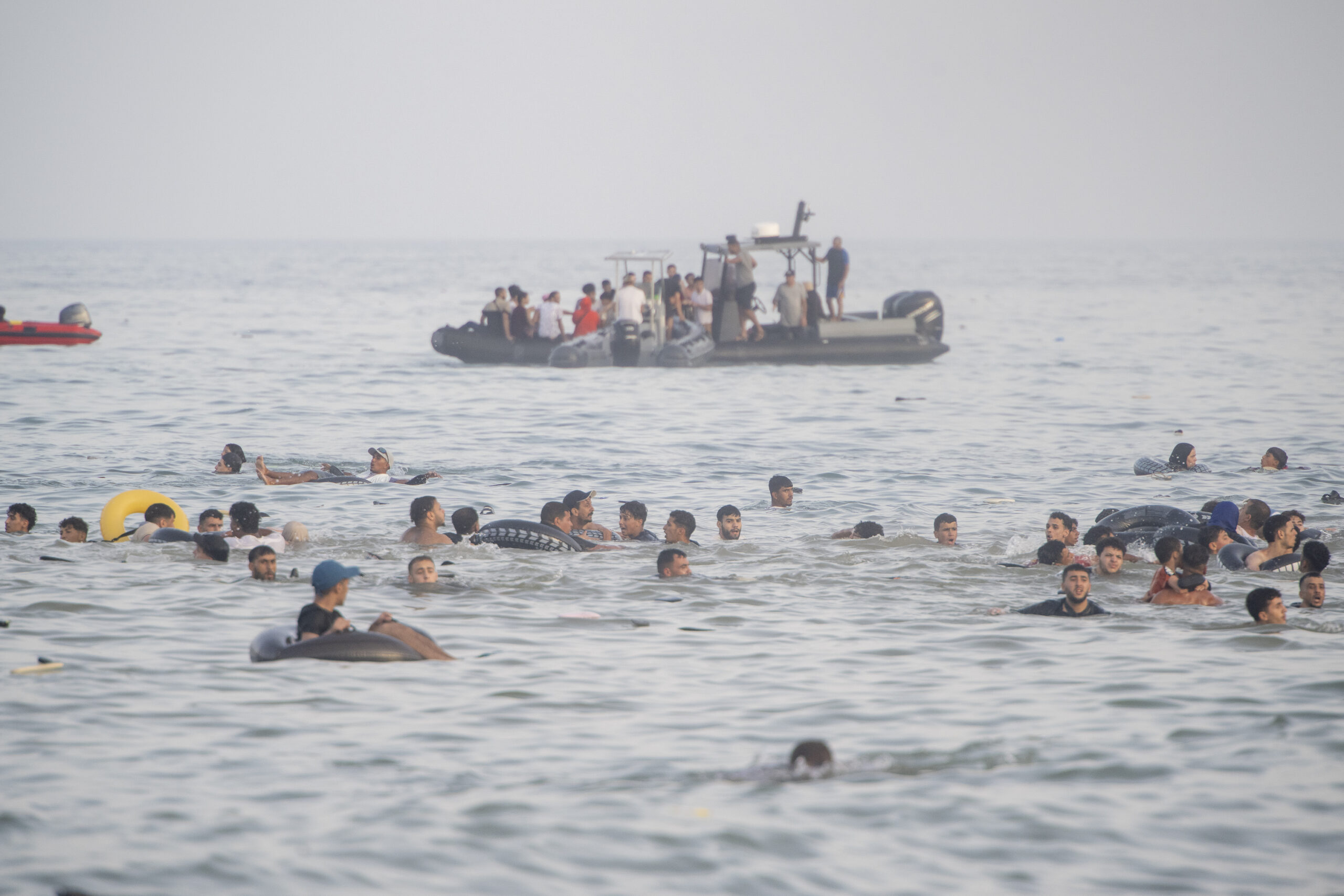
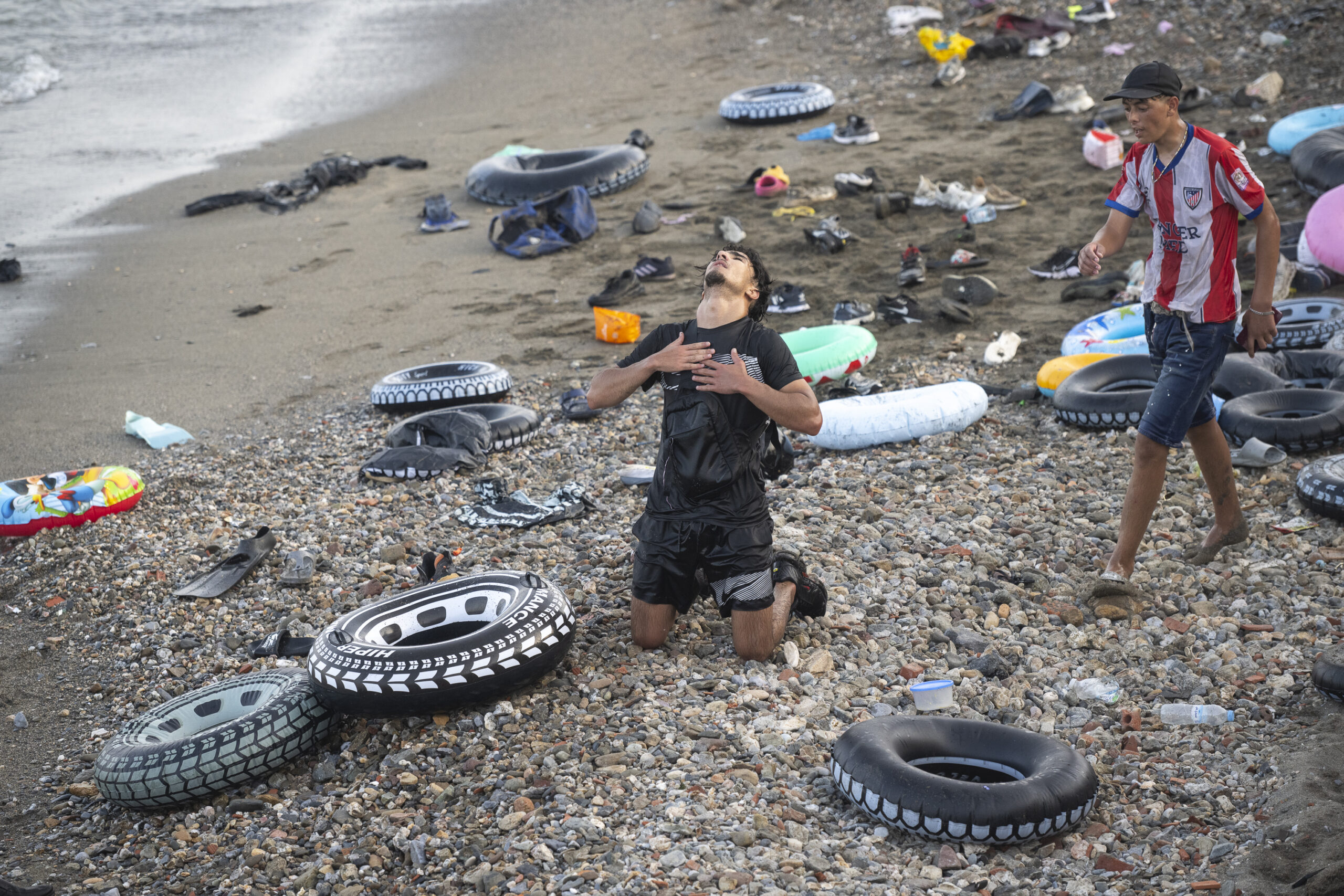
Most of the crossings into Ceuta occurred on Thursday, with migrants entering both by sea and across the land border. Hundreds reportedly swam around the border breakwaters while others crossed on foot during the mass movement.
At least 19 migrants were reported dead during the crossings, according to Spanish public broadcaster RTVE, while El País reported that at least 18 people died attempting the sea crossing. Hundreds of migrants who reached Ceuta later reportedly began returning voluntarily to Morocco through the same border crossing they had used to enter.
The surge prompted Spanish Prime Minister Pedro Sánchez to announce that the government was mobilising “all necessary resources” and deploying the armed forces to support the Civil Guard in restoring security. Sánchez and Interior Minister Fernando Grande-Marlaska travelled to Ceuta following requests from local authorities for additional assistance.

“The Government of Spain is fully committed to providing an immediate response to the situation in Ceuta,” Sánchez said, adding that Madrid was working closely with Moroccan authorities to restore normality.
The crisis was not confined to Ceuta. Spain temporarily closed the Beni Enzar border crossing in Melilla after hundreds of migrants attempted to enter the enclave. Melilla regional president Juan José Imbroda estimated that between 300 and 400 migrants entered the city, describing the situation as serious but “not comparable” to the scale of events in Ceuta.
Subscribe to our newsletter and stay updated on the latest news and updates from around the Muslim world!
Spanish authorities said migrants attempted to enter Melilla both by sea and across the land border. A large police deployment was sent to the area, while Moroccan security forces cooperated in containing the crossings. The border crossing remained closed as security operations continued.
Earlier on Friday, hundreds of migrants reportedly clashed with security forces along the border fences separating Morocco from both Ceuta and Melilla.
In response, Moroccan authorities launched a large-scale operation around the northern city of Fnideq, preventing thousands of people from reaching the border. Security forces intercepted large groups of mostly young migrants, transporting many away from the area while continuing to pursue others attempting to reach Ceuta.
The operation followed an agreement announced by Spain’s Interior Ministry under which Madrid and Rabat would strengthen border coordination and accelerate the return of migrants who entered Ceuta irregularly. The announcement came shortly after Spain’s Supreme Court ruled that migrants intercepted at sea while attempting to swim into Ceuta or Melilla cannot be returned immediately.


The reasons behind the sudden mass movement remain unclear. According to Spain’s EFE news agency, thousands of migrants gathered near the border outside Ceuta in what appeared to be a coordinated attempt to enter Spanish territory.
Moroccan authorities said they did not know what had triggered the large gathering, which coincided with celebrations marking the 27th anniversary of King Mohammed VI’s accession to the throne.
Irregular migration from Morocco and other African countries to Europe continues to be driven by economic and social pressures. Morocco’s Economic, Social and Environmental Council estimates that around 1.5 million people aged between 15 and 24 were neither in employment, education nor training as of May 2024.
Although the country’s unemployment rate fell slightly to 13% in 2025, official figures show that nearly one in eight Moroccans remains unemployed despite the creation of almost 193,000 jobs over the past year.