




At least 44 Muslims have been killed in India since the start of 2026, with 19 deaths attributed to state actors and 25 to Hindu extremist assailants, according to a new report tracking persecution of Muslims across the country.
At least 25 Muslims were killed in India between May and July, including 15 who were killed by police or security forces and 10 who were killed in what researchers describe as religiously motivated attacks by Hindu extremist groups.
The figures, published by the South Asia Justice Campaign’s India Persecution Tracker, says the pace of killings means 2026 could become the deadliest year for anti-Muslim violence since it began documenting such deaths in 2022.
The tracker records not only deaths but also arrests, demolitions, forced expulsions and other forms of state action affecting India’s Muslim minority.
Among those killed between May and July were an 11-year-old girl and a 16-year-old boy, according to the report.

The findings paint a picture of a Muslim community facing pressure from both state institutions and Hindu extremist actors, with the impact extending far beyond individual cases of violence.
‘A full repertoire of coercion’
Subscribe to our newsletter and stay updated on the latest news and updates from around the Muslim world!
The South Asia Justice Campaign says Indian state institutions have continued to use what it calls a long-established set of coercive measures against Muslims.
These include alleged extrajudicial killings, deaths in custody, mass arrests, demolitions of homes and mosques, and the removal of families from areas near India’s borders.
The report particularly identifies Uttar Pradesh, Assam, Kashmir and West Bengal as areas where such actions have been prominent.
The term “state actors” in the report refers primarily to police, security forces and other government authorities, rather than private individuals or armed groups.
According to the tracker, more than 1,000 Muslim homes, businesses and religious structures were demolished in at least 21 separate episodes across eight states during the period covered.

At least 23 Muslim religious structures were reportedly demolished in less than two months across six states.
The tracker says the number of Muslim homes, businesses and religious structures demolished since the beginning of 2026 has now exceeded 3,000.
Demolitions have become a deeply contentious issue in India, where authorities have sometimes described bulldozing as action against illegal construction or criminal suspects. Critics, however, argue that the practice has been used selectively against Muslims and can amount to punishment without due process.
The report also criticises the Indian judiciary’s handling of demolition cases, saying the Supreme Court declined to enforce safeguards it had previously laid down and instead sent contempt petitions back to state High Courts.
Kashmir: mass detentions after militant attack
In Indian-administered Kashmir, the report says security forces detained more than 2,500 people within 48 hours of a militant attack in July.
It also alleges that the homes of two families were demolished using explosives.
Kashmir has been heavily militarised for decades because of the long-running conflict between India, Pakistan and armed separatist groups. Indian authorities routinely defend security operations as necessary to combat militancy.
But rights groups have repeatedly raised concerns about collective punishment, arbitrary detention and the treatment of civilians.
The tracker also alleges that police in several states selectively arrested Muslims during nationwide student protests.
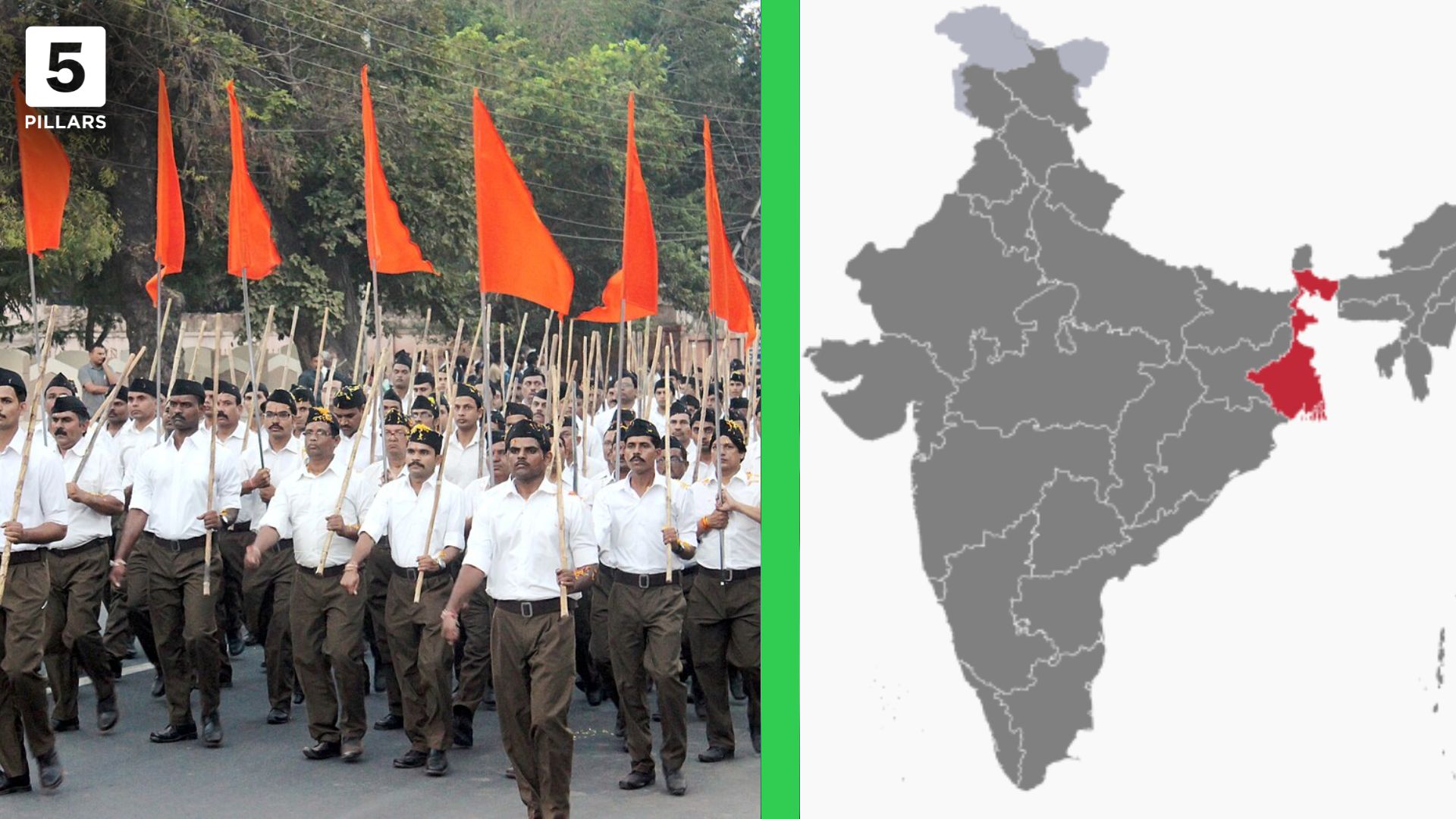
West Bengal: Muslims face a new political reality
West Bengal features prominently in the report.
The state had long been governed by the Trinamool Congress, but the BJP’s first-ever victory in a state election there has dramatically changed its political landscape.
The tracker says that following the BJP’s victory, attacks on mosques, Muslim-owned businesses and settlements occupied by Muslim hawkers left at least two people dead.
One of those killed was reportedly trying to protect a mosque.
The report also highlights a series of government measures that it says disproportionately affect Muslims, including changes to welfare and citizenship screening, alterations to the reservation system and significant cuts to minority-affairs and madrasa funding.
Madrasas are Islamic religious schools, many of which also provide general education.
The tracker says 77 Muslim communities were removed from the state’s backward-classes reservation list, while madrasas were placed under greater surveillance.
It also alleges that police were instructed to hand people detained as suspected “infiltrators” to border forces without first producing them before a court.
The state government has claimed that around 4,800 people were “deported” during its first month in power.
The treatment of Bengali-speaking Muslims has become particularly contentious.
Authorities have used the language of “infiltrators” to describe people they claim entered India illegally from neighbouring Bangladesh. Rights groups, however, warn that such language can blur the distinction between undocumented migrants and Indian citizens who have lived in the country for generations.
That distinction is particularly important in a country where millions of people share language, culture and family ties across the India-Bangladesh border.
‘Detect, Delete and Deport’
Similar concerns have emerged in Assam, a north-eastern state bordering Bangladesh.
The state government has pursued what it calls “pushbacks”, referring to the removal of people it considers illegal migrants.
Assam’s Chief Minister has claimed that 1,679 people have been “sent back” over the past two years.
Human Rights Watch, however, has documented cases in which Indian forces allegedly took families, including children, through gaps in the border fence at night.
The South Asia Justice Campaign says this policy raises serious questions over citizenship and due process.
It also points to the repeated use of the phrase “Detect, Delete and Deport”, which refers to identifying alleged foreigners, removing their names from electoral rolls and ultimately deporting them.
U.N. Special Rapporteurs have previously warned that rhetoric about “infiltrators” risks conflating Indian Muslim citizens with foreign nationals and could contribute to discrimination against Muslims.
For many Indian Muslims, the issue is not simply about migration. It is about whether citizenship itself can become conditional on religion, language or ancestry.
Laws and courts
The report also highlights what it describes as an expanding legal framework affecting Muslim rights.
It says Assam and Madhya Pradesh have enacted Uniform Civil Codes — laws intended to establish common rules for matters such as marriage, divorce and inheritance regardless of religion.
Supporters argue that a common civil law promotes equality. Critics, including sections of India’s Muslim community, argue that such laws can override protections and traditions governed by Muslim personal law.
The report also cites legislation making the “insult” of India’s national song, Vande Mataram, punishable by up to three years in prison.
In another controversial case, a High Court ruling declared the centuries-old Kamal Maula Mosque to be a Hindu temple and ended Muslim Friday prayers there.
The tracker says these developments form part of a broader pattern in which religious disputes are increasingly being settled through courts, administrative action and legislation.
The report also examines cases dating back years in which it says victims’ families have struggled to obtain justice.
It cites appellate courts upholding the acquittal of all 22 accused, including 21 police officers, in a 2005 alleged staged-encounter case involving three deaths.
It also points to the acquittal of five men accused of burning a Muslim man alive during the 2002 Gujarat violence.
The organisation argues that such outcomes reinforce a sense of impunity, particularly where police officers or politically powerful individuals are accused.
The tracker says newer cases have followed similar patterns, including deaths in custody initially treated as accidents, investigations focusing on victims themselves and allegations that authorities protected influential perpetrators.
It also notes that public calls for the genocide of Muslims at a mass gathering near Delhi reportedly received no police action.
Beyond individual attacks and government policies, the report raises a broader concern about political language.
It argues that statements by senior Indian politicians have increasingly portrayed Muslims as outsiders or potential foreigners, despite the fact that Muslims make up around 14% of India’s population and have lived in the country for centuries.
The tracker cites warnings from U.N. experts over rhetoric describing Muslims as “infiltrators.”
The concern is that language used by political leaders can influence how government officials, police and the wider public view an entire community.
The report describes this as a process in which Muslims are treated as a group whose belonging in India is permanently conditional.
That question of belonging is at the heart of many of the cases documented by the tracker.
A rare conviction
The report does, however, point to one significant judicial victory.
A Muslim judge sentenced 14 cow vigilantes to life imprisonment for a lynching.
Cow protection has become one of the most politically charged issues surrounding anti-Muslim violence in India. Hindu extremists have frequently targeted Muslims and other minorities over allegations of transporting or slaughtering cattle, despite India’s diverse laws and practices surrounding cows.
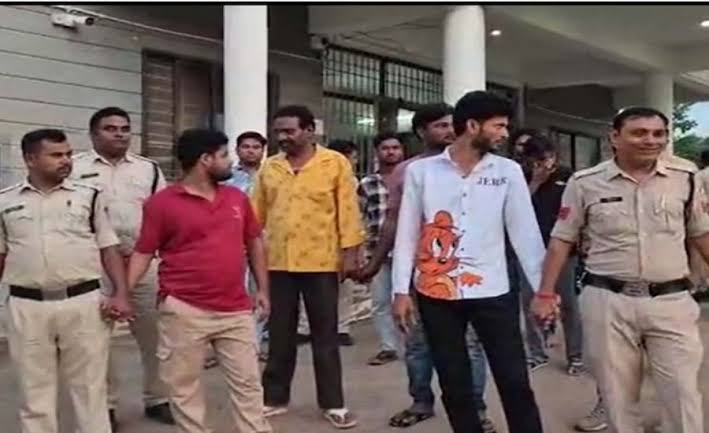
The judge later required police protection after allegedly receiving threats from Hindu extremists.
For the South Asia Justice Campaign, the case demonstrates both the possibility of accountability and the dangers faced by those who attempt to deliver it.
A growing international concern
The report comes amid increasing scrutiny of India’s treatment of minorities from international rights organisations and U.N. bodies.
It highlights concerns over the treatment of protesters, mass deletions from electoral rolls, citizenship checks, demolitions and the treatment of Muslims and other minorities.
The campaign also criticised the Indian government’s decision to block a legislative attempt in Karnataka aimed at strengthening protections against hate speech.
India’s government has consistently rejected allegations that its policies are discriminatory and maintains that law-enforcement and administrative measures are aimed at illegal activity, security concerns or unlawful construction rather than religion.
But the India Persecution Tracker argues that the cumulative pattern is difficult to dismiss as a series of isolated incidents.
For India’s roughly 200 million Muslims, the consequences are not confined to statistics.
They are felt in demolished homes, disrupted businesses, arrests, fear of police action and growing uncertainty over citizenship and belonging.
And with 44 Muslim deaths already recorded in the first seven months of 2026, the campaign warns that the year could mark a new and particularly deadly chapter in India’s long-running struggle over religious identity, citizenship and equal protection under the law.