




Imam Mawlana Sikander Iqbal argues that the Qur’an speaks with unmistakable clarity on same-sex relations, regardless of efforts by modernists to recast its teachings in accordance with their own inclinations.
In recent decades, heterodox thinkers have emerged proposing “reforms” to the Islamic position on same-sex relations. They argue that the Qur’ānic message has been misunderstood by the erudite scholars of the past, or that the language itself is sufficiently malleable to accommodate same-sex relationships alongside normative heterosexual ones.
However, Allah has promised the preservation of His Word: “Indeed, it is We who have sent down the Reminder, and indeed We will preserve it” (15:9).
There are numerous ways to expose the intellectual weakness of those who seek to alter the transcendent moral ethic of Islam. Perhaps one of the most pertinent is to examine how Allah has intertextually safeguarded the meaning of the Qur’ān itself.
One of the primary methods for understanding the Qur’ān is through the Qur’ān itself. Commonly known as Tafsīr al-Qur’ān bil-Qur’ān, this intertextual hermeneutical approach is recognised by all the great exegetes of the past and is regarded as the strongest form of interpretation within the science of tafsīr.

Muftī Muḥammad Shafīʿ (r.a.) explains in Maʿārif al-Qur’ān:
“For instance, there appears the supplication in Sūrah al-Fātiḥah: ‘Guide us to the straight path – the path of those upon whom You have bestowed Your grace.’ It is not immediately clear who these blessed people are. However, another verse clarifies this explicitly: ‘So these are the people whom Allah has blessed: the Prophets, the truthful, the martyrs, and the righteous’ (4:69). Therefore, when commentators explain a verse, they first examine whether its interpretation is already present elsewhere in the noble Qur’ān. If it is, they adopt that explanation as their primary reference.”
Subscribe to our newsletter and stay updated on the latest news and updates from around the Muslim world!
With this principle in mind, let us examine how Allah has preserved Islam’s moral position regarding same-sex relations. Allah describes the attributes of the Prophet ﷺ as follows:
“Those who follow the Messenger, the unlettered Prophet, whom they find mentioned in the Torah and the Injīl; who enjoins upon them what is right and forbids them what is wrong; who makes lawful for them the pure things and makes unlawful for them the impure things (الْخَبَائِثَ); and who relieves them of their burden and the shackles that were upon them. So those who believe in him, honour him, support him, and follow the light sent down with him – they are the successful.” (7:157)
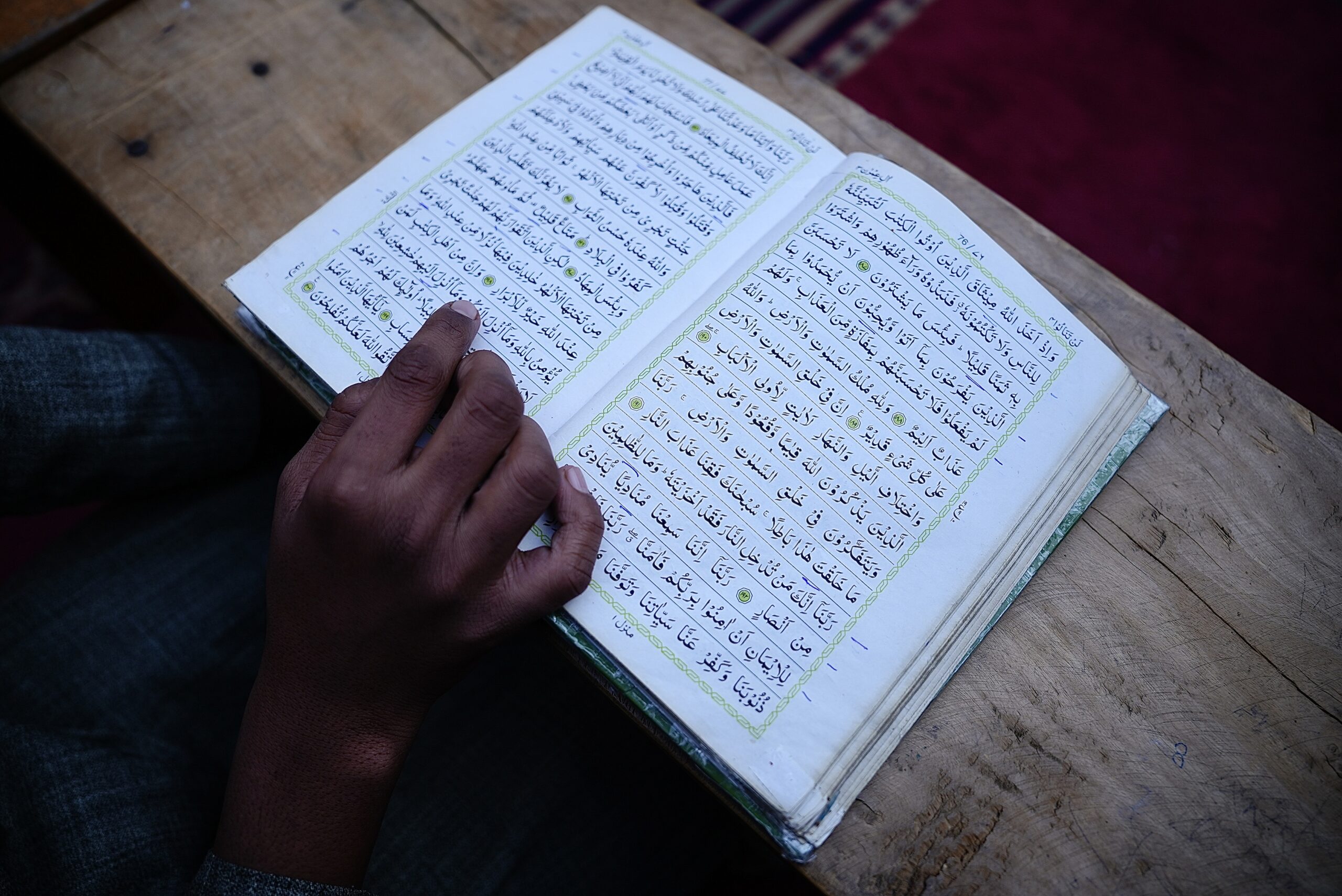
The Arabic term used for “impure things” is الْخَبَائِثَ. The question then arises: what specific impure acts or practices are intended here? Since the verse itself does not enumerate them, we apply the aforementioned intertextual principle and search elsewhere in the Qur’ān for clarification.
We find the same term employed in Sūrah al-Anbiyāʾ, where Allah says regarding Prophet Lūṭ (عليه السلام):
“And as for Lūṭ, We granted him wisdom and knowledge, and We delivered him from the town that used to commit foul deeds (الْخَبَائِثَ). Indeed, they were an evil people, defiantly disobedient.” (21:74)
What were these foul deeds?
Their crimes are recorded throughout the Qur’ān, and the most prominent of them — repeatedly singled out in connection with their mention — is the act of men approaching men with sexual desire instead of women.
The Qur’ānic wording could scarcely be more explicit: “Do you approach men with desire instead of women?”
Although the people of Lūṭ were guilty of numerous sins, same-sex acts remained their defining transgression.
It is the offence most consistently associated with them throughout the Qur’ān and is mentioned repeatedly in multiple passages.
By contrast, their other crimes — such as highway robbery and engaging in evil practices within their gatherings — are mentioned only once.
Imām Ālūsī (رحمه الله), commenting on the use of the plural الْخَبَائِثَ rather than the singular خَبِيثَة, notes: “It is possible that, due to the extreme wickedness of this practice, it is referred to using the plural form الْخَبَائِثَ rather than the singular خَبِيثَة.”
Thus, through an intertextual reading of the Qur’ān, it becomes evident that the eradication of such practices, including same-sex acts, formed an integral part of the prophetic mission.
The Qur’ān itself explains its own terminology and preserves its moral teachings against reinterpretations that seek to detach them from their original and intended meaning.









An excellent clarification.