


The ongoing war, which began on February 28 under what has been described as Operation Epic Fury, has intensified across multiple fronts.
The US and Israel have continued coordinated strikes on Iranian military and economic targets, while Tehran has expanded its retaliation beyond Israel, targeting US assets and allied territories across the region.
According to reports, the conflict has already resulted in more than 1,340 deaths, including then-Iran’s Supreme Leader Ali Khamenei. Iranian responses have included missile and drone attacks against Israel, as well as strikes on Jordan, Iraq, and Gulf states hosting US military infrastructure.
The battlefield has expanded not only geographically but also operationally, with both sides targeting increasingly strategic assets. The latest developments suggest a shift toward economic and infrastructure disruption, alongside continued aerial engagements.
Aircraft losses

The US Air Force has suffered significant losses during the conflict, with at least seven aircraft reportedly destroyed. The downing of a US Air Force F-15 and an A-10 in separate incidents on Friday brought the total number of manned aircraft losses to seven, according to a report.
Subscribe to our newsletter and stay updated on the latest news and updates from around the Muslim world!
Earlier in the war, three F-15s were mistakenly shot down by Kuwaiti air defences in what was described as a friendly fire incident over Kuwait. All six crew members ejected safely and later returned to duty.
Additional losses included a KC-135 refuelling tanker, which crashed in Iraq on March 12, killing six US personnel. The aircraft had been involved in an incident with another aircraft during Operation Epic Fury. An E-3 Sentry surveillance aircraft was also reportedly destroyed during an Iranian strike on Prince Sultan Air Base in Saudi Arabia, injuring at least 10 US service members.
A separate incident saw a US F-35 forced to make an emergency landing after being hit by what was believed to be Iranian fire.
Strategic strikes
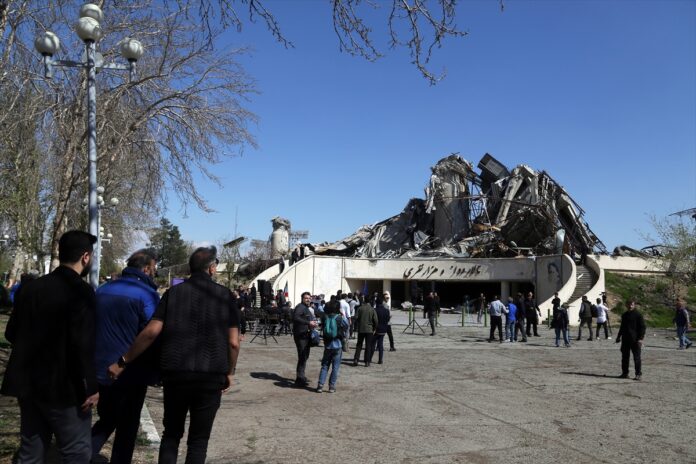
US and Israeli strikes have increasingly targeted Iran’s critical infrastructure, particularly its energy sector. Iranian media reported that attacks hit petrochemical facilities in Mahshahr and Bandar Imam in Khuzestan province, resulting in injuries and significant damage.

The strikes targeted facilities including Fajr, Rejal, and Amir-Kabir, with reports of a “massive explosion” in Mahshahr. Emergency and firefighting teams were deployed to contain the damage, while parts of the Bandar Imam complex were confirmed to have been impacted.
In addition to energy infrastructure, the Shalamcheh border trade terminal was also struck, signalling a broader attempt to disrupt Iran’s economic networks and cross border logistics.
Israel separately claimed it struck a ballistic missile warehouse and weapons research and development sites in Iran. It also said it targeted “an Islamic Revolutionary Guard Corps (IRGC) air defence site where missiles intended to target aircraft were stored.”
Internal tensions
The war has also exposed fractures within the U.S. military leadership. Reports indicate that Defense Secretary Pete Hegseth has removed several senior army officials during the ongoing conflict, including Army Chief of Staff Gen. Randy George.
One official described the situation bluntly, stating: “This is all driven by the insecurity and paranoia that Pete has developed since Signalgate. Unfortunately, it is stoked by some of his closest aides who should be trying to calm the waters.”
Further reports suggested that tensions between Hegseth and Army Secretary Dan Driscoll have contributed to the dismissals, with one source claiming: “(Hegseth) is very concerned about being fired and he knows that Driscoll is one of the top contenders, or a natural contender, to succeed him.”
Regional expansion
The conflict risks widening further as additional regional actors become entangled. Iranian state media has claimed that the UAE has entered the war, citing incidents involving a Chinese Wing Loong-2 drone and an Emirati Mirage 2000 fighter jet.
The claims, however, could not be independently verified, and there has been no official confirmation or response from the UAE.
Nevertheless, the possibility of further regional involvement underscores the volatility of the situation. With multiple states already affected either directly or indirectly, the war continues to evolve beyond its initial scope, raising concerns about a broader and prolonged regional conflict.