


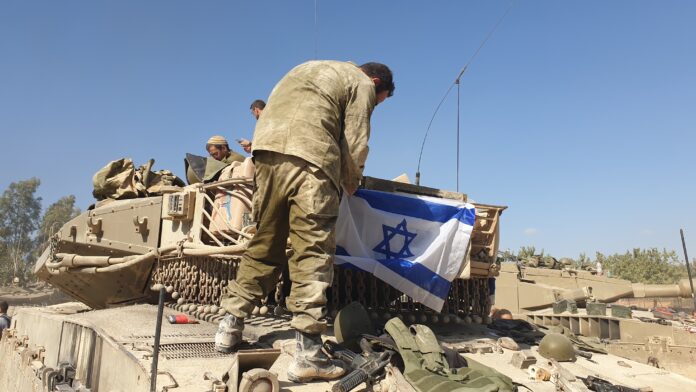
Israel’s military is grappling with a deepening manpower crisis as multi front operations strain forces, raising warnings about readiness, reserve fatigue, and the risk of internal collapse.
The situation has intensified as deployments expand across Lebanon, Gaza, the West Bank, and Syria. Senior officials have begun openly warning that current troop levels are not enough to sustain ongoing operations. The pressure is visible across both active units and reserve forces.
Military spokesperson Effie Defrin said: “The army is suffering a shortage of about 15,000 soldiers, including 7,000 to 8,000 fighters,” highlighting the scale of the gap. Reinforcements are urgently needed as missions continue to grow in both number and complexity.
Chief of Staff Eyal Zamir also raised alarms about combat readiness. He warned that the army is raising “10 red flags,” and stressed that reserve forces “will not hold” under sustained pressure, pointing to a system under significant strain.
Force strain

The burden on Israel’s military has grown as it operates across several active fronts at once. Zamir noted that the army is engaged in Lebanon, Gaza, Syria, Iran, and the West Bank simultaneously, stretching its capacity to respond effectively.

This multi front engagement has increased reliance on reserve units, which were not designed for prolonged and repeated deployments. As a result, fatigue is becoming a serious concern, both physically and mentally, among reservists.
Subscribe to our newsletter and stay updated on the latest news and updates from around the Muslim world!
Zamir warned, “The army is heading toward internal collapse in light of the government’s failure to pass laws related to Haredi conscription, regulating reserve service and extending mandatory service,” underscoring how policy gaps are worsening operational stress.
Conscription debate
At the center of the crisis is a long running dispute over the conscription of ultra Orthodox Jews, known as Haredim. Many in this community have historically been exempt from military service, creating an imbalance in recruitment.
The Haredi population, which makes up about 13% of Israel’s population, largely opposes mandatory enlistment. Community leaders argue that military service threatens their religious identity and way of life.
Senior rabbis have urged followers to refuse enlistment, even encouraging rejection of draft orders. This resistance has made it difficult for policymakers to expand the recruitment base at a time when additional manpower is urgently needed.
Political pressure
The issue has also become deeply political, with opposition figures accusing Prime Minister Benjamin Netanyahu of attempting to formalize exemptions. Religious parties such as Shas and United Torah Judaism have made the matter central to coalition negotiations.
This political tension has slowed legislative efforts to reform conscription rules, leaving the military without a clear path to address its manpower shortage. The delay has further complicated efforts to stabilize the force structure.
Meanwhile, the broader conflict has evolved in distinct phases since October 2023. Israel launched a war on Gaza following the events of October 7, 2023, in response to Hamas’ attacks, killing more than 72,000 Palestinians and wounding around 172,000, while devastating most of the enclave’s infrastructure. The war has been described by some UN officials as meeting the threshold of genocide under international standards.
Since then, the conflict has widened beyond Gaza into a separate and expanding regional confrontation. Military activity has extended into Lebanon and Syria, alongside a joint offensive with the United States on Iran, which has triggered retaliatory strikes across the region.
These overlapping conflicts have amplified the strain on Israel’s military, reinforcing concerns that without structural changes, the current system may struggle to sustain prolonged operations.