


After attending a recent Islamophobia conference in Paris, Roshan Muhammed Salih says the situation for Muslims is so bad there that simply gathering, speaking and organising as Muslims has itself become an act of resistance against systemic repression and silencing.
Holding a conference on Islamophobia in Paris should not feel like an act of defiance. And yet, in today’s France, simply gathering Muslims, activists, academics, and allies in one room to speak openly about discrimination has become a political achievement in itself.
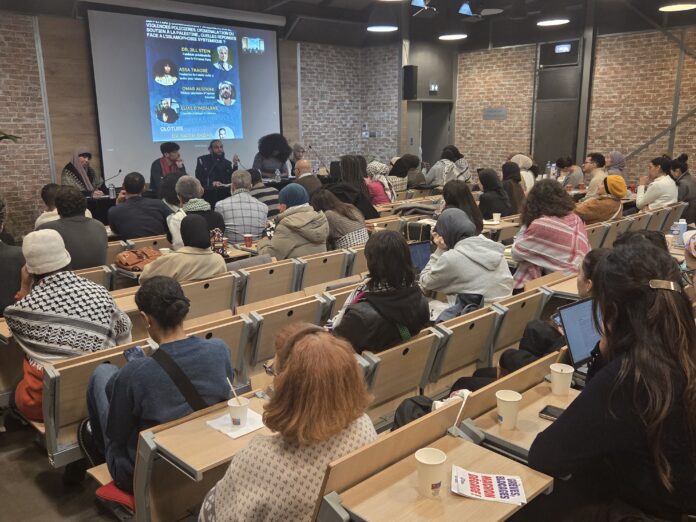
The International Forum on Islamophobia, organised by the University of Berkeley in partnership with L’Espace Malcolm X and several Muslim and Pan-African organisations, was more than a conference. It was a quiet rebuttal to the idea that Muslim voices must be marginal, muted or managed.
As Rayan Freschi, from CAGE International, told me: “We have been able to organise a significant conference at the heart of maybe the most Islamophobic country in the West. So it’s a lot in itself, a major success.”
Around 120 people attended, including prominent French, British and American Muslim academics and activists. This may not sound much but in a political climate where Muslim visibility is increasingly framed as a threat, that presence mattered. “It’s an amazing platform that we were able to secure in order to spread our messages and our narratives,” Freschi said.

Systemic Islamophobia
What was striking throughout the conference was how consistently speakers described Islamophobia not as a series of isolated incidents, but as a system. Elias D’Imzalene, a Muslim activist involved with Urgence Palestine and other Muslim organisations, was blunt in his assessment: “What can be said about the situation of Muslims in France today, except that it is not good, that it is getting worse and worse?”
Subscribe to our newsletter and stay updated on the latest news and updates from around the Muslim world!
According to D’Imzalene, Islamophobia in France operates on multiple levels — legal, cultural, and political. He pointed to laws banning the hijab for young women in schools, the niqab in public spaces, and the so-called “separatism law,” which has led to the dissolution of Muslim organisations.
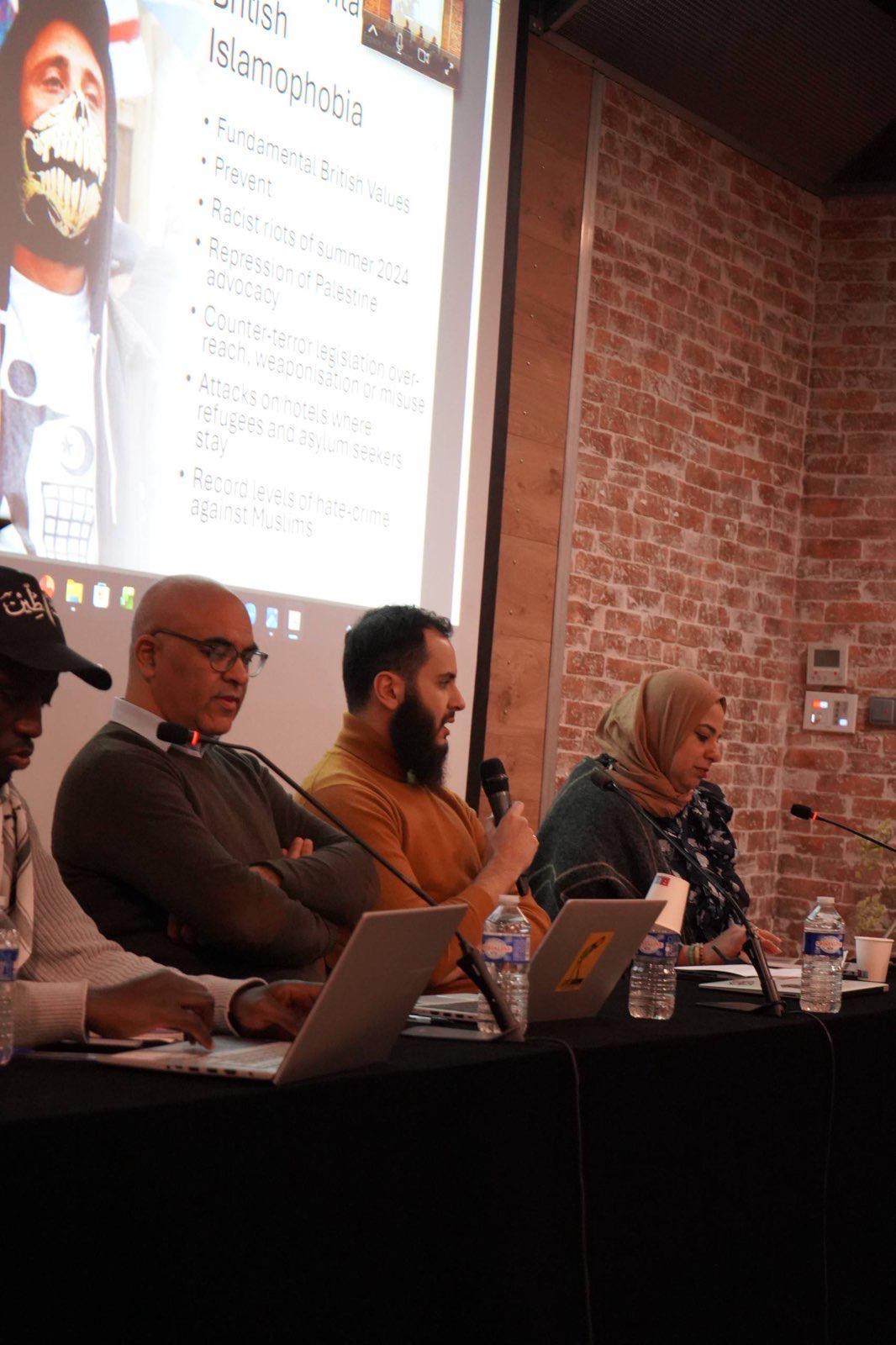
“We are talking about more than a thousand associations,” he said, naming groups like the anti-Islamophobia organisation CCIF and the charity BarakaCity. “Everything that fostered mutual support, everything that created a bond between Muslims, is now liable to be dissolved.”
What emerged from the discussions was a sense that the French state has moved beyond regulating religious expression and into actively criminalising Muslim self-organisation. D’Imzalene described what he sees as a new phase: “French politicians are entering a new phase of radicalisation of their Islamophobia, which is that of the fight against so-called infiltration.” In this framing, Muslims are suspect not only when they organise independently, but even when they participate in mainstream civic life.
This pressure is not abstract. It has material consequences — police checks, frozen funds, closed mosques and cancelled events. Organisers explained how difficult it has become to secure venues. “Authorities are calling the people who provide the venues and trying to cancel,” D’Imzalene noted. “Sometimes the mayors or even the prefect come and cancel the conferences.”
One organiser confirmed that finding a space required discretion, precisely because “it’s extremely hard to secure some venues, some physical spaces in order to express our political ideas.”
Liberty, Equality, Fraternity?
The irony is hard to miss. France prides itself on freedom of expression, yet Muslims are forced to navigate an environment where speaking openly can trigger surveillance or legal action. D’Imzalene himself is facing legal proceedings, which he believes are meant to silence him and others involved in pro-Palestinian mobilisation. His sin was to use the word “intifada” during a pro-Palestine rally which led to him being prosecuted for antisemitism, which he vehemently denies.
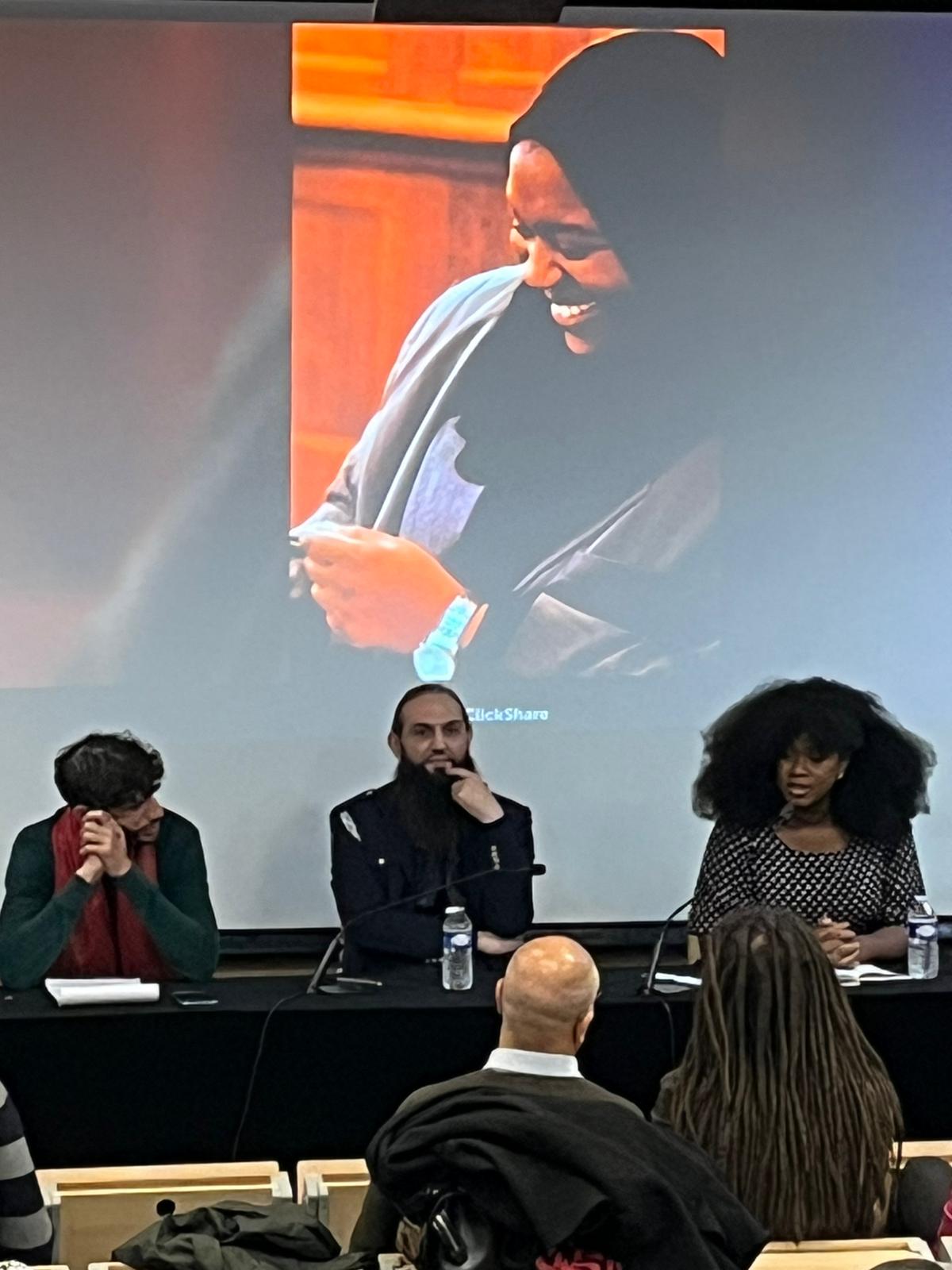
Reflecting on this, he remarked: “When you want to kill your dog, you say it has rabies.”
Yet despite the repression, the tone of the conference was not one of despair. If anything, it was marked by resilience. “Despite the huge repression and the huge crackdown that we’re facing, there’s always a way to express our resistance,” Freschi said. The very act of holding the conference became proof of that resistance.
What this gathering revealed is that Islamophobia in France is no longer just a social prejudice — it has become, as one speaker put it, “a grammar in politics.” It structures debates, justifies laws, and shapes who is allowed to speak. And yet, rooms like this one still fill up. People still come. Conversations still happen.
Leaving the conference, I was struck by a simple but unsettling thought: in a country that claims universal values, Muslims now have to fight for the basic right to assemble, speak, and exist publicly as themselves. That this conference happened at all is a success. That it needed courage to happen is the real indictment.