



Fero Imen writes that she grew up believing Germany was home, only to learn in early adulthood that for Muslims like her, belonging is always conditional.
I grew up in Germany not as a visitor or a passing guest, but as a child who genuinely believed that hard work, discipline and loyalty would eventually grant me the same dignity as everyone else. And I tried. I learned the language without an accent. I excelled in school. I completed my studies. I built a career. I paid my taxes.
Yet the older I become, the more painfully clear it is: I may be German on paper, but I am not German in the minds of those who believe they own this land. It does not matter how well we speak the language, how high we climb, how loyally we serve or how much we contribute.
For many, someone like me – Muslim, visibly non-white, with a family history untouched by the Wehrmacht – will never be allowed to cross the invisible threshold into full belonging. The message is subtle at times, brutal at others, but always unmistakable: you can be here, but you are not of here.
And Germany’s political class is reinforcing this truth with increasing boldness.

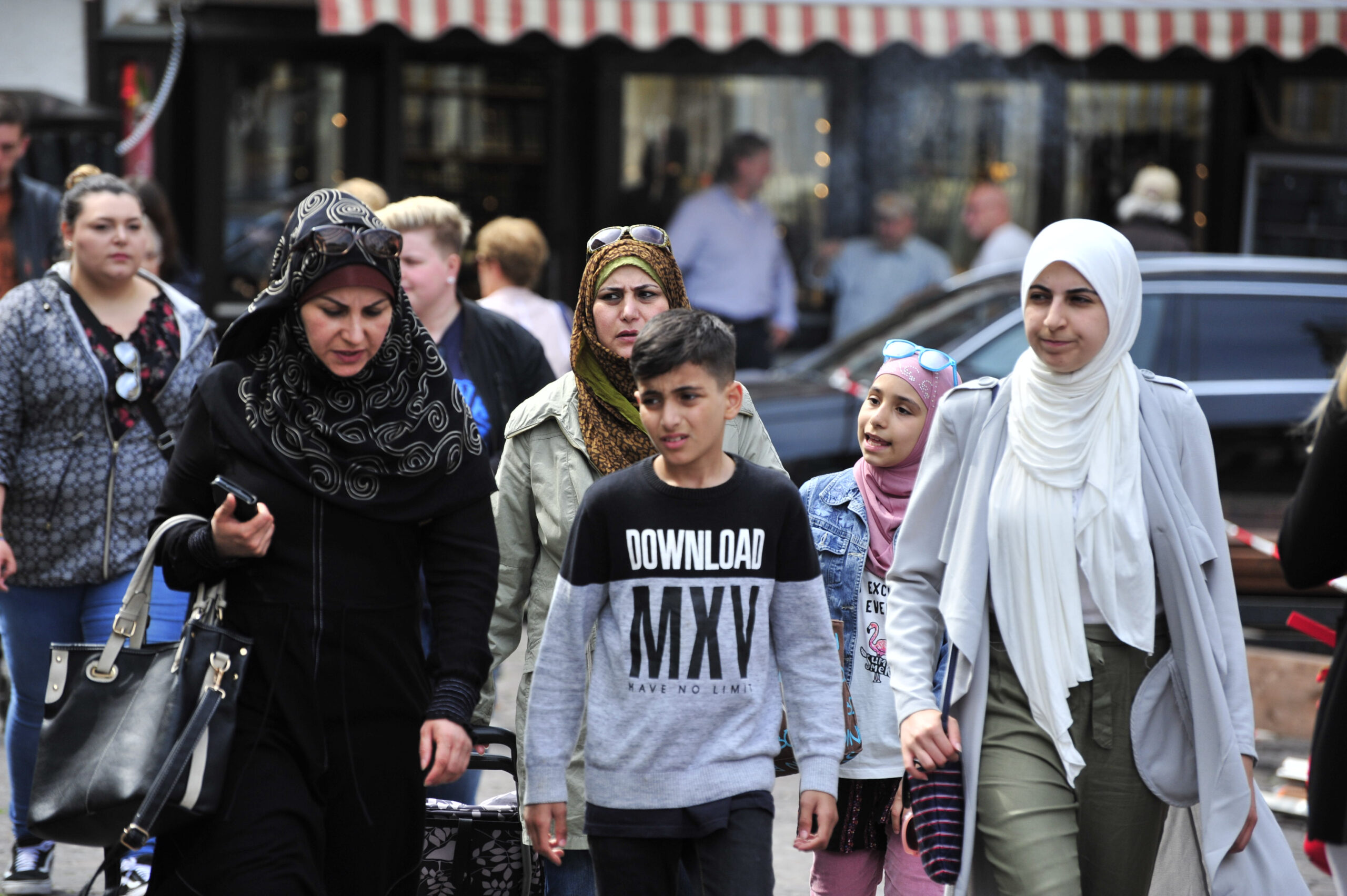
Some time ago, I met a group of young, accomplished Muslim sisters at an event. We spoke about obstacles, the silent ceilings we hit, and one sister – thoughtful, composed, unmistakably weary – took the floor.
She told us that since her youth she had devoted herself to dialogue and integration, believing in the promise that good faith and hard work could bridge the distance between “us” and “them.”
Subscribe to our newsletter and stay updated on the latest news and updates from around the Muslim world!
Now, as an adult woman, a mother and a successful senior physician in a renowned hospital, she sees things differently. She is exhausted. Despite years of professional achievement and a stable private life, she is still met with discrimination, still treated as an outsider, still reminded of her place. She considers the entire project a failure, and she recognises the same fatigue in countless other Muslims who once believed in it just as fiercely as she did.
The price of acceptance: silence and self-erasure
For many of us who grew up here, the unspoken bargain is brutal: you may live safely, study peacefully and enjoy the material comforts of the West if you erase yourself.
If you soften your faith so it does not disturb anyone. If you hide your heritage so it does not appear too foreign. If you suppress your political conscience so it does not challenge the national narrative.
We have already raised a generation of young Muslims conditioned to apologise for their existence: children who speak flawless German yet are still asked where they really come from; children who suppress their cultural pride because it makes others uncomfortable; children who learn quickly that their belonging is always conditional, always fragile, always revocable.
Is this truly the price we must pay for safety? If so, perhaps our parents paid far too much.
Rootlessness as a political project
Alexander Solzhenitsyn once warned: “To destroy a people, you must first sever their roots.” For migrants, this is not abstract philosophy; it is our daily reality.
The pressure to shed our cultures, languages and convictions is not integration; it is a controlled dismantling of identity. Europe does not sever our roots with violence; it does so with polite demands, bureaucratic pressure and the constant expectation that we make ourselves smaller, quieter and more palatable.
The more fragile Europe becomes, the more desperately it clings to the illusion that purity is the answer. Across the continent – in France, the Netherlands, Italy, Poland, Sweden and Belgium – the same pattern repeats: a society in crisis defaults to the comfort of exclusion.
Germany is no exception, merely more practised at disguising its fear as moral righteousness.
The politics of conditional belonging
The war in Gaza has exposed deep fractures in German society. Instead of facing the complexities of its foreign policy, its moral obligations or its historical alliances, the government has found a simpler path: blame the migrant, blame the Muslim, blame the other.
The phrase “imported antisemitism” has become the new national incantation – a convenient way to displace responsibility and avoid confronting the fact that antisemitism was born, nurtured, industrialised and weaponised on European soil.
It is dishonest. It is racist. And it is cowardly. But above all, it is a tactic – one that aims to discipline a population whose political voice Germany does not trust.
Staatsräson as a loyalty test
German Staatsräson (Reason of State) has shifted from a foreign policy principle to a domestic loyalty test. It is used not only to articulate support for Israel but also to measure how obedient Muslims are expected to be. You are allowed to condemn violence, but not too loudly. You are allowed to grieve Palestinian children, but only privately and preferably in silence. You are allowed to speak, but only if your speech reassures German anxieties.
When young Muslims protest the killing of civilians in Gaza, they are labelled extremists.
The far-right AfD (Alternative for Germany) rises in every election, east and west, because fear is easier to mobilise than honesty. Mainstream parties, terrified of losing voters, mimic the far-right instead of resisting it. Even the Chancellor, Friedrich Merz, recently reduced migrants to an aesthetic disruption in the urban landscape, describing human beings as a “Stadtbild problem” – something to be corrected, removed or sent back.
This is not accidental language. This is ideology leaking through the seams. In moments like this, Germany’s façade cracks, revealing a deeper truth: this nation is still unsure whether people like me can ever be part of its future.
Germany, like much of the West, is trapped in fear of the very transformations it unleashed through centuries of war, colonial extraction, capitalist expansion and geopolitical interference.
Now that the displaced and the marginalised live within its borders, the West clings to old hierarchies, maintaining the idea that some lives are first-class, others second and others still a tolerated third. It hides this behind the language of “integration,” “security” and “Staatsräson,” but the structure beneath remains unchanged.
Because these hierarchies persist, Muslims in the West must reject the roles assigned to them and cultivate a new, unapologetic certainty: we must be more politically present, more committed to our values and more anchored in our identity, not more eager to erase it.
The next generations will not be protected by our silence but by our clarity and courage. If we allow the West’s anxieties to dictate our posture, we condemn our children to a life lived in the waiting room of belonging.
This is the West’s great anxiety: that the world it reshaped will reshape it in return. And it will, inshaAllah!
Fero Imen is an Afghan writer and researcher whose work explores the intersections of Islam, politics, and identity in post-colonial societies.