


Imam Adil Tagari explains how Israel’s education system, its Hasbara propaganda, its media and laws have radicalised its people to cheerlead for a genocide.
The mass indoctrination of the Israeli public is the most efficient radicalisation programme of the modern era.
A 2024 Pew study found that 73% of Israelis believed Israel’s offensive in Gaza had either “been about right” or “not gone far enough.” Only 4% of Israeli Jews said the assault had crossed a line.
Another poll showed 82% support for “the transfer (expulsion) of Gaza’s residents,” and nearly half (47%) endorsed conquering enemy cities as the ancient Israelites once did in Jericho, erasing their populations.
64% declared “there are no innocents in Gaza,” while 94% of respondents insisted Israel had used “reasonable force.”

Despite the relentless flood of gory imagery, Israeli civil society appears anaesthetised by layers of PR-spin and dehumanising padding, incapable of empathising with the Palestinians.
As Norman Finkelstein observes, the genocide in Gaza is not a state project but a national one. Israeli historian Omer Bartov, who warned Yitzhak Rabin in 1987 that the IDF was “drifting toward Nazification,” now laments “the utter inability of Israeli society to feel any empathy for Gaza.”
Subscribe to our newsletter and stay updated on the latest news and updates from around the Muslim world!
This societal psychosis, laid bare since October 7th, has deep roots. For decades, Israeli education, Hasbara, and media have worked in seamless concert to radicalise the populace, manufacture consent, and inoculate citizens against self-reckoning.
Education: manufacturing the siege mindset
School syllabi have long been vectors for inculcating Zionist narratives and ensconcing anti-Arab hostility; while Israeli officials complain about Palestinian books, Hebrew education has bastardised history and normalised militarism.
Researcher Norit Beled-Elhannan writes that “textbooks circulating in Israel are being written for young people who will be recruited into compulsory military service in order to carry out Israel’s policy of occupying Palestinian territories.”

Her study concludes the curricular endgame: “a Jewish state, a Jewish majority, and Israeli domination,” producing a systematic assault that reduces Palestinians to caricatures.
From 1948, textbooks soaked in European Orientalism erased Palestinians as political actors. The Nakba was euphemised, with no mention of Plan D, Jewish terrorism, or ethnic cleansing.
Only sluggish revisions in the 1990s were met with fierce backlash and the later anti-Nakba measures (2011) that threatened funding for institutions that commemorate Palestinian displacement.
A sick sophistry pervades, anti-Arab racism is woven with the claim that mass-killings are “necessary for the survival of the state.” Some even rationalise the Deir Yassin massacre as beneficial because it induced flight.
Textbooks feed a siege mentality, “Arabs have 21 countries, and we have only one”, cementing the 1998 Education Ministry project to steer pupils toward the military and curate a curriculum of fear.
Today, civic textbooks censor the occupation, and controversial literature (even a novel about an Israeli–Palestinian tryst) is barred; chapters on civil equality and minority rights have been removed, while the 2018 Jewish Nation-State Law itself is taught as compulsory civics.
Grassroots efforts such as Zochrot remain marginal, facing official discouragement; the Education Ministry has warned teachers away from participation, reinforcing the taboo on teaching Palestinian history.
The message is brutal and simple: institutional propaganda primes impressionable Israelis to see Palestinians not as neighbours but as pesky problems to be contained or neutralised.
Hasbara: the state propaganda machine
Israel boasts a well-oiled propaganda behemoth called Hasbara (“explanation”), founded in the state’s infancy to export the national narrative and burnish its image.
Its ethos was distilled by Ben Gurion’s adage: “Never mind what the gentiles say, what counts is what the Jews do.” From the start, Hasbara justified atrocities abroad while sanitising them at home.
By the 1970s, propaganda organs such as the Domestic Information Centre embedded ethno-nationalist values across society. By 2012 analysts judged Hasbara to have become “one of the most sophisticated public-diplomacy apparatuses in the world,” coordinating official and unofficial operations inside and outside Israel.
It now extends from ministries to corporations, influencers, and diaspora networks, a synchronised choir singing from a single hymn sheet.
Its foundational myth persists: Israel is a beleaguered island of virtue besieged by baying Arab philistines, a rallying cry for both domestic unity and foreign sympathy.
In the post-9/11 era, Hasbara apotheosised Israel as the vanguard of the War on Terror, laundering apartheid through the lexicon of “self-defence.” This stakhanovite mainstreaming of belligerence percolates through every layer of Israeli society.

Hasbara also excels at deflection, reflexively branding criticism “antisemitic” or “biased.” A poll by the Israeli Democracy Institute found 61 % of Jewish Israelis deem war-crime allegations (including ICC investigations) “anti-Israeli bias.”
Such conditioning ensures that foreign censure is dismissed as propaganda while the state’s own is accepted as gospel.
The moral corrosion is laid bare by official incitement, documented in the UN genocide report. Netanyahu invoked the biblical “Amalek”; Defence Minister Gallant called Gazans “human animals”; others likened their onslaught to “mowing the grass.”
Each remark reveals how far the Overton window has lurched toward total war and how profoundly Hasbara has radicalised its audience.
Media and public delusion
Cast in pernicious civilisational and existential terms, Israeli citizens are daily nourished on vitriol. The domestic Hebrew press and social-media warrens glorify war, lionise soldiers, and recruit youth as “online ambassadors.”
Hashtag campaigns deriding starving Palestinians abound, while reels of carnage are dismissed as staged, “Gazawood.”
Israel has devolved into an echo chamber, its citizens trapped in a silo-syndrome. They are exposed almost exclusively to Hebrew-language, pro-government news, while foreign media and human-rights reports are filtered or discredited.
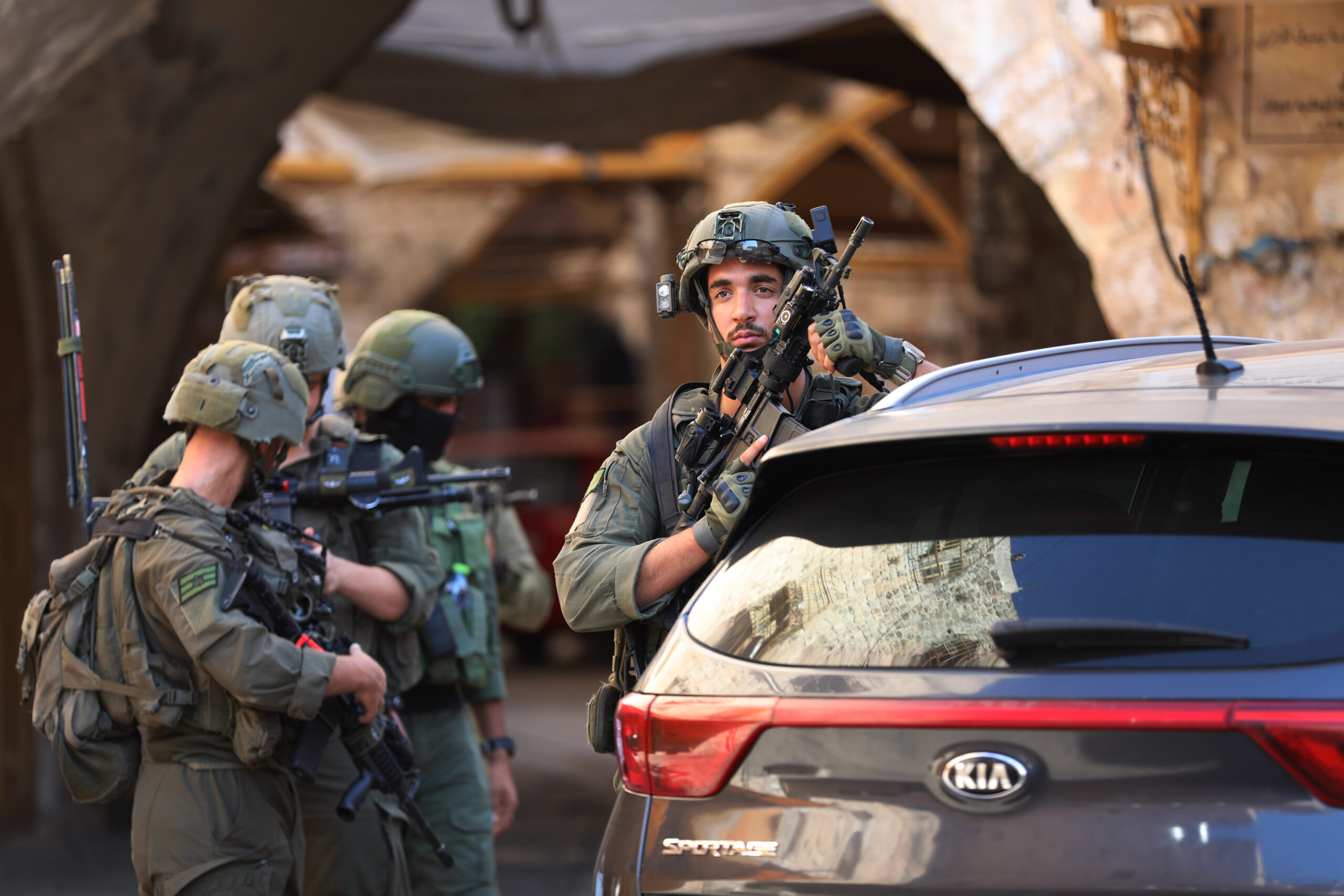
After October 7th, mainstream channels refused to show Gazan suffering, adhering strictly to IDF communiqués, producing near-unanimous public approval for the war’s conduct.
Decades of Hasbara have mobilised citizens behind government policy and insulated them from moral doubt. Public discourse is saturated with siege narratives and biased history, creating a paranoid populace that sees every conflict as zero-sum.
A catalogue of 500 statements by Israeli public figures advocating genocidal violence attests to the normalisation of cruelty, mirrored and amplified by mainstream media.
Left-leaning outlets like Haaretz are marginalised; human-rights groups such as B’Tselem are demonised as traitorous.
As Israeli lawyer Michael Sfard warns, “Words lead to deeds. Words that normalise or legitimise serious crimes against civilians create the social, political and moral basis for others to act.”
Law and institutionalised racism
Institutionalised racism is enshrined in legislation. Over the past decades, the Knesset has passed a series of discriminatory laws.
Beyond the Nakba Law, the Anti-Boycott Law penalises advocacy against Israel; the NGO “Foreign Agent” Law stigmatises human rights groups; the 2018 Nation-State Basic Law constitutionally trumpets the exclusive right of self-determination for Jews.
These legislative moves result from and further drive an atmosphere of second-class, fifth-columnist Arab citizenship in Israel and nurtures an ethos of state-sanctioned acrimony.
A radicalised nation
The cumulative effect of these insurmountable forces is starkly unmissable in Israeli society today. Once-fringe attitudes are now the bread and butter of public discourse, fostering the national message that Israeli Jews are a law unto themselves.
Israeli public sentiment has, since the Second Intifada (2000-05), dovetailed harmoniously with ethno-nationalism, hardline Zionist expansionism, military maximalism, implacable anti-Arab racism and the “immunity imperative” of Jewish exceptionalism.
There is minimal push back against these pernicious ideologies domestically.
Such consensus would be unfathomable without decades of educational propaganda grooming the public.
Considering Netanyahu’s hot air on de-radicalising Gaza, the million-dollar question is whether Israeli society will ever sober up to its own demons, and how long it would take to de-condition a population genetically engineered by generations of extremists to maim, mutilate and equivocate.
Adil Tagari is an Islamic scholar with an MA in Sociology/History. He teaches Higher Islamic Studies and lectures on Muslim history online.