



On Pakistani Independence Day, blogger Najm Al Din says debt, feudalism, military influence and nationalism are hindering the nation’s true Islamic destiny.
Today marks the 78th anniversary of Pakistani independence, with many celebrations expected at home and abroad.
From flag-hoisting ceremonies to fireworks displays and cultural performances, Pakistanis around the world will be in festive spirits, commemorating nearly eight decades since the country gained independence from the British Empire.
But while the national holiday is a source of pride for millions, it is important to reflect on the factors which impede Pakistan from transitioning to a sovereign state and whether nationalism can be reconciled with Islam.
Debt

The uncomfortable truth is that the legacy of independence is not one of accomplishments but rather a trail of unfulfilled promises.
For decades, Pakistan has been ensnared into a sovereign debt trap, with successive administrations borrowing from foreign creditors and predatory lending institutions such as the International Monetary Fund to finance debt service payments, often with various conditions attached which do not align with the country’s developmental priorities.
Subscribe to our newsletter and stay updated on the latest news and updates from around the Muslim world!
Furthermore, cash-strapped Pakistan has been negotiating its expensive debt arrangement with China, with proposals to delay billions of dollars in energy sector debt to Beijing.
With debt servicing projected to account for nearly half of the federal budget outlay for the next fiscal year, restructuring debt has indentured the nation since its founding, limiting its autonomy in decision making, resulting in depreciating currency, backbreaking inflation and generational poverty.
Feudalism
Another depressing reality which puts paid to the myth of independence is Pakistan’s oppressive feudal ruling structure which was inherited from the colonial period.
In regions like Southern Punjab and rural Sindh, much of society revolves around the age-old relationships between powerful landholding elites such as the Nawabs and Khans and a downtrodden labour class which maintains their fiefdoms.
Those born into privilege often use their family’s established networks and political connections to control the means of subsistence and are largely responsible for the unchecked concentration of wealth and power.
Rooted in tribal loyalties which became institutionalised under the British Raj, Pakistan’s governing structures transfer arbitrary judicial and administrative powers to propertied classes which significantly obstruct the social and economic mobility of the working classes, who are systematically denied the equal opportunities which independence promised.
Military
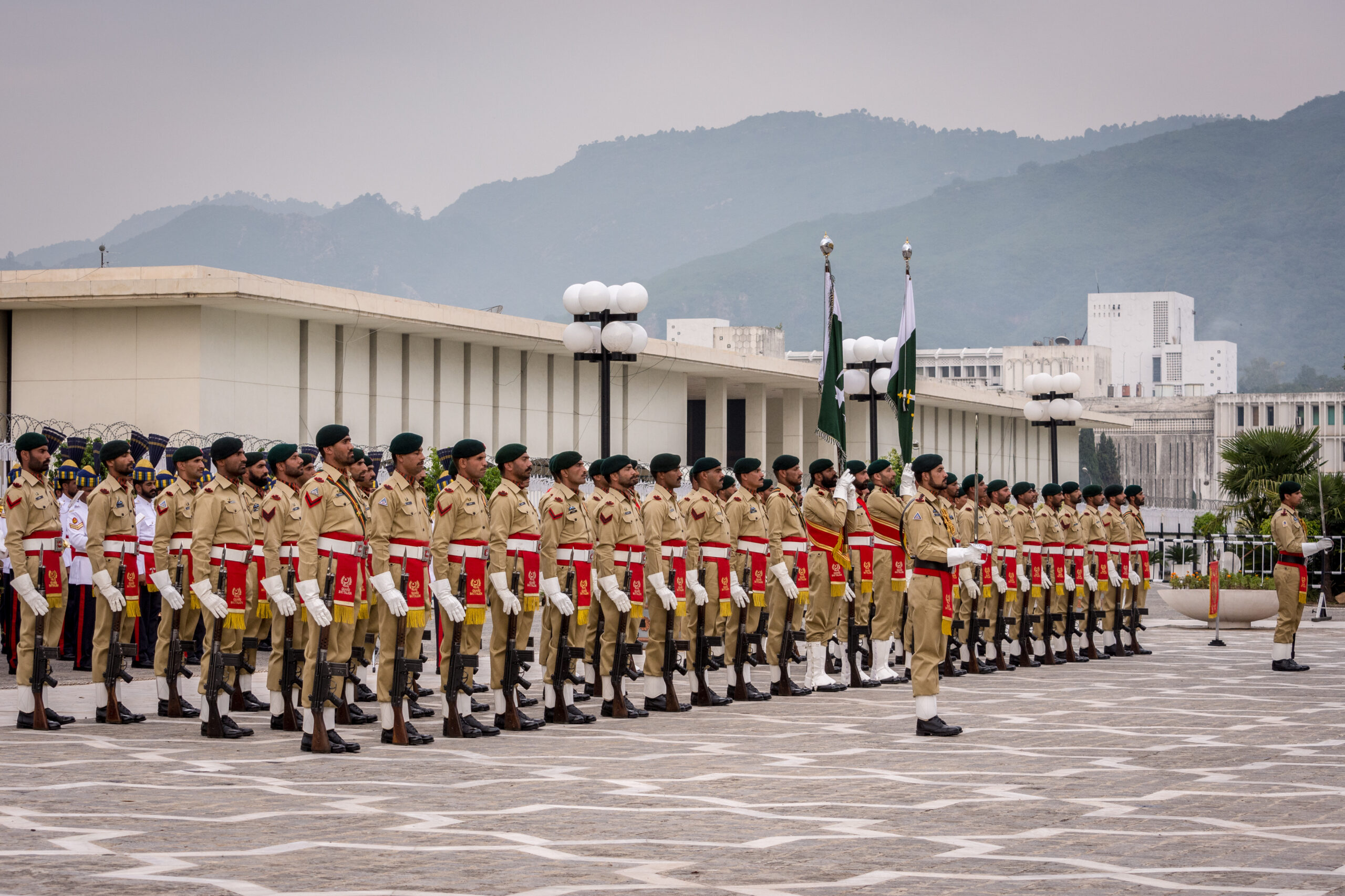
The military’s disproportionate role in governance also explains why Pakistanis have yet to enjoy the fruits of independence.
Beneath the facade of democracy lies a military-bureaucratic nexus inherited from British India, impeding civic institutions from counterbalancing the power of an army whose shadow has hovered over the nation’s electoral process for decades.
Ever since the military coup of General Ayub Khan in 1958, Pakistan’s military has been the highest recipient of state resources compared to any other government department.
Effectively the de facto rulers of the nation, the top brass are also part of the landed aristocracy and use their leverage to meddle in the country’s politics by imprisoning opposition activists, censoring political groups like the Tehreek-e-Insaf party of former PM Imran Khan and advancing U.S. foreign policy interests in the region.
Nationalism
Ever since the Sykes-Picot agreement of 1916 and the dismemberment of the Ottoman Empire, ideals such as pan-Arabism and socialism gained traction in the Arab world.
The Muslims of the subcontinent followed a similar trajectory in the post-partition era which spurred the creation of independence movements and nation-building projects anchored to ideologies which are antithetical to Islam, such as neoliberalism and pan-nationalism, further contributing to the fragmentation of the Muslim world.
Institutional failings aside, a more sobering reality which must dawn on Pakistan’s 230 million Muslims, as well as on their neighbours in Bangladesh, is the fundamental contradiction between nationalism and Islam.
While nationalism emphasises loyalty to the nation-state and prioritises national interests and a shared identity based on language, ethnicity and history, Islam demands unity and allegiance to the global community of believers known as the Ummah, where belief in Allah and the messenger Muhammad (pbuh) is the primary criteria for identity and belonging.
Therefore, any independence day celebrations based on the distinctiveness and superiority of one Muslim nation or ethnic group over another is prohibited in Islam, the core tenets of which are incompatible with the principles of nationalism.
The way forward – Khilafa
For the Muslims of Pakistan and Bangladesh, the bitter memories of 1971 have strained relations between the countries and millions of natives continue to harbour grievances towards each other.
While these tensions are connected to the violence which marred the liberation war in 1971, permanently bearing the scars of a troubled past and highlighting historical conflicts will only perpetuate the feelings of victimhood and resentment.
Therefore, it is imperative to unlearn the nationalistic narratives which fuel hatred between both groups and desist from demonising a fellow Muslim as an enemy “other” to solidify national identity.
It is tragic how two nations with huge Muslim populations could not overcome the violent legacy of partition while European nations such as UK, Germany and France managed to resolve their long-standing rivalries through multi-lateral economic agreements, defence pacts and various post-war accords based on mutual interests, including NATO and the Treaty of Maastricht.
The Muslims of the subcontinent must quickly overcome the historical baggage which has for decades undermined the unity of Muslims in South Asia. This can be achieved by re-aligning the sentiments of the populace with Islam and restoring a functioning leadership via a Khilafah which is devoted to the comprehensive implementation of Islam as a deen across all spheres of life.
Pakistan and Bangladesh can become the nucleus for the Ummah’s political aspirations once its scholars, students of knowledge and practising Muslim citizens encourage policymakers to reset relations between both nations based on Islam. This will lay the foundation for bilateral agreements in economics, education, foreign policy, as well as foster cultural ties which facilitate people-to-people exchange via civil society organisations.
With a belligerent India on their borders and having borne the brunt of Modi’s strong-arm tactics for years, there is now a remarkable opportunity for Islamabad and Dhaka to look beyond the parochial nationalism which has cast a long shadow over diplomacy and actively work towards reshaping South Asia’s security architecture by fostering greater economic, military and strategic ties, which can also empower Muslims in neighbouring India who are often victims of Hindutva violence.
I appeal to the Muslims of South Asia to put aside yesterday’s animosities and scrap slogans like “Pakistan Zindabad” and “Joy Bangla” which force us to act in isolation against our enemies. Instead, let’s usher a new era of collaboration, with a long-term vision to herald a revolutionary era in geopolitics based on the Quran and Sunnah.
This isn’t simply a matter of political pragmatism. This is an obligation demanded by Islam.