



Muzzammil Ayyub Thakur, director of the Kashmir Centre, says India’s conviction of Kashmiri activist Asiya Andrabi lays bare a justice system weaponised against dissent, where speech is criminalised and Kashmir’s demand for self-determination is met with repression.
In the shadow of India’s occupation of Kashmir, the conviction of Asiya Andrabi by a Delhi court under the Unlawful Activities (Prevention) Act (UAPA) stands as a brazen act of judicial repression.
Andrabi, founder of Dukhtaran-e-Millat and a lifelong advocate for Kashmiri freedom, has been targeted not for any act of violence, but for her unyielding voice against Hindutva fascism and India’s imperial grip on our homeland.
Convicted on charges of “conspiracy” and “membership” of a so-called terrorist organisation, yet paradoxically acquitted of actual terrorism or financing, this verdict exposes the fundamental absurdity of India’s legal system as it operates in occupied territory: a machinery built not to deliver justice, but to silence dissent.
On behalf of The Kashmir Centre, we condemn this decision outright and demand Andrabi’s immediate release, grounded in international law, United Nations resolutions, and the Geneva Conventions.

The judgment is riddled with contradictions. Andrabi was convicted for conspiracy to commit terrorist acts and to wage war against India, yet the court simultaneously admitted there was no evidence of terrorist activities, terrorism financing, or actual war-making.
Instead, it relied on her speeches, interviews, and social media posts advocating for Kashmir’s liberation to convict her under UAPA Sections 18, 38, and 39, alongside IPC provisions for waging war against the state.
Subscribe to our newsletter and stay updated on the latest news and updates from around the Muslim world!
This amounts to the criminalisation of free speech – a hallmark of authoritarian governance. Her so-called “crime” is nothing more than articulating the aspirations of millions of Kashmiris who reject Indian rule as an illegal occupation imposed through brute force.
Perverting justice
From a legal standpoint, this conviction exemplifies how India’s framework in Kashmir perverts the basic principles of justice. The UAPA’s vague definitions of “terrorism” and “conspiracy” violate the principle of legal certainty enshrined in Article 15(1) of the ICCPR and Article 11 of the UDHR, enabling their arbitrary application against those who dissent in disputed territories.
Drawing from colonial-era sedition laws that subordinate human rights to state sovereignty, the Indian judiciary has ignored decolonial legal theory, which affirms the right of occupied peoples to resist as recognised by international human rights bodies and UN resolutions that frame Kashmir as a site of unresolved self-determination.
Andrabi’s advocacy is not criminal; under international law, it is a fundamental right. Kashmir is not an “integral part” of India but a disputed territory, as affirmed by multiple UN Security Council resolutions.
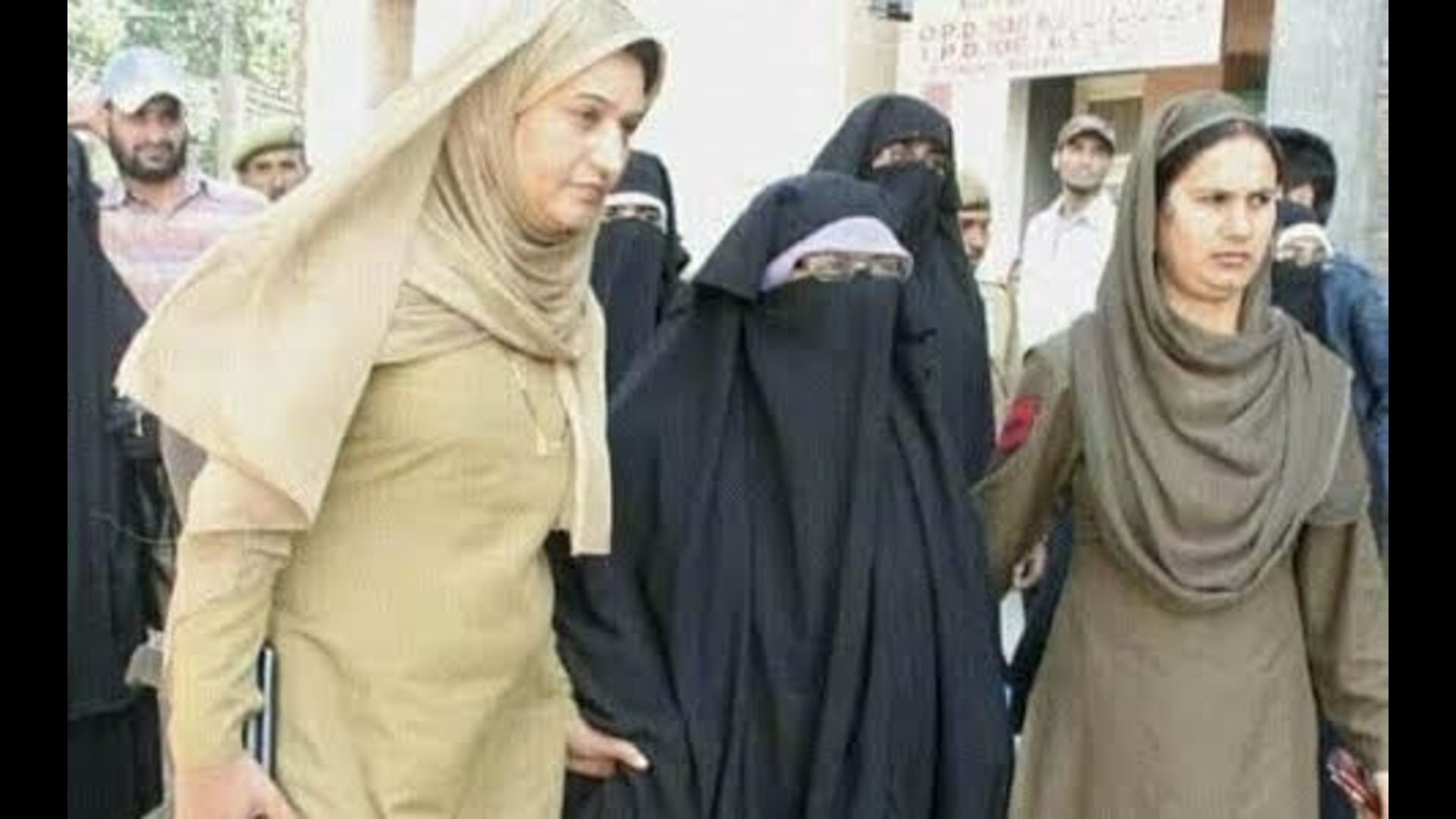
By convicting Andrabi for promoting “secession,” India’s courts are not serving justice, but are defying the UN’s binding directives demanding demilitarisation and a referendum. The international community must hold India accountable for treating these resolutions as relics while Kashmir has, and continues to suffer war crimes, crimes against humanity, ethnic cleansing, genocide, settler colonisation and demographic change.
Moreover, Andrabi’s treatment violates the Geneva Conventions, which apply to all occupied territories. Under Article 49 of the Fourth Geneva Convention, an occupying power cannot transfer its population into occupied territory or alter its demographic composition, yet India’s Hindutva-driven policies have done precisely that, settling non-Kashmiris to erode our Muslim-majority identity.
Her resistance to this demographic engineering is protected under Common Article 3, which prohibits degrading treatment and arbitrary detention. Her imprisonment since 2018, without fair trial, constitutes collective punishment against Kashmiris asserting their dignity. Additional Protocol I, Article 1(4) further extends protection to peoples struggling against colonial domination and foreign occupation.
Andrabi is no terrorist; she is a freedom fighter exercising a recognised legal and moral right.
War against Kashmiri identity
This conviction also reflects India’s broader war on Kashmiri identity – a campaign to crush dissent and consolidate control. The Modi regime, guided by RSS ideology evolved from Nazism and emulating Zionism, brands any pro-Kashmir voice as “anti-national.”
Andrabi, a woman who has fearlessly challenged this narrative, founded an organisation that mobilised Kashmiri women against enforced disappearances and boycotted farcical elections – acts of peaceful defiance systematically misrepresented as terrorism.
The court’s drive to impose the harshest possible sentence, despite accepting that no criminal act was proven, demonstrates that justice is not merely elusive for the people of Kashmir, but is structurally denied.
Sentencing her to life imprisonment serves only to “satisfy the collective conscience” of India: to make an example of anyone who dares to resist occupation. It mirrors Afzal Guru’s case in 2013, where the logic of public spectacle displaced the logic of law.
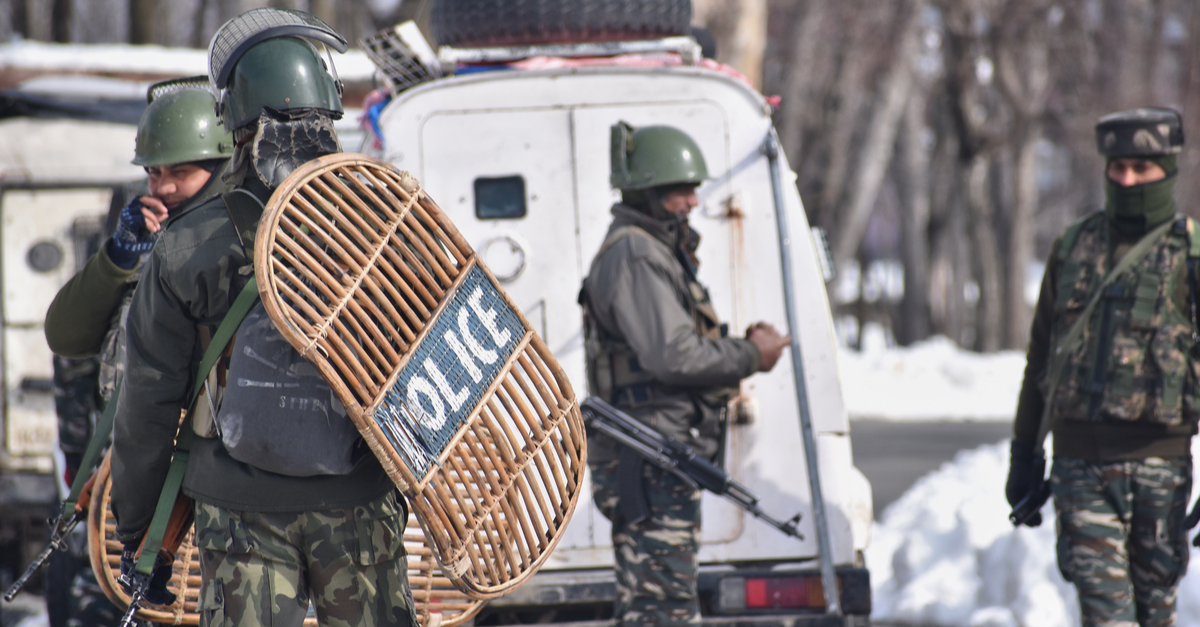
Andrabi is not alone in her imprisonment. Her senior colleagues Nahida Nasreen and Fehmida Sofi have languished alongside her – 800 kilometres from Kashmir – for the past eight years.
They are among a generation of Kashmiri political prisoners whose continued detention represents a systematic assault on the movement for self-determination: Qasim Faktoo (Andrabi’s husband, 33 years imprisoned), Masarat Alam (30 years), Yasin Malik (serving life imprisonment while facing a death penalty pursuit), Shabir Shah (39 years), Khurram Parvez (civil society activist, five years), and journalists Irfan Mehraj and Sajad Gul (three years each).
All are held under conditions that are not merely harsh but illegal – severe restrictions on family contact, medical negligence, solitary confinement, psychological and physical torture, extortion, overcrowding, and the denial of religious practice including prayer and fasting during Ramadan.
As Kashmiris, we refuse to be complicit in our own erasure. Andrabi’s release is not a favour but an obligation under international law. The UN must enforce its resolutions. Bodies like the International Court of Justice must investigate India’s violations of the Geneva Conventions.
Global powers, too often silent on Kashmir due to economic interests and geopolitical calculation, must prioritise human rights over realpolitik. Until Andrabi and all political prisoners are freed, Kashmir is demilitarised and a plebiscite is held, India’s occupation remains a stain on the world’s “collective conscience.”