



The Lebanese government has been told by U.S. officials to fully disarm Hezbollah as patience wears thin in Washington.
A senior U.S. envoy has expressed frustration over the lack of progress, warning that talks will not continue unless there are tangible signs of movement.
Tom Barrack, the U.S. Ambassador to Türkiye and Special Envoy for Syria, said former President Donald Trump has “no patience” for the deadlock, and is expecting a complete disarmament of Hezbollah – a task the U.S. says is the responsibility of the Lebanese state.
“Nobody is going to stick around doing this until next May,” Barrack told Lebanese broadcaster LBCI in an interview.
He added that negotiations would not continue in the absence of “real progress,” while insisting that the U.S. was not attempting to force its agenda on Lebanon.

“We’re not going to intervene in regime change. We’re not going to intervene in politics. And if you don’t want us, no problem – we’ll go home,” he said.
Barrack insisted that the U.S. was only offering support to Lebanon if requested.
Subscribe to our newsletter and stay updated on the latest news and updates from around the Muslim world!
Weakened Hezbollah
Hezbollah was involved early in Israel’s war on Gaza, engaging in cross-border exchanges of fire with Israel. But the group has since scaled back its operations after suffering a series of heavy losses – most notably the assassination of its leader Hassan Nasrallah, and the fall of the Bashar al-Assad regime in Syria, which had provided it with vital support.
Despite this, the U.S. – citing Israel’s security – continues to press for the complete dismantling of the group’s military capabilities.
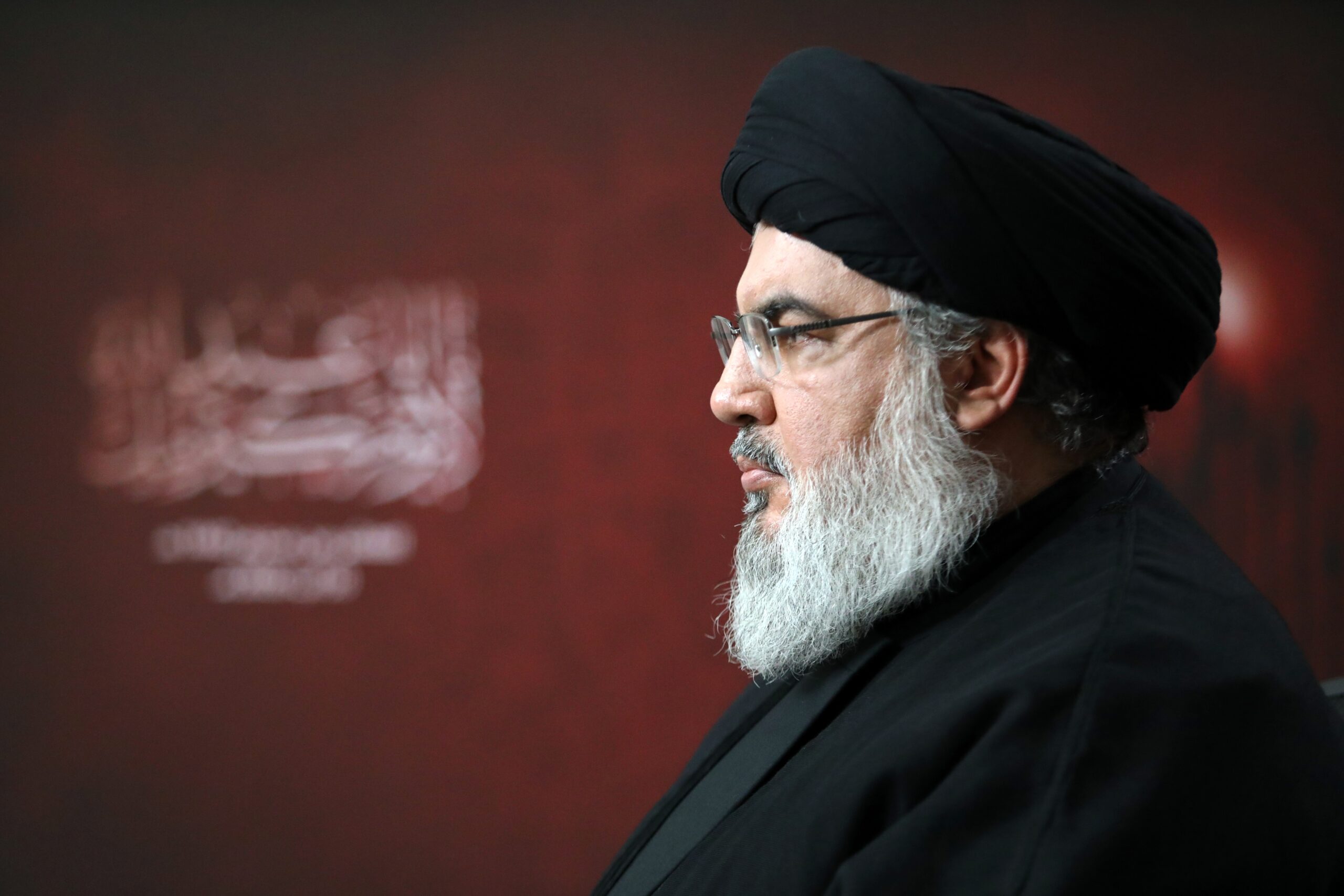
Editorial credit: mohammad kassir / Shutterstock.com
Speaking further on the disarmament issue, Barrack reiterated that the ultimate goal was to see “one nation, one people, one army” in Lebanon.
Since its founding in 1982, Hezbollah has declared Israel its primary enemy and has vowed to continue its armed resistance until Israel “is removed from existence.”
Barrack said a U.S. proposal delivered to the Lebanese government on June 19 calling for Hezbollah’s disarmament had been met with “honest and candid” discussions from Lebanese officials – which he described as a positive sign.
The U.S. initiative is part of a wider effort to disarm all non-state armed groups in Lebanon, including Palestinian militias.
Barrack praised the Lebanese Armed Forces (LAF) for their role in maintaining security in southern Lebanon, calling them “heroic” and “the accepted, neutral medium that everybody accepts.”
Citing Trump’s impatience, Barrack said he would return to the region in two weeks in the hope of seeing “a breakthrough.”
He added that Lebanon must seize the opportunities presented by shifting regional dynamics, including improving ties between the U.S., Syria and other regional actors.
“Syria is taking advantage of it,” he said. “Lebanon should take advantage of it – or stay in this fall.”
Israel-Hezbollah war
Full-scale conflict between Israel and Hezbollah broke out in September 2024, during the broader Israeli war in Gaza.
Hezbollah launched rockets from southern Lebanon in support of its allies in Gaza, prompting Israel to respond with airstrikes and a ground invasion of southern Lebanon.
The Israeli offensive killed more than 4,000 people and displaced nearly 1.4 million Lebanese civilians.
The war ended in November 2024 following a U.S.-brokered ceasefire.
A key outcome of the conflict was the killing of Hezbollah’s top military leaders, including Secretary General Hassan Nasrallah – a Shia cleric who had led the group since 1992 and transformed it into a major political and military force.
Following his death, Hezbollah announced that Deputy Secretary General Naim Qassem would succeed him.
Other senior Hezbollah officials who had been seen as potential successors – including cleric Hashem Safieddine – were also reportedly killed.
Hezbollah’s influence has further waned following the fall of Syrian President Bashar al-Assad, whose regime had served as a vital link between Iran and Hezbollah, facilitating the flow of weapons and logistical support.
Once considered the most heavily armed non-state military force in the world, Hezbollah’s activities have slowed significantly.
The group notably stayed out of the recent Israel-Iran conflict, with pro-Hezbollah journalist Qassem Kassir saying: “Iranian missiles are capable of confronting the Israeli occupation.”
Hezbollah was founded in 1982 as a Shia political and paramilitary organisation during Lebanon’s civil war. It is classified as a terrorist group by U.S. and the U.K. and several other western countries.
Despite its political clout within Lebanon, U.S. Middle East Envoy Morgan Ortagus reiterated the Trump administration’s position that Hezbollah must be excluded from any future Lebanese government.
She said Washington has “clear red lines” and that Hezbollah’s continued presence in Lebanon’s political system would not be tolerated.