


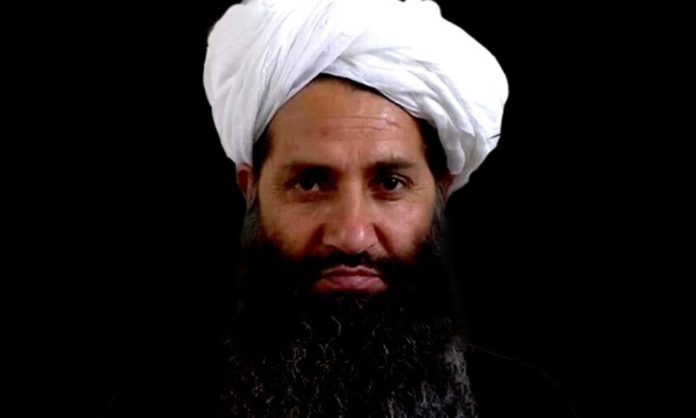
The International Criminal Court has issued arrest warrants for senior leaders of the Islamic Emirate of Afghanistan (IEA), including its supreme leader Hibatullah Akhundzada, on charges of “persecuting women and girls.”
The arrest warrants also include the Chief Justice of the IEA Abdul Hakim Haqqani, another prominent Afghan religious figure.
The warrants issued today, accuse the leaders of persecuting “other persons non-conforming with the Taliban’s policy on gender, gender identity or expression; and on political grounds against persons perceived as allies of girls and women.”
It stated: “The Chamber has found that there are reasonable grounds to believe that Mr Hibatullah Akhundzada and Mr Abdul Hakim Haqqani have committed by ordering, inducing or soliciting the crime against humanity of persecution, under article 7(1)(h) of the Rome Statute, on gender grounds against girls, women and other persons non-conforming with the Taliban’s policy on gender, gender identity or expression; and on political grounds against persons perceived as ‘allies of girls and women.’
“These crimes are believed to have been committed on the territory of Afghanistan since the Taliban seized power on 15 August 2021, and have continued until at least 20 January 2025.”

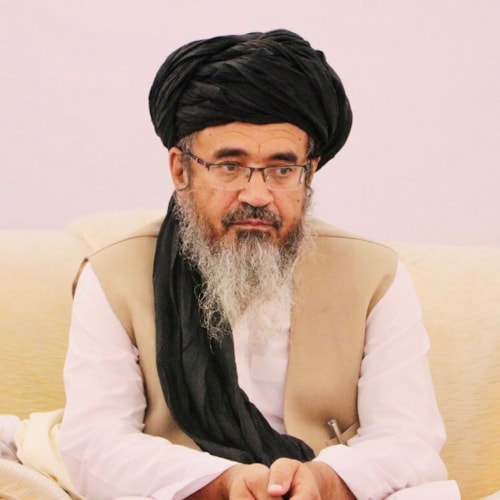
While the arrest warrants were initially issued under seal on January 31, 2025, the chamber decided to publicly disclose their existence to prevent the further commission of these crimes and to serve the interests of justice.
The move will be met with significant opposition inside Afghanistan among the supporters of the supreme leader, who is considered not just a political leader, but the most senior religious figure and Emir of the Islamic Emirate.
Subscribe to our newsletter and stay updated on the latest news and updates from around the Muslim world!
Zabihullah Mujahid, the Spokesperson of the Islamic Emirate responded to the development with a strongly worded statement, which read:
“Once again, an institution operating under the name of the “International Crime Court” has issued a declaration calling for the arrest and prosecution of certain leaders of the Islamic Emirate. Such announcements and baseless rhetoric cannot affect the firm determination and legitimate stance of the Islamic Emirate in any way.
“We do not recognise any entity under the title of the “International Court,” nor do we acknowledge any obligation toward it.
“At a time when genocide is ongoing in Gaza, Palestine, by the Israeli Zionist regime and its foreign supporters—with hundreds of women and children being killed daily without reason right under the eyes of the so-called International Court—raising slogans about human rights, justice, and the court is a matter of shame and disgrace. The leadership and officials of the Islamic Emirate have established unparalleled justice in Afghanistan based on the sacred laws of Islamic Sharia.
“Labelling the laws of Islamic Sharia as oppressive or against humanity, and threatening those who implement them with arrest and prosecution, is a clear expression of enmity and hatred toward the pure religion of Islam and its legal system, and it is an insult to the beliefs of all Muslims.”
Who is Hibatullah Akhundzada?
Hibatullah Akhundzada, is the current supreme leader of the Islamic Emirate of Afghanistan.
Born around 1961 in the Panjwai district of Kandahar Province, Afghanistan, Akhundzada is a Pashtun from the Nurzai tribe.
He studied Islamic sciences under his father and later in madrassas in Pakistan, namely in Quetta, after the Soviet invasion of Afghanistan forced his family to migrate.
Akhundzada joined the Taliban movement in the 1990s and served as a judge in the Taliban’s Islamic courts during their rule from 1996 to 2001.
He emerged as a significant religious figure within Afghanistan, particularly known for his role in the shadow court system during the insurgency against the U.S.-backed Afghan government.
Akhundzada became the supreme leader of the Taliban in May 2016 after the death of Mullah Akhtar Mohammad Mansour in a U.S. drone strike.
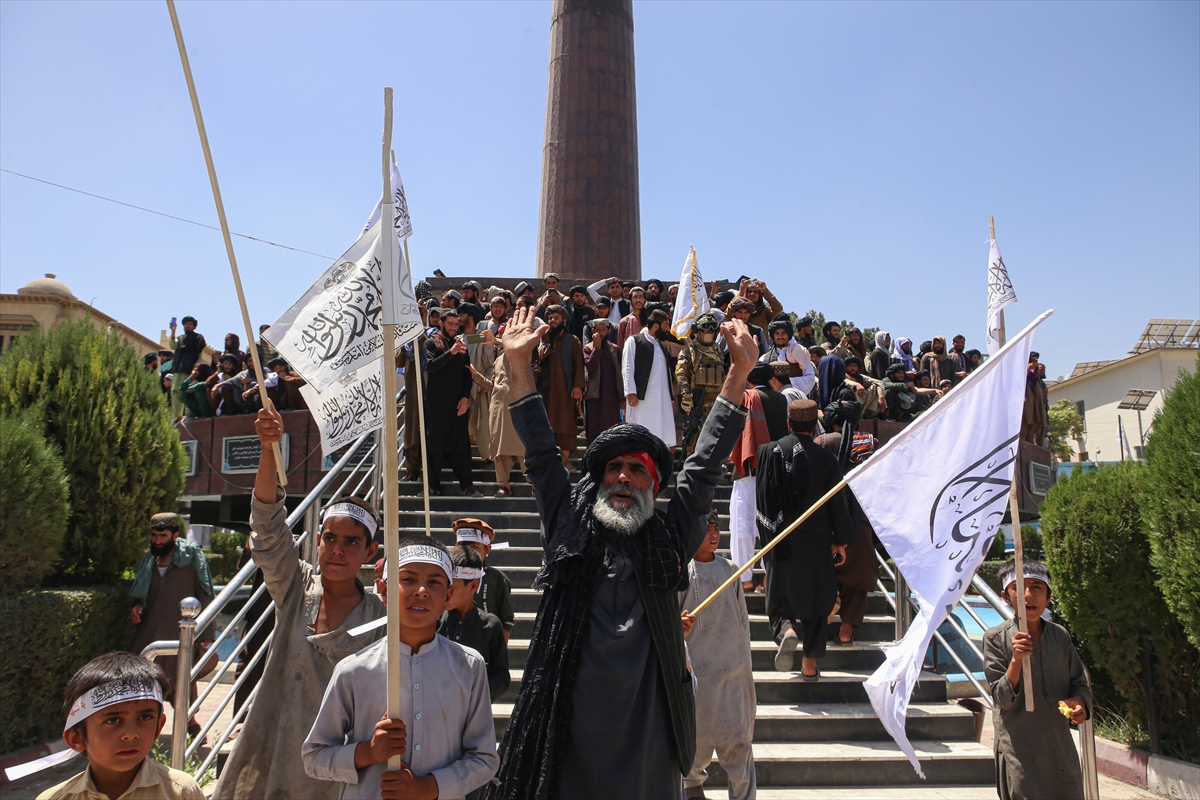
He led the Taliban to victory in August 2021, following the withdrawal of U.S. and NATO forces, and has since been the head of state with absolute power.
Akhundzada has rarely appeared in public and makes significant decisions from Kandahar, where he primarily resides.
Abdul Hakim Ishaqzai
Abdul Hakim Ishaqzai is an Afghan Islamic scholar and writer who has served as the Chief Justice of Afghanistan since 2021.
Born in 1967 in the Panjwayi District of Kandahar Province, he is one of the founding members of the Taliban and was a close associate of the late leader Mullah Mohammed Omar.
Haqqani graduated from and has taught at Darul Uloom Haqqania, a Deobandi Islamic seminary in Pakistan. He has also run his own madrasa in the Ishaqabad area of Quetta, Pakistan.
His roles within the Taliban have included serving as chief justice of the Supreme Court during the 1996–2001 Islamic Emirate and leading the Taliban’s negotiation team in Qatar for peace talks.
The issue of female education
Afghanistan is a deeply conservative Muslim-majority country which has suffered from decades of western-led wars and occupation.
Following the liberation of Afghanistan from the illegal U.S. occupation in 2021, the Taliban formed a new interim administration to head the newly-established Islamic Emirate.
One of the IEA’s priorities has been to implement Shariah law as quickly, holistically and effectively as possible. However, when the IEA restricted secular education for women and girls older than 12, it triggered widespread condemnation, including from parts of the Muslim-majority world.
Currently the ban is imposed on girls above grade six from attending school, however, there are some exemptions for women who are pursuing a career in the medical field for example or wish to receive further education from home.
In a 2022 speech, the Loya Jirga (grand assembly of religious and tribal leaders) in Kabul, Hibatullah Akhundzada pledged not to waver from the path of Islam even if the country is “attacked with an atomic bomb.”
He said: “The world does not want the Islamic Emirate to be independent, and they want things to be done with their reference, and they are interfering in our internal affairs. If you use an atomic bomb on us, we will still not take a single step against what is pleasing to God.”
Since the end of the U.S. occupation, life in Afghanistan has become noticeably safer with the security situation significantly improving under the IEA’s rule.
5Pillars has reported extensively from Afghanistan since 2021, and have witnessed first-hand the efforts to rebuild the war-torn country, tackle widespread drug addiction, implement Sharia law, and gaining international recognition of the Islamic Emirate.
Our coverage from inside the Islamic Emirate of Afghanistan can be found on the 5Pillars YouTube channel.