


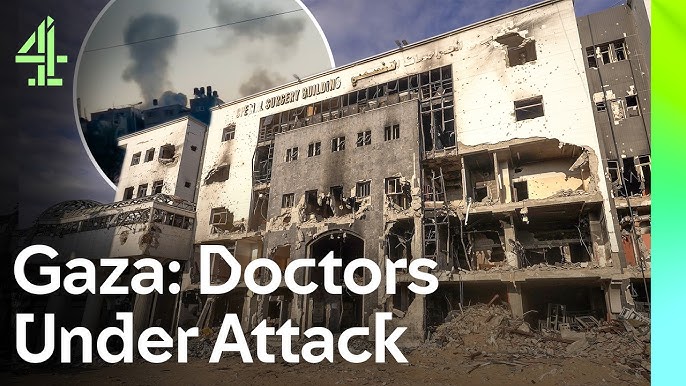
The BBC’s decision to pull the documentary ‘Gaza: Doctors Under Attack,’ which it initially commissioned but was later broadcast by Channel 4, is yet more evidence of the broadcaster’s pro-Israel bias, writes Muhammad Siddeeq.
The BBC should hang its head in shame for refusing to air a film it tasked a team of highly respected journalists to produce. The flimsy reason given was the supposed risk of appearing biased, but biased in whose eyes? The Israelis and Zionists who dream of a Greater Israel? Certainly. But to fair-minded people in Britain who still believe in justice and humanity? Absolutely not.
The documentary collects first-hand testimonies from doctors and healthcare workers in Gaza. In contrast, most Israeli soldiers, IDF doctors, and prison officers approached for interviews reportedly declined, fearing they would be labelled traitors if they spoke on camera.
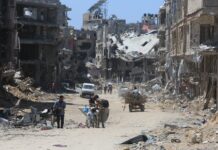
Even after nearly 21 months of witnessing apocalyptic levels of death and destruction in Gaza — often in 4K on social media — this documentary remains chilling viewing. It portrays the harrowing reality faced by medics working under Israel’s genocidal military assault, as well as the abuse endured by Palestinians held in Israeli detention. Therefore, Channel 4 deserves significant recognition for its editorial bravery in acquiring and broadcasting this film.
‘Most moral army in the world’

Clearly, exposing the normalised violence against patients and staff in Gaza’s hospitals crossed a red line for the pro-Israel lobby, and the BBC appeared to have buckled under pressure from Zionist groups who fear further tarnishing the image of “the most moral army in the world.”

Gaza: Doctors Under Attack is a forensic examination of the IDF’s systematic targeting of Gaza’s healthcare infrastructure. Produced by award-winning British journalist Ramita Navai and her team, it compiles dozens of personal testimonies from individuals in Gaza, the West Bank, Israel and Egypt.
Subscribe to our newsletter and stay updated on the latest news and updates from around the Muslim world!
The film documents the near-total destruction of Gaza’s hospitals and the killing and wounding of hundreds of medical professionals. It also exposes the torture and inhumane treatment of patients and healthcare workers in Israeli interrogation centres.
The documentary opens with shocking footage of ambulance workers in Gaza being killed in cold blood by the IDF. A mobile phone video recovered from one of the victims directly contradicted the official Israeli version of events. “This is just one attack among hundreds on Palestinian healthcare workers,” says the film’s narrator.
The documentary also features footage of Israelis gathering in towns like Sderot, near the Gaza border, watching and cheering live bombings of Gaza through telescopes. This unflinching look at the consequences of dehumanising propaganda and ideological extremism was never going to sit well with those invested in Israel’s public image. It’s little surprise that Tel Aviv exerted maximum pressure to prevent the BBC from airing it.
Even Gary Lineker, long-time BBC presenter, publicly stated that the corporation should “hang its head in shame” for refusing to show a film highlighting the suffering of Gaza’s healthcare workers.
The film also documents how the IDF destroys hospitals one by one, forcing doctors and staff to relocate to neighbouring facilities under constant threat of death. It highlights the incredible heroism of Palestinian medical workers who risk — and often lose — their lives while refusing to abandon their patients.

Gaza’s medics vs. IDF medics
The film shares the personal realities of Palestinian medics who not only face constant danger themselves, but often leave their families sheltering in or near the very hospitals being bombed.
Working without electricity or water, inside damaged and dangerous buildings, Gaza’s healthcare workers demonstrate resilience that borders on superhuman. Their courage is an inspiration not only to other medical professionals but to all of humanity. Medicine is an honourable profession where doctors around the world swear an oath to treat patients without discrimination, but this ethical standard does not seem to apply to IDF medical personnel.
Israeli doctors that were interviewed for the documentary claimed many of their colleagues refused to treat Palestinians in custody — and some even participated in their physical abuse. One senior Gaza doctor recounts how, while detained in an Israeli interrogation centre, an IDF doctor who tortured him warned he would “end [his] life” if he requested medical help again.
Even more disturbing is that many of these Israeli doctors are dual nationals. Some will be working in European countries — including Britain — potentially treating Arab and Muslim patients after participating in war crimes in Gaza and the occupied West Bank.
An Israeli military doctor who spoke anonymously in the film, says he personally witnessed his colleagues perform medical procedures on Palestinians without consent, pain relief, or anaesthetic, for which he appeared to express some shame.

The documentary is not without flaws. For instance, the narrator mentions that a Palestinian doctor interviewed on camera — himself a victim of torture — was a relative of a Hamas member and had shared pro-Hamas content on social media, which is irrelevant. International law protects doctors regardless of political or religious beliefs. The inclusion of this detail felt like a concession — possibly made under pressure from the BBC, or to appease Israeli and Zionist critics.
In conclusion, Gaza: Doctors Under Attack is a powerful and courageous film that shows the true heroes of this war are not those in tanks and uniforms, but those in blue scrubs, risking everything to save lives.
We need more documentaries like this to reveal the true face of Zionism and the suffering it inflicts.
You can watch Gaza: Doctors Under Attack here.