



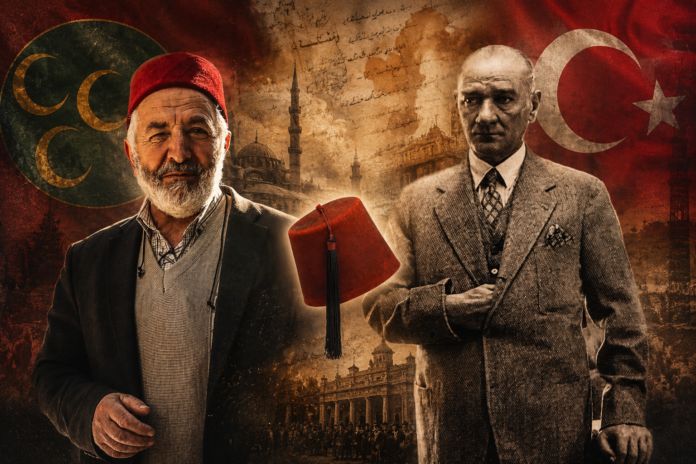
A century after Atatürk’s Hat Law helped consign the fez to history, Muhammad Siddeeq went searching for one in Istanbul — and found himself confronting Türkiye’s unresolved struggle over its Islamic and secular identity.
During a recent visit to Istanbul, I went in search of its Ottoman past. It is difficult not to; the city wears its history almost everywhere: in its skyline, its mosques, its bazaars and in the names of sultans whose empire once stretched across three continents.
I attended Friday prayers at the magnificent Sultan Ahmed Mosque, better known as the Blue Mosque, and later prayed Asr at Hagia Sophia, the great Byzantine basilica that became an Ottoman mosque after the conquest of Constantinople in 1453, a museum under the secular republic, and once again a functioning mosque in 2020.
To pray beneath its vast dome, and afterwards listen to the customary Turkish style recitation of the Qur’an, was a deeply moving experience. I also visited the Süleymaniye Mosque, commissioned by Sultan Süleyman the Magnificent at the height of Ottoman power.
But among the usual pleasures of Istanbul — its kebabs, coffee, ice cream and crowded streets — there was one particular souvenir I wanted to take home: a red Ottoman fez. That proved surprisingly difficult.

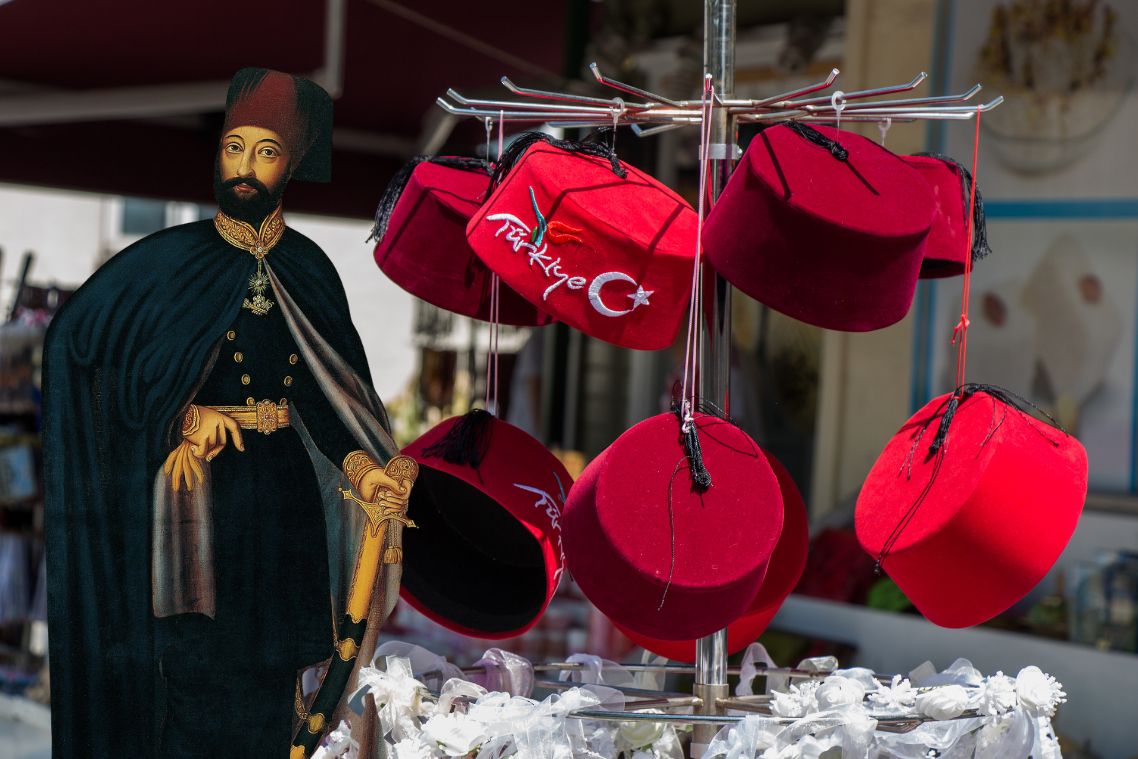
The fez is instantly recognisable: a cylindrical red felt hat, usually topped by a black tassel. Introduced as part of Sultan Mahmud II’s programme of military and administrative reform in the 1820s, it eventually became ubiquitous among Ottoman men.
Far from being an ancient Islamic garment, it was itself once a modernising innovation. Yet over the following century it became one of the most powerful visual symbols of Ottoman identity.
Subscribe to our newsletter and stay updated on the latest news and updates from around the Muslim world!
Disappearance of the fez
I assumed that in a city which enthusiastically markets its imperial heritage, fezzes would be everywhere. They were not.
Street after street and bazaar after bazaar, I saw virtually nobody wearing one. There were occasional exceptions: ice-cream sellers performing for tourists and employees at establishments such as the famous Hafiz Mustafa confectionery shops.
Otherwise, the hat that once appeared on the heads of Ottoman officials, soldiers, merchants and ordinary citizens had almost disappeared from public life.
Eventually I found one in Istanbul’s historic Egyptian, or Spice Bazaar. Even there, the fezzes were tucked away among other tourist souvenirs towards the back of the shop.
I picked out a bright red one with a black tassel. Unlike almost everything else one buys in a bazaar, I did not even bargain.

The shopkeeper placed it quickly into a plastic bag. Half joking, I asked: “Am I allowed to wear it?”
His answer stopped me. “No. Not here in Türkiye.”
Whether the legal position today is quite as straightforward as that answer suggested is another matter, but his instinctive reaction was revealing.
Mustafa Kemal’s secular reforms
In 1925, Mustafa Kemal Atatürk’s newly established republic introduced the Hat Law as part of a sweeping programme intended to westernise Turkish society and break symbolically with the Ottoman order. The legislation promoted Western-style brimmed hats for public officials and helped drive the fez — regarded by the new republican elite as a symbol of the old Ottoman world — out of public life.
The significance went far beyond clothing.
Atatürk abolished the Ottoman sultanate in 1922 and the caliphate in 1924. Religious institutions were brought firmly under secular state control. The Arabic script was replaced by a modified Latin alphabet. Dress, education and public administration became battlegrounds in the construction of a new, secular and self-consciously European-oriented Turkish nation.
The fez consequently acquired a meaning greater than the object itself.
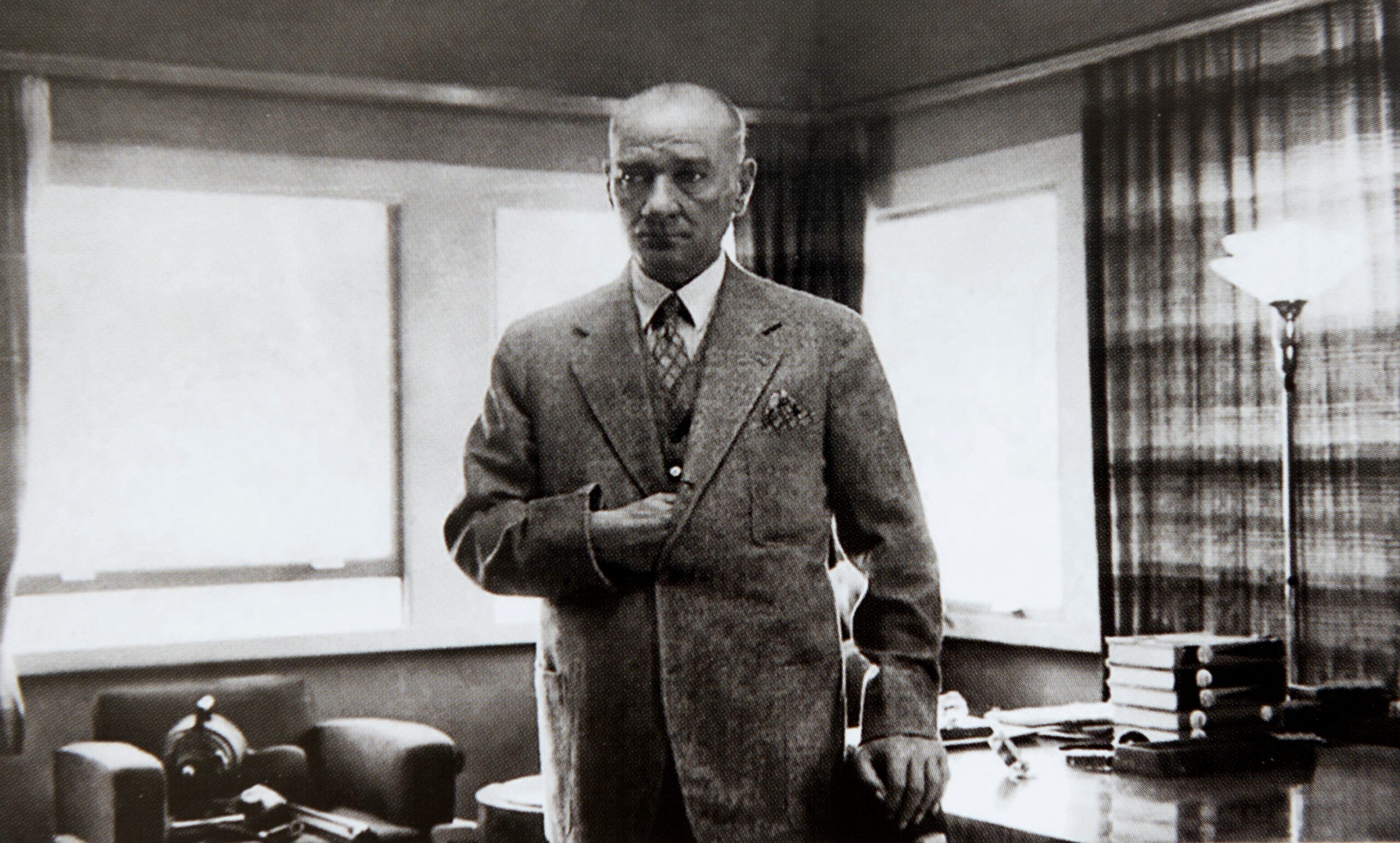
To many secular Turks, particularly those strongly attached to the Kemalist foundations of the republic, it can evoke an era from which Atatürk deliberately attempted to make a decisive break: monarchy, caliphate, religious authority and an imperial identity that transcended Turkish nationalism.
For others, however, the Ottoman inheritance is not something embarrassing to be discarded but an essential part of Turkish history.
That tension has become increasingly visible during the long political dominance of President Recep Tayyip Erdoğan and his Justice and Development Party, the AK Party.
A new era under Erdoğan
Erdoğan has repeatedly embraced Ottoman history and symbolism in public discourse. Ottoman rulers are frequently referred to as “our ancestors”, while imperial architecture, military achievements and Islamic heritage have assumed a much more prominent place in Türkiye’s presentation of its national story.
His governments have also dismantled some of the restrictions associated with the older, more rigid interpretation of Turkish secularism. Most notably, prohibitions preventing women wearing the Islamic headscarf in many universities and state institutions were progressively removed.
Yet the fez remains conspicuously absent.
Perhaps that is because restoring it would strike a particularly sensitive symbolic nerve. The headscarf can be defended as an issue of individual religious freedom. The fez, by contrast, is inseparable in the Turkish imagination from the political struggle between Ottoman continuity and Kemalist revolution.

That is precisely why it matters.
A mature republic should surely be confident enough to allow its citizens to engage freely with every part of their history. Wearing a fez need not mean demanding the restoration of the Ottoman Empire, any more than admiring an Ottoman mosque constitutes a rejection of republican Turkey.
A century after the Hat Law, Türkiye is no longer the fragile new state Atatürk was attempting to forge from the ruins of an empire. It is a major regional power with a strong national identity of its own.
Perhaps the greatest sign of confidence would therefore be neither to erase the Ottoman past nor to romanticise it, but simply to allow Turks to decide for themselves what parts of that inheritance they wish to embrace.
The little red hat I carried through Istanbul in a plastic bag ultimately represented something much larger: a country still negotiating the relationship between the secular republic it became and the Islamic empire it once was.
If President Erdogan truly sees the Ottomans as his “ancestors” as he often so proudly proclaims, then it is high time that he repeals Law No. 671 and allows Turks to wear the Fez with pride once again.