
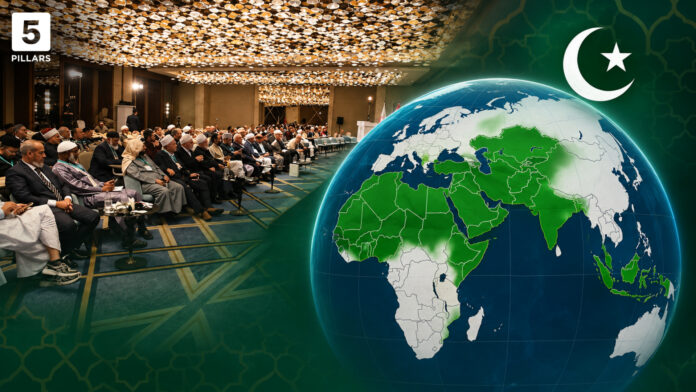
Prominent Muslim scholars meeting in Istanbul have agreed to draw up a landmark charter for Islamic unity and establish new bodies to overcome divisions within the Ummah, coordinate action on Palestine and strengthen cooperation across the Muslim world.
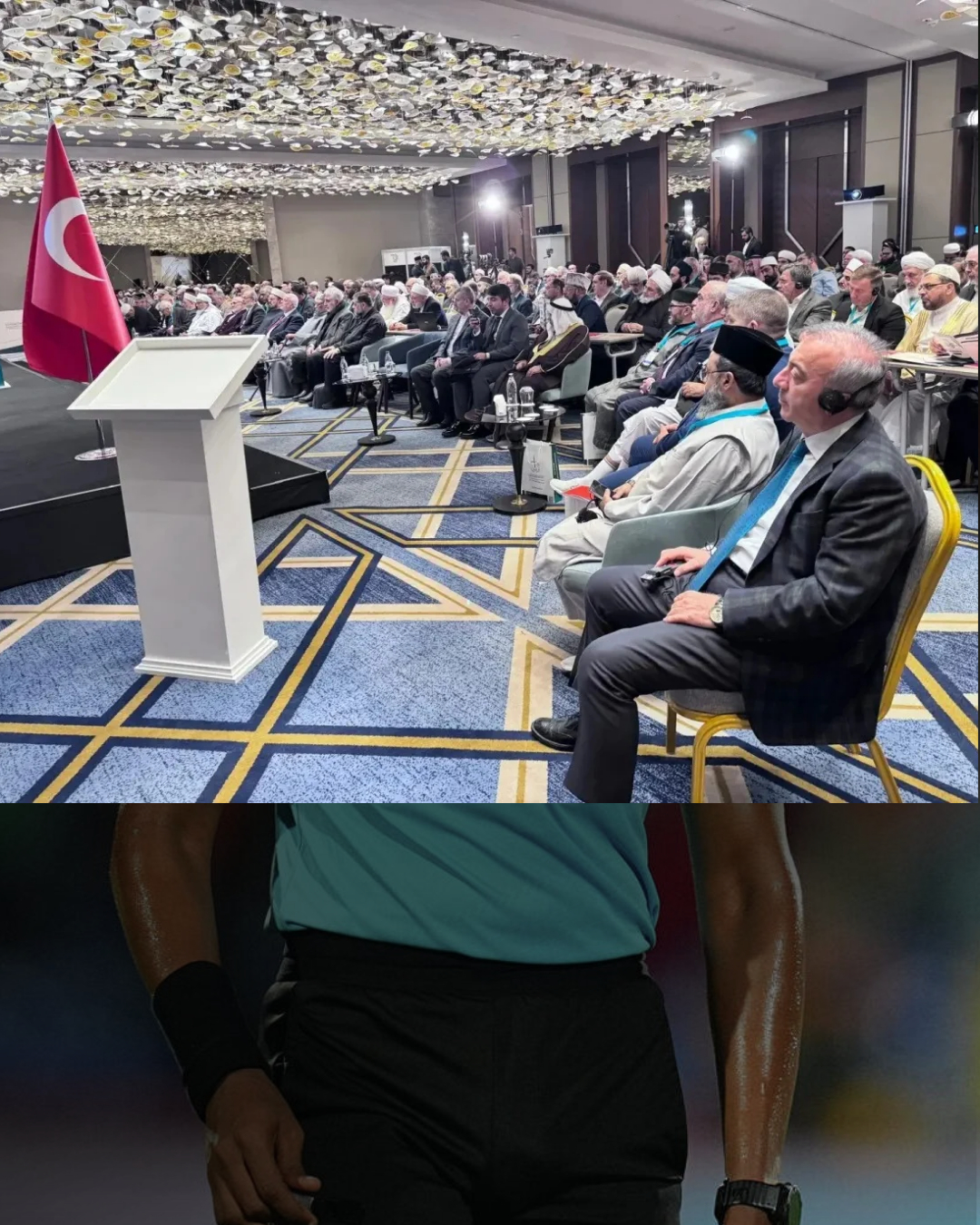
The three-day conference, held from October 28–30, was organised by the Qatar-based International Union of Muslim Scholars (IUMS) and the Islamic Scholars Foundation.
Under the theme “Unity of the Moderate Ummah: From Fundamental Principles to a Charter of Unity,” the gathering brought together scholars, intellectuals, political figures and representatives of Islamic institutions from numerous countries.
In their concluding statement, participants declared that Muslim unity was a religious obligation rooted in the Quran and Sunnah, and warned that divisions had weakened the Ummah’s ability to confront major challenges.
The scholars cited the Quranic verse: “And hold firmly to the rope of Allah all together and do not become divided.” (Surah Aal Imran, 3:103)

They argued that Muslims needed to move beyond general appeals for unity towards practical cooperation, common institutions and projects capable of delivering tangible results.
What kind of Muslim unity?
Subscribe to our newsletter and stay updated on the latest news and updates from around the Muslim world!
The conference’s central message was that Muslim scholars, movements, institutions and political leaders should cooperate on shared Islamic principles while respecting legitimate differences in religious interpretation.
This includes efforts to overcome divisions between Islamic organisations and schools of thought, encourage dialogue between scholars, coordinate religious and educational activities, and develop common positions on issues affecting Muslims worldwide.
Importantly, the organisers stressed that unity did not mean abandoning the fundamental teachings of Islam or requiring every Muslim to hold identical religious views.
Instead, the concluding statement distinguished between the established, definitive principles of Islam, which must be preserved, and matters of legitimate scholarly interpretation where differences can be accommodated.
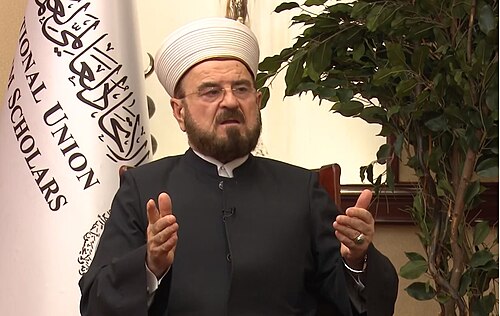
It called for cooperation on matters of agreement and mutual understanding on matters of disagreement, within recognised Islamic and scholarly boundaries.
The statement does not explicitly describe the initiative as an attempt to reconcile Sunnis and Shias, nor does it name particular Islamic denominations or schools of thought.
Although its language about respecting differences between Islamic schools could encompass cooperation across sectarian boundaries, the document does not specify whether Sunni-Shia reconciliation is an objective or which theological differences the organisers consider acceptable.
The clearest stated objective is therefore broader cooperation between Muslim scholars, religious movements, educational institutions and political organisations, without requiring them to surrender their established beliefs.
The conference also emphasised that unity should not be confused with uniformity. Rather, it should involve managing disagreements responsibly, rejecting sectarian fanaticism and concentrating on shared Islamic interests.
New charter for Muslim unity
One of the conference’s main decisions was to adopt a draft document entitled “Charter of the Moderate Ummah: Constants and Variables.”
The proposed charter aims to establish common principles for cooperation between Islamic scholars, movements and institutions.
It seeks to distinguish between the unchanging foundations of Islam and matters where scholarly interpretation, renewal and differences of opinion are permitted.
The organisers said the draft would be developed further in consultation with participating scholars and Islamic institutions to produce an agreed framework.
The statement invited Muslim scholars, intellectuals, leaders and organisations to contribute to its development and help promote its objectives.
New institutions and committees
The conference also agreed on several practical measures to turn its proposals into reality.
These include establishing a Centre for Unity Studies and Projects, which would develop research and initiatives aimed at strengthening cooperation across the Muslim world.
The scholars also agreed to form unity committees in Muslim-majority countries and among Muslim communities living in non-Muslim countries.
These committees would seek to bring Islamic organisations closer together, coordinate their activities and identify opportunities for joint action.
Other proposals include organising joint scholarly training programmes, holding national workshops to identify obstacles to unity, and arranging regular meetings between scholars, preachers and intellectuals.
The conference also called for closer coordination between Muslim political figures and institutions on issues affecting the Ummah.
Participants stressed that the initiative’s success should ultimately be judged by the projects implemented and the cooperation achieved, rather than simply by conferences and declarations.
Palestine and Al-Aqsa
Palestine featured prominently in the concluding statement, with the scholars demanding an end to what they described as the genocide in Gaza, the killing and violations taking place in the occupied West Bank, and Israel’s occupation of Palestinian territory.
They also called for the protection of Palestinian prisoners and Islamic holy sites, particularly Al-Aqsa Mosque in Jerusalem.
The scholars urged Muslim institutions and leaders to coordinate their efforts to defend Al-Aqsa and support the Palestinian cause through legitimate and responsible means.
They argued that divisions and weakness within the Muslim world had contributed to the suffering of Palestinians and other oppressed communities.
Sudan, Yemen and oppressed Muslims
The conference also addressed the suffering of Muslims in Sudan, Yemen, Myanmar and East Turkestan.
On Sudan, the scholars called for an end to the conflict, the restoration of security and stability, and increased humanitarian, financial and moral support for the Sudanese people.
They also expressed support for Sudan’s unity, sovereignty and legitimate state institutions.
Regarding Yemen, participants backed the country’s unity, security and stability, and called for its legitimate state institutions to be enabled to exercise their authority.
The scholars reaffirmed their solidarity with the persecuted Rohingya Muslims and Muslims in East Turkestan.
They also called for the release of prisoners of conscience who had committed no crime and urged greater protection for their rights and dignity.
Islamophobia and anti-Muslim hatred
The conference condemned Islamophobia and warned against attempts to exploit unrest in Western countries to fuel hostility towards Muslims.
The scholars called for the protection of religious freedoms, respect for the law and peaceful coexistence between communities.
They also rejected terrorism in all its forms and condemned an attack on a church, stressing the importance of protecting social peace and promoting mutual respect.
The statement urged Islamic media organisations to challenge hatred, incitement and sectarian intolerance while highlighting shared Islamic values and strengthening trust between Muslim communities.
Turning declarations into action
The scholars concluded by stressing that Muslim unity must become a continuous process involving religious scholars, political leaders, educational institutions, charities, media organisations and wider society.
They called for Muslim unity to be incorporated into educational and religious training programmes.
The conference also proposed establishing regular channels of communication between participating organisations, with designated representatives responsible for monitoring progress and implementing agreements.
Future meetings would evaluate results, address obstacles and assess whether the conference’s recommendations were being translated into meaningful action.
The Istanbul gathering therefore represents an attempt to establish a more coordinated approach to Muslim cooperation, based on shared Islamic principles, respect for recognised differences and practical collaboration.
However, the proposed charter remains under development, and the effectiveness of the initiative will depend on whether the participating scholars and institutions can turn their commitments into lasting cooperation.